Beware the Hormuz Trade: Oil's Calm Masks a Spike Risk
WTI crude at $78.08 despite a closed Strait of Hormuz. Iran standoff, Trump's "semi-negotiating" comment, and Brent's $8 drop signal dangerous complacency.
Key Points
- WTI crude has dropped to $78.08 from $84.51 as of July 31 — an $6.43-per-barrel decline — even as the Strait of Hormuz remains closed and Iran shows no sign of concession.
- Iran's government publicly stated the Strait will not reopen without U.S. concessions, while Trump described talks as "only semi-negotiating," leaving the world's most critical oil chokepoint in limbo.
- Traders long equities and short volatility into Wednesday's CPI face a compounding risk: a Hormuz escalation would simultaneously spike energy prices, reignite inflation, and shatter the soft-landing thesis in a single headline.
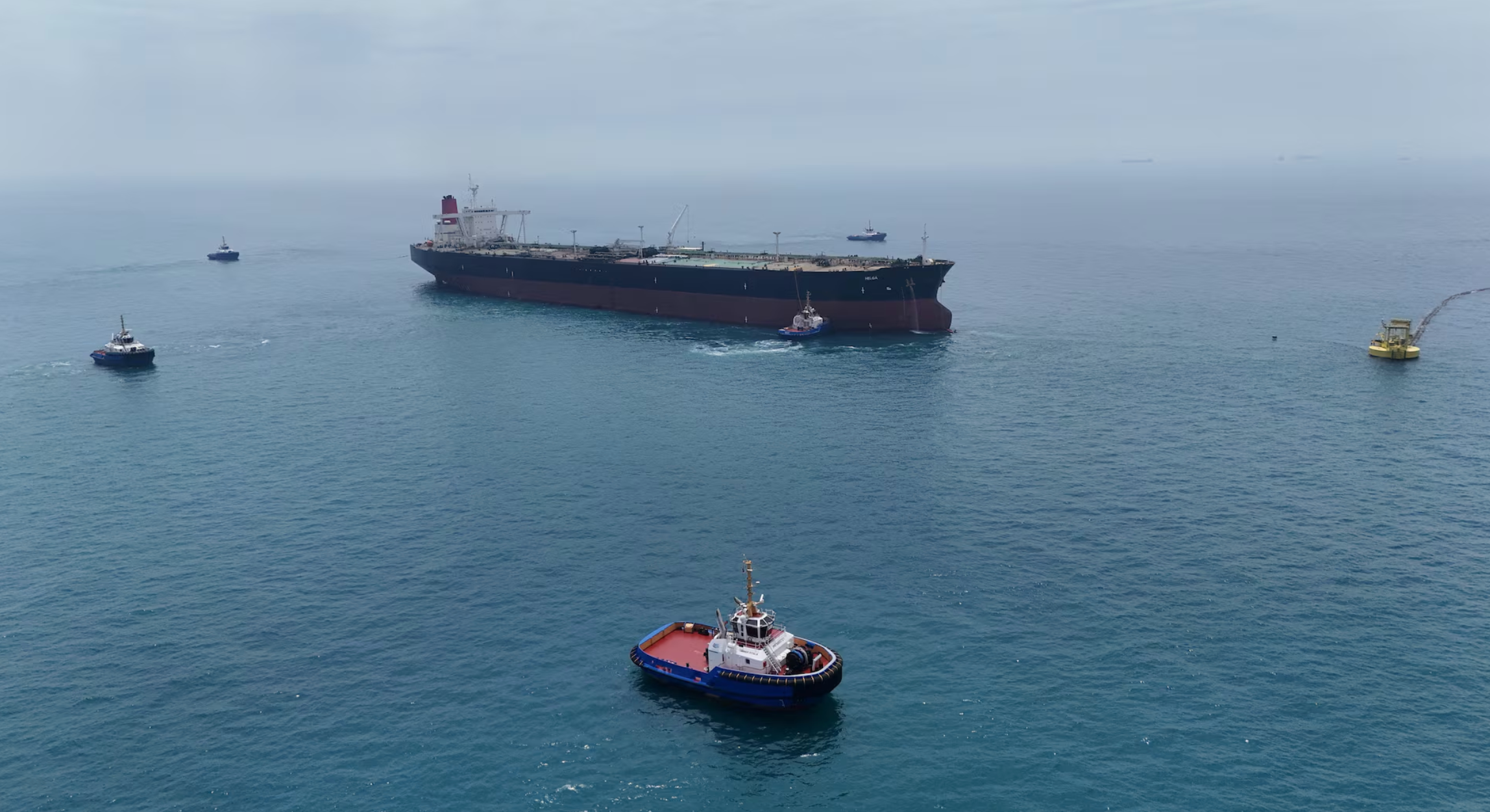
WTI crude is trading at $78.08 per barrel Monday morning — down 13 cents — and that relative calm is the most dangerous number in the energy market right now. The Strait of Hormuz, through which roughly 20% of all seaborne oil transits daily, remains closed. Iran has not budged. And the price of crude has somehow fallen more than $6 per barrel in the past ten days.
A Market Pricing Peace It Hasn't Earned
The math here does not add up, and that gap between geopolitical reality and market pricing is where the trade risk lives. Our internal data shows WTI at $84.51 and Brent at $91.63 as of July 31. This morning, Brent trades at $83.64 — an $8 collapse in under two weeks — while the Strait of Hormuz remains physically closed. The simplest explanation is that traders have convinced themselves a deal is imminent and have front-run the resolution. The problem is that the principals involved have given them no credible reason to believe that.
Iran's government issued an unambiguous statement over the weekend: the Strait will not reopen until Washington meets its specific conditions. The Oman-brokered talks are described as entering "final stages," a diplomatic phrase that can mean a deal is 48 hours away or that both sides are preparing face-saving exits from a failed negotiation. President Trump's characterization of the talks as "only semi-negotiating" — delivered to reporters Sunday — is the more actionable signal. That language does not describe a leader who believes he is days away from signing off on a deal. It describes a leader who is keeping his options open, including military ones.
For context on the magnitude of Hormuz exposure: approximately 17-21 million barrels of oil pass through the strait daily under normal operating conditions. Saudi Arabia, the UAE, Iraq, Kuwait, and Iran itself all depend on the chokepoint for the majority of their export flows. Even a partial disruption — a credible mining threat or a single incident involving a tanker — historically triggers 10-to-15% crude price spikes within 24 hours. The market is currently priced as if that scenario has been permanently removed from the probability table. It has not.
What the Drop in Crude Is Actually Telling Us
The $6-plus decline in WTI since July 31 has several potential explanations beyond naive optimism about a diplomatic resolution. Demand-side concerns are real: Monday's pre-market data landscape includes Friday's 23,000-job payroll loss, which signals U.S. economic deceleration and by extension slower fuel consumption growth. China's manufacturing PMI data has been soft for consecutive months, and European industrial output remains under pressure from elevated energy costs and slowing export demand. A weaker global growth profile is legitimately bearish for crude, independent of the supply picture.
Natural gas offers a parallel data point worth watching. Henry Hub is at $2.62 per MMBtu as of July 31 — a price level that reflects the same demand-skepticism story. Natural gas at $2.62 is cheap by any historical standard, and it reflects a market that is not pricing significant energy disruption risk into the forward curve. That complacency is consistent across the energy complex, which makes the positioning crowded and the potential reversal violent. The XLE energy ETF has seen modest outflows in recent sessions alongside the broader semiconductor ETF selling — institutional money is not rotating into energy as a Hormuz hedge, it is simply reducing exposure to high-beta sectors broadly.
Equity markets are sending a different signal entirely: gold at $4,408.20, up 0.19%, and the $15.3 billion combined inflow into SPY and GLD suggest some hedging activity, but it is not concentrated in energy. If institutional desks were genuinely pricing Hormuz escalation risk at meaningful probability, XLE would be one of the week's top inflow destinations. It is not. That tells you the smart money's base case remains resolution — but base cases can reprice in a single news cycle when a geopolitical situation involves two parties who have publicly stated contradictory conditions for an agreement.
What Escalation Actually Looks Like for Traders
The asymmetry here is severe and worth quantifying. If Oman's mediation succeeds and the Strait reopens — a bull case for crude sellers — WTI probably finds support around $75 to $77, reflecting the underlying demand softness. That's another $1 to $3 of downside from current levels. If Iran mines the Strait, fires on a tanker, or simply announces talks have collapsed, WTI could reach $95 to $100 within 48 hours based on historical analogues from 2019 and 2012. The risk-reward for being short crude without a stop above $84 is asymmetrically dangerous right now.
The inflation feedback loop makes this a macro event, not just an energy trade. CPI headline is already at 3.5% year-over-year. A crude spike to $95 WTI translates into roughly 30-to-40 cents per gallon at the pump within 30 days, and fuel is a direct CPI input. That would not only delay any Fed easing — it would actively reopen the rate-hike debate that Friday's payroll data appeared to close. An S&P 500 at record highs with a VIX at 15.47 has no buffer for a simultaneous energy shock and inflation resurgence. The most exposed positions in that scenario are long-duration growth stocks, high-multiple AI names, and any sector that benefited from Friday's rate-relief trade.
The specific levels to watch: WTI above $84.50 — recapturing the July 31 close — would confirm that the market is beginning to re-price Hormuz risk and would likely accelerate quickly toward $90. Brent above $92 would be the cleaner signal, given its tighter link to Middle East benchmarks. Traders running long equity books into Wednesday's CPI should treat any crude move above $84 WTI this week as a compounding risk signal, not an isolated commodity event. The calendar confluence of a Hormuz standoff, a record equity market, and a CPI print that could move either direction creates the conditions for a volatility event that the current VIX reading is not remotely discounting.
The Weekly Investor
Daily market analysis for active traders. Free.