Barrick Mining Q2: 74% EPS Jump, $1.2B Buyback
Barrick Mining (GOLD) crushed Q2 estimates with adjusted EPS up 74% YoY and $1.2B in buybacks. Here's what traders need to watch next.
Key Points
- Barrick reported adjusted EPS of $0.82 for Q2 2026, up 74% year-over-year, on gold production of 796,000 ounces that exceeded the top end of guidance by 26,000 ounces.
- The ahead-of-schedule restart of the Loulo-Gounkoto mine and the resolution of all outstanding disputes with Newmont over the Nevada Gold Mines JV remove two of the stock's most persistent overhangs simultaneously.
- Traders should watch the year-end North American IPO separation as the next discrete catalyst, with Mark Hill already named as incoming CEO of the new entity.
Barrick Mining printed adjusted EPS of $0.82 in Q2 2026 — up 74% year-over-year — while deploying $1.2 billion in share buybacks during a single quarter, lifting total shareholder returns 242% year-on-year to $1.50 billion. Net earnings hit $1.22 billion, up 50% from Q2 2025, and gold production of 796,000 ounces blew past the top of guidance by 26,000 ounces. At current gold prices and with two major corporate overhangs now resolved, this is one of the cleanest fundamental setups in the mining sector.
The Production Story Behind the Beat
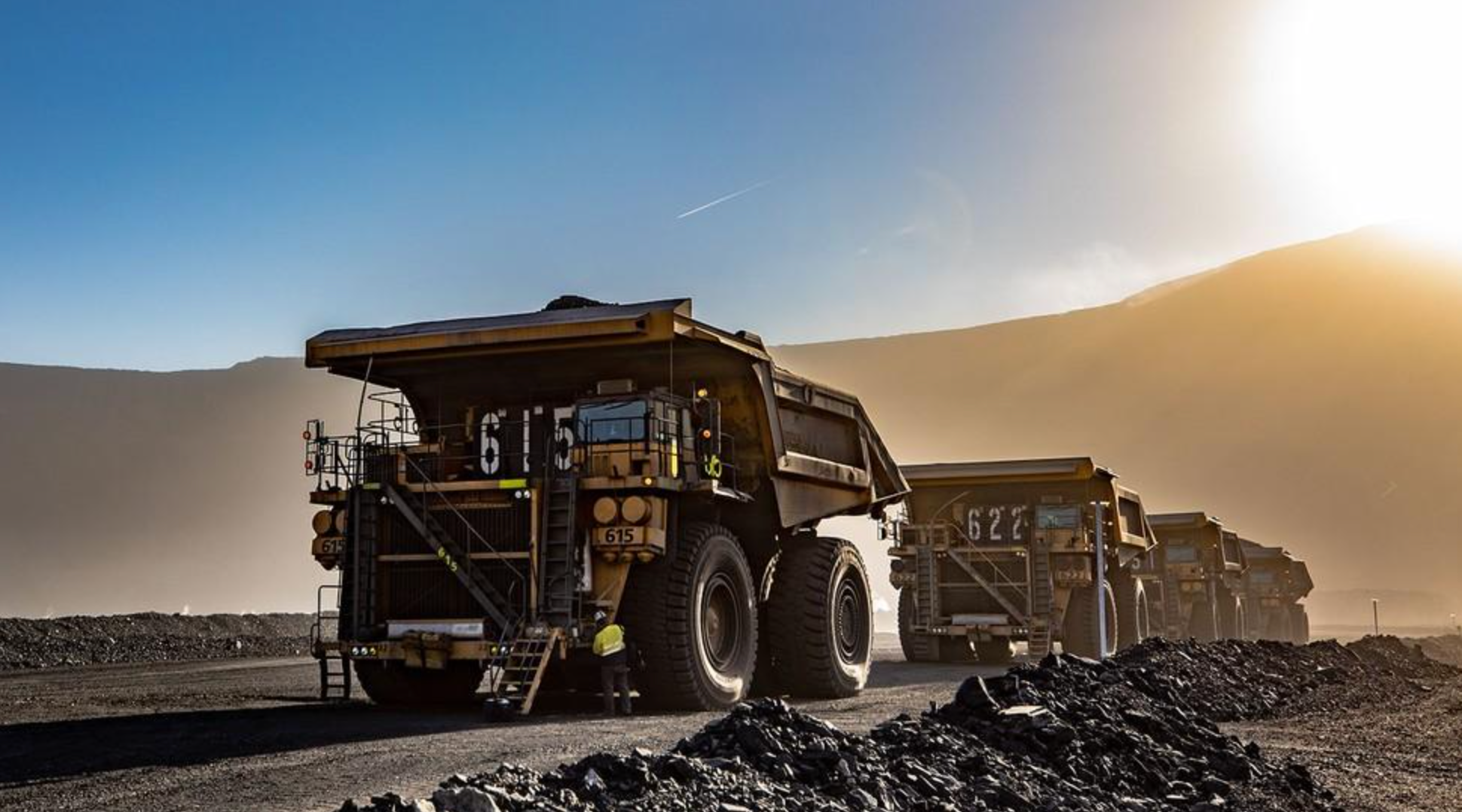
The headline production number — 796,000 ounces against a guidance ceiling of 770,000 — understates the operational significance of what drove the beat. The Loulo-Gounkoto complex in Mali restarted ahead of schedule following its previously disclosed suspension, and recovery rates at several other assets accelerated faster than the internal timeline management had presented to analysts earlier this year. That combination produced a rare outcome in mining: a quarter where both volume and cost performance moved in the right direction at the same time.
Cost discipline held even as production surged, which is where many gold miners stumble in high-output quarters. Barrick kept full-year production and cost guidance unchanged, signaling that Q2's outperformance was not the product of pulling forward ounces at the expense of H2. That's a critical distinction for anyone modeling the back half. A company that beats by raiding future quarters tends to see guidance cuts follow within one to two reporting cycles. Barrick's flat guidance update is an explicit statement that Q2's volumes were additive, not borrowed.
The capital expenditure reduction also matters: total attributable capex guidance was trimmed to $3.8 billion–$4.2 billion from the prior range, freeing incremental cash flow. With WTI crude at $84.51 per barrel as of July 31 — a meaningful input cost for open-pit mining operations — any capex discipline that reduces fuel and equipment exposure directly protects margins. The revised capex envelope, combined with the production beat, creates a free cash flow profile that supports continued buyback activity in Q3.
The JV Resolution and What It Unlocks
The agreement with Newmont over the Nevada Gold Mines joint venture is not a footnote — it's a structural change. The Nevada JV has been a source of disclosed friction between the two largest gold producers in the world, encompassing disputes over excluded properties, operating protocols, and capital allocation priorities. According to Barrick's Q2 release, the amended JV agreement includes contributions of previously excluded properties and concludes all outstanding disputes between the parties.
For traders, the practical effect is a reduction in execution risk at one of the world's highest-grade gold districts. The Nevada complex — spanning Cortez, Carlin, and Turquoise Ridge — is Barrick's single largest operational footprint. Disputes at that level create uncertainty around capital deployment, mine planning, and eventually production timelines. With the dispute formally closed, both parties can advance permitting and development decisions that were effectively in limbo. Newmont carries its own operational leverage to this resolution, but Barrick, as operating partner, captures the more immediate benefit.
The broader market backdrop reinforces the timing. With the 10-year Treasury yield at 4.69% and real rates still positive, gold's performance above $2,400 per ounce reflects demand dynamics that go beyond simple rate mechanics — central bank accumulation, geopolitical hedging tied to Strait of Hormuz uncertainty, and dollar volatility are all contributing. Barrick's cost structure at current gold prices generates margins that look materially different than they did 18 months ago when the JV friction was first escalating.
The North American IPO Catalyst Traders Can Date
The most underappreciated item in Monday's release is the confirmation that the North American IPO remains on track for completion by year-end, with Mark Hill formally designated as CEO of the entity upon separation. This is not a vague strategic aspiration — it has a named executive, a confirmed timeline, and presumably a regulatory filing process already underway. In deal terms, that's an advanced stage of execution.
The mechanics of a mining company IPO of this scale tend to follow a predictable path: confidential S-1 or F-1 filing with the SEC typically precedes public registration by 60–90 days; roadshow activity then compresses into a two-to-three week window ahead of pricing. If the year-end target is December, the public filing window opens somewhere in September or October. Traders who want exposure ahead of the book-building discount should be watching for that registration statement, not waiting for the roadshow.
The strategic logic of the separation also deserves attention. Spinning off North American assets into a standalone vehicle creates a pure-play entity with direct exposure to Nevada and potentially other North American operations, listed on a US exchange, with a dedicated management team. That structure typically attracts a different — and often higher — valuation multiple than a diversified global miner carrying African country risk alongside North American tier-one assets. The parent Barrick retains its international portfolio; the SpinCo gets re-rated on North American multiples. Both sides of that trade have historically unlocked value in the 12 months post-separation.
The near-term risk to monitor is macro: a September Fed rate hike — currently priced at 44% probability, down from 67% a week ago — could pressure gold if it triggers a dollar rally. The 2-year yield at 4.25% against a Fed Funds Rate of 3.63% already reflects market skepticism about the pace of easing. Any upside inflation surprise in this week's CPI print could reprice both gold and the IPO timeline if equity market conditions tighten. Barrick's $0.175 quarterly dividend provides a floor for income-oriented holders, but the real trade is the IPO optionality embedded in the current share price. Watch for an SEC registration filing between now and October 15 — that's the signal that year-end pricing is real.
The Weekly Investor
Daily market analysis for active traders. Free.