
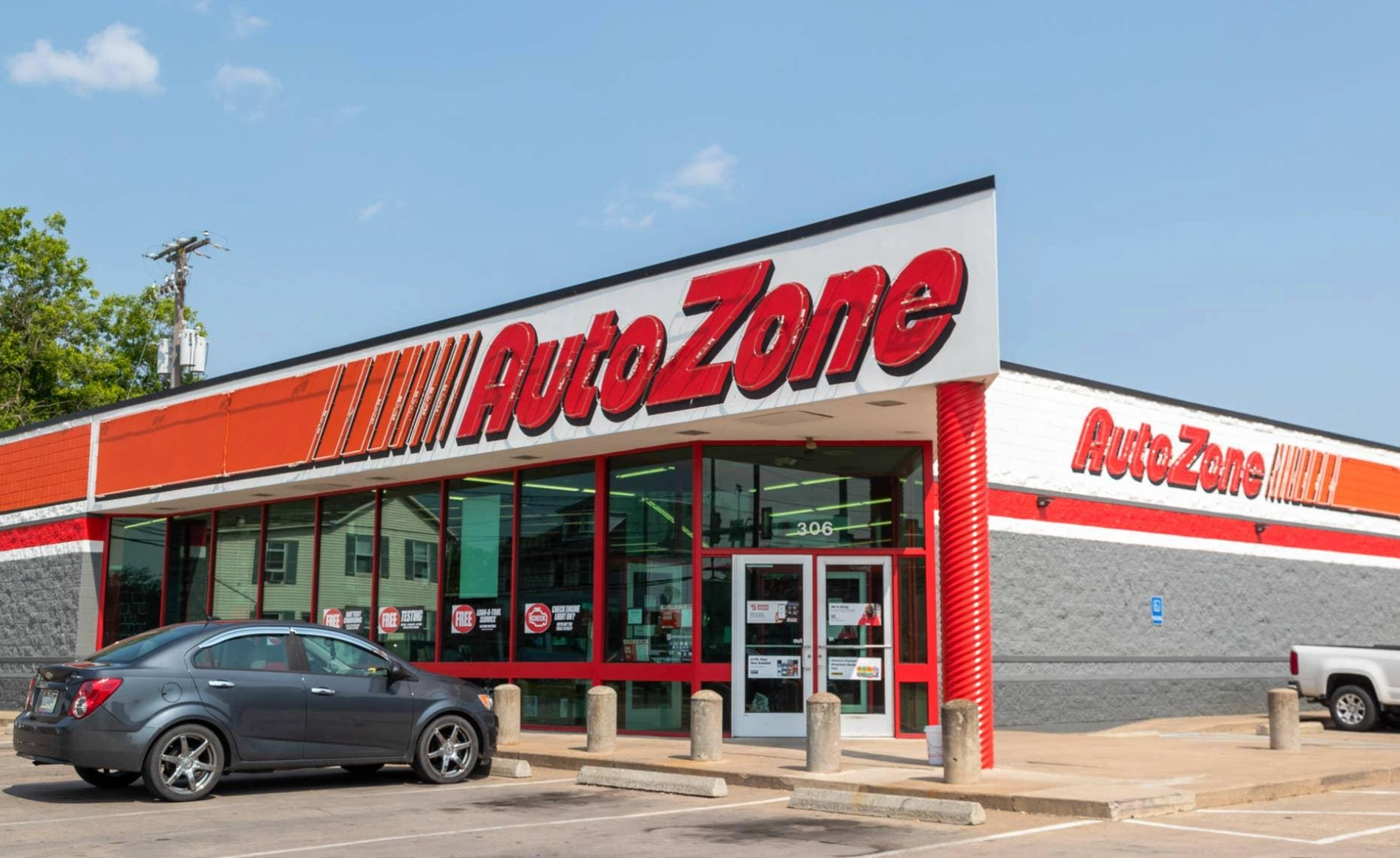
AutoZone Q4 Earnings: Will AZO Miss Again?
AutoZone reports Q4 FY2026 earnings September 22 with a 9.72% implied move priced in. AZO has missed EPS estimates in 6 of its last 8 quarters.
Key Points
- AutoZone entered its Q4 FY2026 print on September 22 having missed consensus EPS in six of its last eight quarters, with the options market pricing a 9.72% implied move — nearly double its 5.6% historical average.
- Domestic same-store sales were expected to decelerate to 3.7% year-over-year from 4.8% in the prior quarter, pointing to softening DIY demand as a key pressure point.
- KB Home's after-close Q3 print carries equal weight for housing sector positioning — watch for any guidance revision on deliveries or margins against an elevated mortgage-rate backdrop.
AutoZone entered Tuesday's session at $2,844.31 with the options market pricing a 9.72% swing in either direction around its Q4 FY2026 earnings report — a premium that tells you precisely how little confidence traders have in the company's ability to deliver a clean number. AZO has missed consensus EPS estimates in six of its last eight quarters, and the three most recent post-earnings sessions produced declines of 8.99%, 6.32%, and 7.17% respectively.
A Pattern the Market Has Priced In
The consensus setup for Q4 FY2026 called for revenue of $6.71 billion, up 7.49% year-over-year, and EPS of $54.14 versus $48.71 in the year-ago period. Those are not aggressive estimates in isolation. The problem for AutoZone is that the company has been consistently unable to meet numbers that looked achievable on paper, and the pattern has become embedded in how the market approaches each release. An implied move of 9.72% — nearly double the 5.6% average absolute post-earnings move across the last four reports — reflects the asymmetry traders are pricing: the downside scenario feels more probable than upside surprise, so the options premium has widened accordingly.
The deceleration in domestic same-store sales is the metric to watch most closely inside the report. Consensus expected SSS growth of 3.7% year-over-year, down from 4.8% in the prior quarter. That slowdown, if confirmed, signals that the core DIY customer — the person doing their own oil changes and brake jobs to save money — is pulling back even in an environment where economic pressure would theoretically drive more do-it-yourself behavior rather than less. It is a counterintuitive signal, but it aligns with broader consumer data showing fatigue in discretionary spending even at the lower price points. If the actual SSS print comes in below 3.7%, the stock's immediate support at $2,834.19 will be tested within minutes of the release, and the May 2026 pattern — an 8.99% single-session drop — becomes the relevant playbook.
The international business provides a partial offset. AutoZone's Mexico and Brazil operations have been growing faster than domestic, and any outperformance there could soften the headline impression even if domestic SSS disappoints. But institutional investors tracking AZO are primarily anchored to the domestic same-store number as a real-time gauge of U.S. consumer financial health, and a soft domestic print will dominate the reaction regardless of how international performs. The 10:00 AM ET conference call is the moment when management's tone on the consumer — whether they describe current weakness as transitory or structural — will set the narrative for the next quarter.
KB Home and the Housing Read-Through
While AutoZone dominated the pre-market earnings attention on September 22, the after-close print from KB Home carries its own systemic weight. The homebuilder guided Q3 2026 home deliveries of 2,600 to 2,800 units at revenues between $1.20 billion and $1.35 billion — a recovery target following a sharp 27% revenue decline in Q2. The Street had penciled in adjusted EPS of $0.90, and with mortgage rates still elevated and consumer sentiment recovering only gradually, the tolerance for another guidance miss in housing is extremely thin.
KB Home's Q3 results will land after the close in a week when Raymond James has already reiterated an Underperform on Lennar following its own Q3 review, and when the broader housing data calendar remains active — August new home sales land Thursday, September 24. Any signal from KBH management about order cancellation rates, net new orders, or community count changes will carry weight beyond a single company report. It will serve as a real-time stress test of whether the housing market's gradual recovery narrative survives into Q4, or whether elevated mortgage rates — a direct consequence of the Federal Reserve's first rate hike since 2023, which landed just last week — are beginning to bite harder than the consensus expects.
The Fed's timing is not incidental to KBH's situation. A rate hike at this point in the calendar hits the housing market with a lag of roughly two to three quarters, which means the full effect on buyer qualification rates and mortgage applications may not fully surface until Q1 or Q2 2027. What KBH says tonight about current demand trends — specifically whether traffic and conversion rates held up through August and into September — will give traders one of the earliest reads on whether that lag effect is arriving ahead of schedule. Builders have been managing the rate environment with mortgage rate buydown programs that compress their own margins, so the gross margin line inside the KBH print deserves as much scrutiny as the top-line revenue comparison to guidance.
Levels and Catalysts to Monitor
For AutoZone, the immediate framework is straightforward: $2,834.19 is the first technical support level to watch if the reaction to Q4 results is negative, and a break below that level on a miss that includes SSS below 3.7% opens a path toward the $2,700 area that defined AZO's range during the March 2026 selloff. On the upside, a genuine beat — EPS meaningfully above $54.14 combined with domestic SSS at or above 4% — would be the first clean print in over a year and could push shares back toward the $3,000 level that acted as resistance through the spring. Given the six-of-eight miss pattern, the asymmetric probability favors monitoring the downside scenario with more rigor.
For KB Home, the deliveries number relative to the 2,600–2,800 unit guidance range is the most immediately tradeable data point. A print below 2,600 units with any downward revision to Q4 delivery guidance would likely push KBH shares lower in after-hours trading and weigh on the broader homebuilder ETF. A beat on deliveries with maintained or improved margin commentary would validate the Q2-to-Q3 recovery thesis and set up a positive read-through to Thursday's August new home sales data. The August 25 durable goods orders and final University of Michigan Consumer Sentiment on Friday, September 25 complete the macro picture for the week, and by Friday's close, traders will have enough data to judge whether the consumer — DIY auto parts buyer and potential homeowner alike — is holding up or quietly stepping back.
The Weekly Investor
Daily market analysis for active traders. Free.