Warsh's Jackson Hole Debut: What Traders Must Know
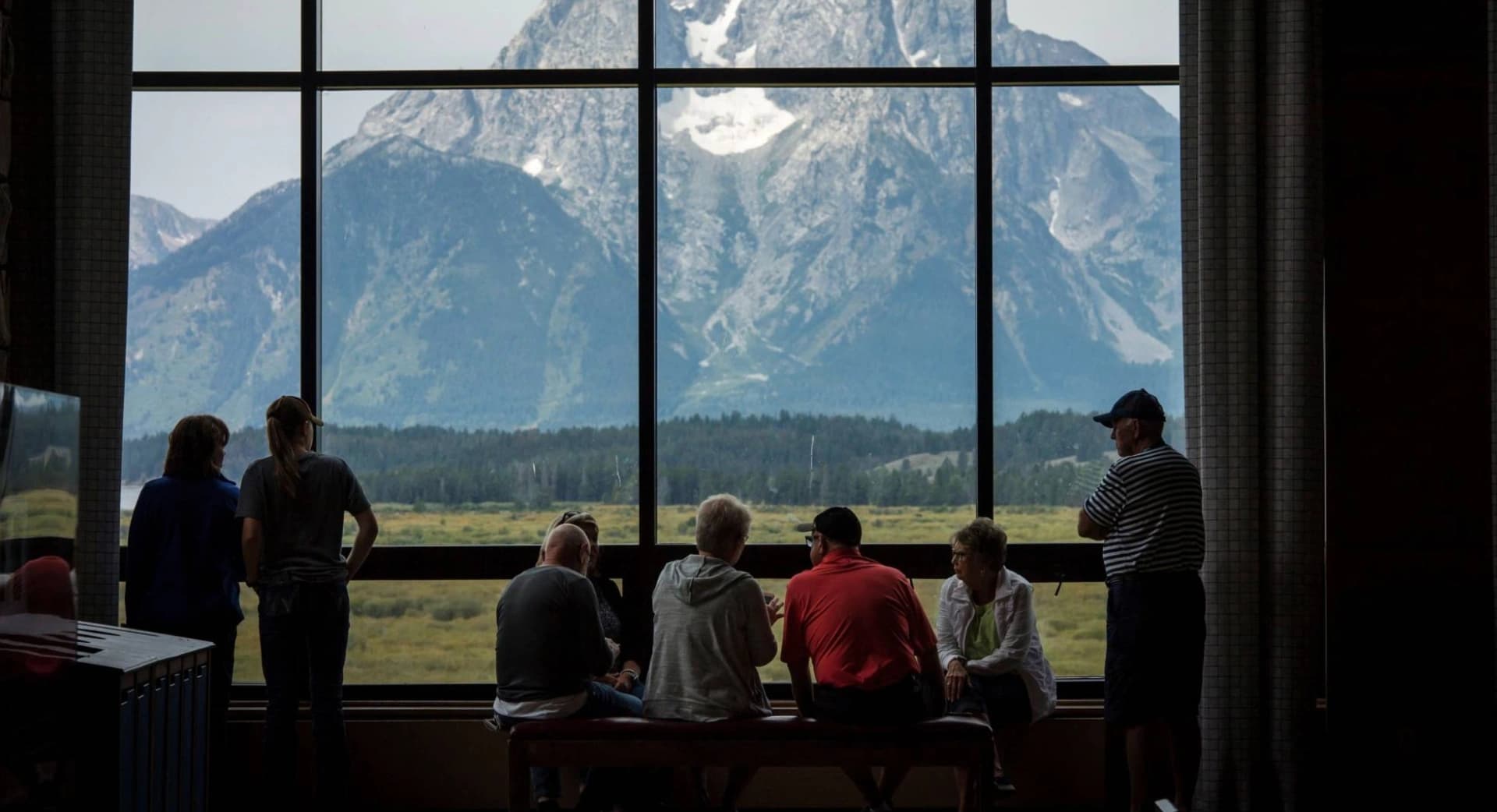
Fed Chair Kevin Warsh speaks Friday at Jackson Hole — his first keynote. With three hawkish dissenters and a 30-year yield near a 19-year high, any deviation from neutral moves markets.
Key Points
- Three FOMC members dissented in favor of a 25-basis-point hike at the July 29 meeting — the most hawkish fracture in nearly a decade.
- Warsh has deliberately killed the Fed's forward-guidance playbook, making Friday's keynote the most information-dense Fed speech in years.
- Watch the 10-year yield at 4.74% and September hike odds near one-in-three for the immediate market reaction to Warsh's remarks Friday morning.
The most consequential Federal Reserve speech in years lands Friday morning in Wyoming, and the market is not ready for it. Kevin Warsh, who took the chair on May 22, 2026, delivers his first Jackson Hole keynote against a backdrop that includes three hawkish dissenters at the last FOMC meeting, a 10-year Treasury yield sitting at 4.74%, and a 30-year yield hovering near a 19-year high — a combination that gives every word he speaks the potential to reprice the entire rate curve in real time.
The Fed Warsh Inherited
The July 29 FOMC statement was a 9-3 vote to hold the federal funds rate at 3.5% to 3.75% — and the three dissenters were not backbenchers. Beth Hammack, Neel Kashkari, and Lorie Logan all preferred an immediate 25-basis-point hike, making this the most fractured FOMC vote in the better part of a decade. That is the institution Warsh now chairs, and Friday is the first time he will address the public as its leader from a major policy stage.
The statement itself was careful but revealing. The Committee described economic activity as "expanding at a solid pace despite elevated uncertainty that owes, in part, to the conflict in the Middle East," and characterized inflation as "remaining elevated relative to the Committee's 2 percent goal, in part reflecting supply shocks that have driven price increases in certain sectors, including energy." With WTI crude at $84.05 per barrel and Brent at $92.51, those supply-side pressures are not hypothetical — they are live, embedded in the current price level, and unlikely to resolve on a schedule the Fed can control. That language gives the hawks a durable argument regardless of what any single monthly print shows.
What makes Warsh's debut genuinely unusual is structural, not just political. He has explicitly abandoned the Fed's habit of telegraphing intentions ahead of meetings. Where Powell spent years cultivating a predictable communication cadence — managing market expectations through carefully staged speeches and minutes — Warsh told reporters on July 29 that his Jackson Hole remarks would focus on "long-term structural questions," not near-term guidance, and that the Fed would act independently of market pricing. That posture is a direct repudiation of the guidance-forward framework that defined the post-2008 era. It means Friday's speech carries genuine, unpriced information in a way that most recent Fed keynotes simply have not.
What 69% Consensus Actually Means
Bank of America's latest fund manager survey shows 69% of respondents expecting a neutral tone from Warsh on Friday. That number matters — not because it's right, but because it defines the asymmetry of the trade. Neutral is the consensus. Neutral is already in the price. The 2-year Treasury yield at 4.24% and SOFR at 3.65% are both consistent with a market that believes the Fed is on hold through year-end. If Warsh delivers anything north of neutral — any acknowledgment that the three dissenters have a point, any suggestion that the pause has a defined endpoint, any language tightening the conditionality around the next move — the repricing is immediate and violent in the front end.
The base case from Barclays has the FOMC holding through the end of 2026, with year-end core PCE forecast at 3.2%. But core CPI is already at 2.5% year-over-year through July, and July PCE is expected to show core up just 0.1% month-over-month when it prints on August 29 — the day after Warsh speaks. If the PCE data validates the disinflation narrative, it creates a clean narrative for the doves. The problem is sequencing: Warsh speaks first. His framing could set the interpretive lens through which Friday afternoon's PCE number is read. A hawkish Warsh followed by a soft PCE creates confusion and volatility. A neutral Warsh followed by a soft PCE is the cleanest path to a relief rally in bonds and rate-sensitive equities.
Nine of eighteen FOMC participants penciled in at least one hike before year-end in the June dot plot. That was before the string of cooler CPI and PPI readings, and before July's negative payroll print. Even so, September hike odds sit at roughly one in three — not negligible, and not priced for a hike. The 19-day window between Friday's speech and the September 16 FOMC decision is narrow enough that Warsh's tone could mechanically shift those odds by 10 to 15 percentage points in a single session.
What Traders Watch Next
The immediate trade is straightforward: the 10-year at 4.74% is the level. A hawkish surprise from Warsh pushes it toward 4.90% and above, a level not seen consistently since the back half of 2023. A neutral-to-dovish read brings it back toward 4.60%, where the curve would re-steepen modestly given that the 2-year at 4.24% is already pricing a more cautious Fed. The 50-basis-point spread between the 2-year and 10-year — a positive slope that returned after an extended inversion — is itself a signal that markets are now pricing in higher structural long-term rates even as they expect near-term stasis. Warsh disrupting that view would be the summer's biggest macro trade.
Beyond yields, the dollar index and rate-sensitive equity sectors — utilities, REITs, and regional banks — are the secondary expressions. Utilities have been pricing a hold-into-cut scenario. If Warsh tilts the narrative toward a hike, the sector re-rates lower fast. Regional banks face the opposite logic: a hike expectation steepens the curve further and helps net interest margins. Watch the KBW Bank Index as a real-time read on how traders are interpreting the speech.
The forward-looking calendar is equally compressed. Q2 GDP's second estimate lands Wednesday at 8:30 a.m. ET. Any meaningful downward revision to growth would undercut the hawks' economic-strength argument heading into Friday. Then Warsh speaks. Then PCE prints. Three data points in three days, each capable of moving the other's interpretation. The September 16 FOMC decision is the endpoint — but the window that shapes it opens at 8:30 Wednesday morning and doesn't close until PCE clears the tape Friday afternoon. Position accordingly.
The Weekly Investor
Daily market analysis for active traders. Free.