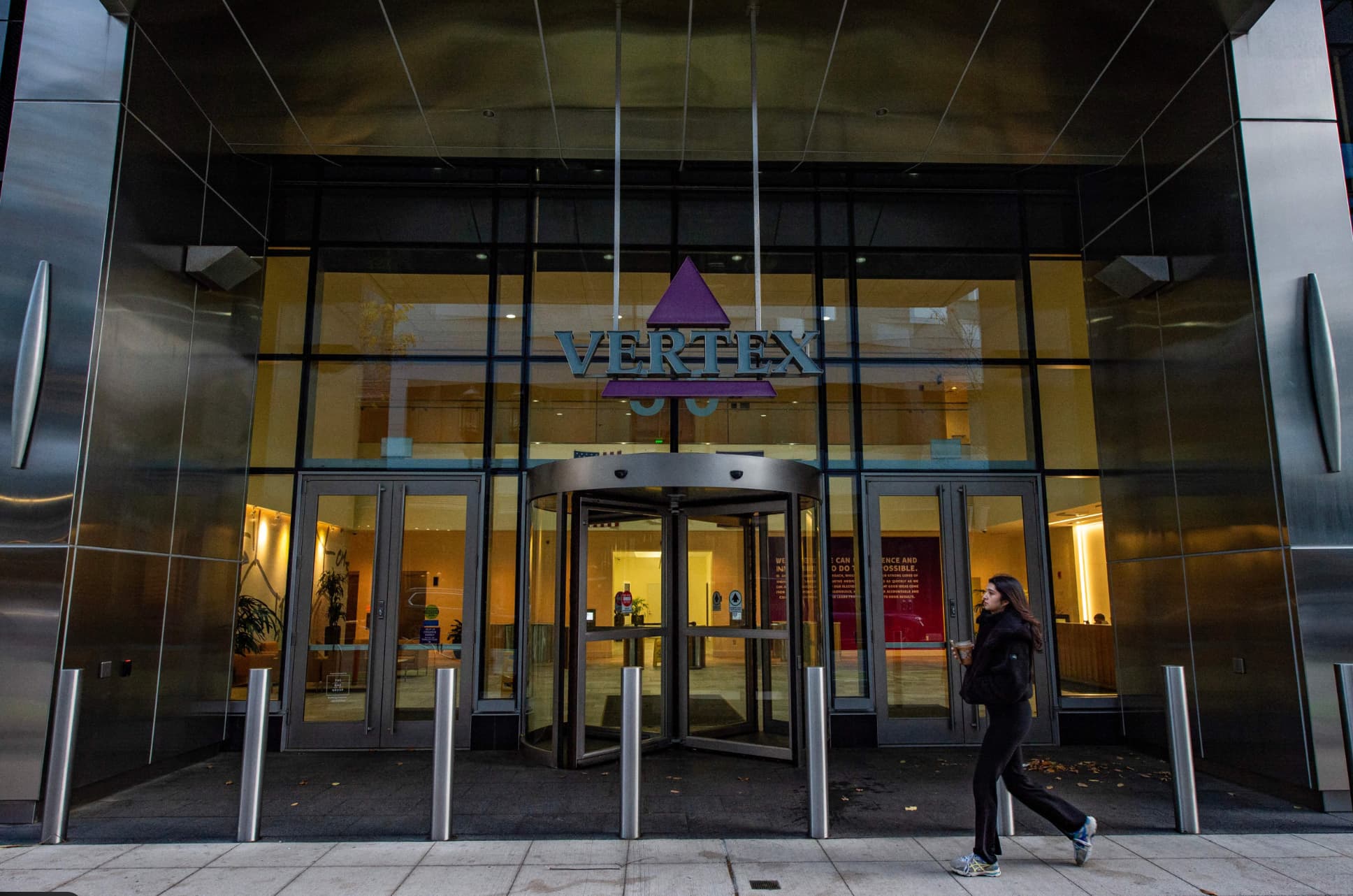
Vertex Buys Crinetics for $85/Share, CRNX Doubles
Vertex Pharmaceuticals acquires Crinetics Pharmaceuticals in an all-cash deal at $85 per share, sending CRNX up 99% and expanding Vertex's endocrinology pipeline.
Key Points
- Vertex Pharmaceuticals is acquiring Crinetics Pharmaceuticals in an all-cash deal at $85 per share, nearly doubling CRNX's stock price — up 98.9% on 8 million shares Wednesday morning.
- The deal adds two primary oral endocrinology therapies to Vertex's pipeline and is expected to close in Q3 2026, per the company's 8-K filed July 7 with the SEC.
- Traders should watch VRTX for any overhang from deal financing and scan the remaining small-cap endocrinology space for sympathy pops and the next potential takeout target.
Crinetics Pharmaceuticals is trading at a near-double Wednesday morning — up 98.9% on 8 million shares — after Vertex Pharmaceuticals announced an all-cash buyout at $85 per share, a premium that wiped out years of small-cap biotech frustration in a single overnight filing. The deal, disclosed in a Vertex 8-K filed July 7 with the SEC, is expected to close in Q3 2026 and gives Vertex two primary oral endocrinology therapies it did not have before. In a session dominated by geopolitical fear and a semiconductor rout, this is the tape's cleanest binary trade — and it's already halfway priced in.
The Deal Structure and What Vertex Is Buying
The $85-per-share all-cash price is the number every trader needs to anchor to first. CRNX had been trading significantly below that level before the announcement, which explains the near-doubling — not a rounding error, but a hard acquisition premium that reflects Vertex's conviction in the endocrinology pipeline it's absorbing. All-cash deals in biotech carry a specific read-through: the acquirer isn't asking target shareholders to take on deal risk, which typically means either the buyer's stock is under pressure or the buyer wants certainty of close without a stock-price-dependent exchange ratio complicating the vote. In this case, Vertex filed its own 8-K on July 7 — available at the SEC's EDGAR system — disclosing the transaction terms, and the expected Q3 2026 close gives the deal a compressed timeline that limits the arb spread's useful life.
What Vertex is actually acquiring matters as much as the price. Crinetics has been developing paltusotine, an oral somatostatin receptor agonist targeting acromegaly and carcinoid syndrome, alongside at least one additional candidate in the endocrinology space. For Vertex, whose core franchise is built on cystic fibrosis with Trikafta, the endocrinology addition is a deliberate pivot into a second rare-disease vertical. The logic is familiar from the CF playbook: identify a high-unmet-need rare condition where patients have limited oral treatment options, bring a best-in-class oral therapy to a market currently served by injectables or older generics, and capture premium pricing. If paltusotine clears its remaining regulatory hurdles on schedule, Vertex will own a commercial-stage endocrinology asset rather than a development-stage one — a much cleaner deal than paying full commercial multiples would have required.
Reading the VRTX Reaction and the Arb Math
Vertex's stock response to the announcement is the secondary trade worth watching. Large acquirers in all-cash biotech deals frequently see their own shares sell off on the day of announcement as investors discount the cash outlay and question strategic fit. VRTX has not escaped this dynamic entirely, and traders should check the live print against Tuesday's close to assess how much deal-financing concern is baked in. Vertex carries a strong balance sheet — the CF franchise generates substantial free cash flow — but the market's instant verdict on whether management overpaid will show up in VRTX's intraday performance more than in any analyst note published today.
The merger arbitrage setup for CRNX is straightforward but not without risk. With the deal announced at $85 all-cash and expected to close in Q3 2026 — call it September or October — the stock's current level near the doubling point implies the arb community is buying some probability of a competing bid, a deal break, or a closing delay. In a higher-rate environment — SOFR is sitting at 3.63%, the fed funds effective rate at 3.63% — the cost of carrying an arb position for three to four months is not negligible. A 35-basis-point positive yield curve, with the 10-year at 4.48%, means arb desks are discounting the deal's time value against a real cost of capital. The spread between the current CRNX price and $85 will compress or widen based on any regulatory signal from the FTC, which has been active on pharma consolidation reviews in 2025 and 2026.
The Broader Biotech M&A Read-Through
One deal does not make a trend, but context matters: this announcement arrives in a market environment where large-cap pharma and biotech companies are sitting on substantial cash reserves and facing patent cliffs that make organic pipeline development insufficient on its own. Vertex's acquisition of Crinetics is the latest in a series of all-cash rare-disease takeouts that have defined the biotech M&A calendar through the first half of 2026. The Q2 rally — S&P 500 up 14.9%, Nasdaq up 21.4% — inflated small-cap biotech valuations broadly, but a pocket of endocrinology and rare-disease names with credible Phase 2 or Phase 3 data still trades at levels that make them actionable targets for larger acquirers.
The names to watch in the wake of this deal are the remaining small-cap oral endocrinology and rare-disease developers that have what Vertex just paid $85 per share to acquire: credible oral delivery mechanisms, demonstrated Phase 2 efficacy, and manageable commercial infrastructure requirements. The market will run a sympathy scan today — any company in the paltusotine competitive space, or any company developing oral therapies for conditions currently dominated by injectables, becomes a speculative read-through candidate for the next 48 hours. That's a short-duration trade, not a thesis, and position sizing should reflect that distinction.
Live market data tracked Wednesday morning confirms CRNX is the session's single largest percentage gainer, up 98.9% on volume of 8 million shares — meaningful turnover for a small-cap that will cease to trade independently once the deal closes. The Russell 2000 is down 0.70% on the day, meaning the broader small-cap environment is under pressure from the same Iran and rate dynamics hitting large-caps; CRNX is trading through that headwind entirely on deal premium, which is the cleanest possible confirmation that the arb is functioning and the market believes this deal closes. The VRTX 8-K filing dated July 7 is the definitive source document — the SEC's EDGAR filing for Vertex contains the full transaction terms for traders who want to verify the Q3 close timeline and any material conditions precedent before sizing a position.
The specific date to watch is any FTC second-request deadline, which typically arrives within 30 days of HSR filing. If Vertex files HSR immediately — standard practice in deals targeting a Q3 close — traders should expect either a clearance signal or a second-request notice by mid-August. A clean clearance with no second request would collapse the remaining arb spread toward zero almost immediately; a second request extends the timeline and widens the spread, creating a potential re-entry for arb desks at better carry-adjusted levels. Until that FTC signal arrives, CRNX at current levels is a binary hold for arb players and a closed trade for momentum players who caught the overnight move.
The Weekly Investor
Daily market analysis for active traders. Free.