US Trade Deficit Poised to Blow Out to -$90B in July
The July US trade deficit is expected to widen sharply to -$90B from -$73.3B in June. Here's what the number means for stagflation risk and Fed policy.
Key Points
- The July US trade deficit is expected to print near -$90B, a roughly $17B deterioration from June's -$73.3B — one of the sharpest single-month swings in recent memory.
- Tariff front-running by importers stacking inventory ahead of anticipated policy tightening is the primary suspect behind the import surge.
- Friday's NFP report and the September 15–16 FOMC meeting are the next catalysts that will determine whether this stagflation read forces the Fed's hand.
The July trade deficit is expected to hit approximately -$90 billion when the BEA releases this morning's data at 8:30 AM ET — a $16.7 billion deterioration from June's already-revised -$73.3 billion gap and one of the most dramatic single-month swings the balance of trade has seen outside of a pandemic-era distortion. If the print lands anywhere near consensus, traders need to recalibrate their stagflation models immediately.
What the Data Actually Shows
June gave the market a false sense of relief. The deficit narrowed to $73.3 billion from $77.6 billion in May, driven by a 1.8% drop in imports to $388.0 billion — a move that looked like demand cooling at the margin. Exports also fell, down 0.9% to $314.7 billion, so the improvement was largely mechanical rather than a sign of genuine competitiveness. The services surplus held at $28.8 billion, providing a modest structural offset. Strip out services and the goods deficit was already eye-watering. July is expected to make June look like a walk in the park.
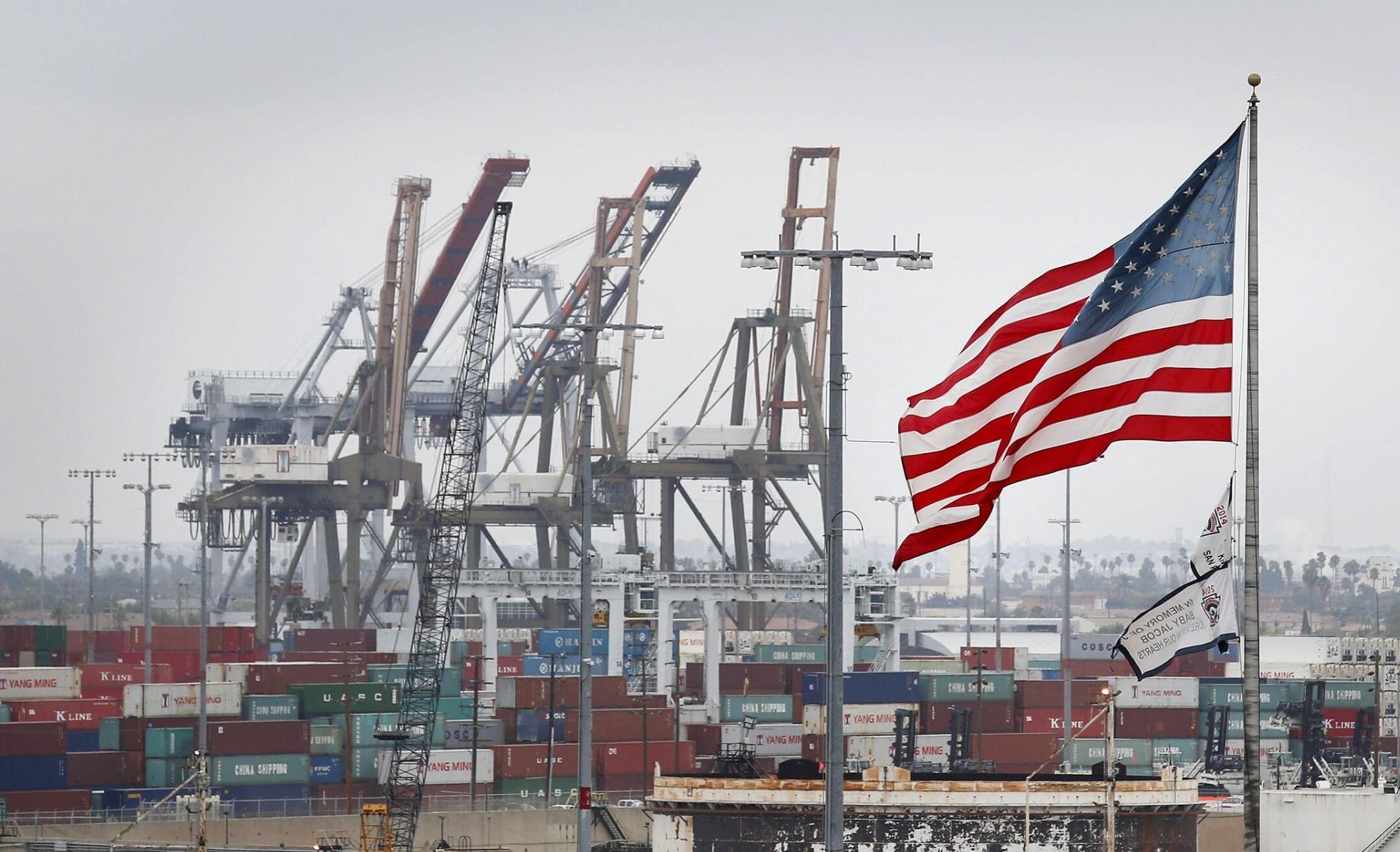
The leading explanation for the anticipated blowout is tariff front-running — the same dynamic that distorted trade data in early 2025 and again in Q1 2026. Corporate procurement teams do not wait for tariffs to land; they pull forward orders aggressively the moment policy signals shift. With the current administration signaling further tariff escalations tied to the Iran conflict and renewed pressure on semiconductor and pharmaceutical supply chains, import demand in July almost certainly surged well before any actual price increase hit the docks. The resulting data will look like a demand boom. It isn't. It is a one-time inventory build that creates a hangover in Q3 and Q4 as orders get worked down and import volumes collapse.
The Fed's Problem
Here is why this number matters beyond the trade desk: a deficit blowout of this magnitude, arriving alongside sticky inflation and a Fed already debating whether to hike at its September 15–16 meeting, creates a genuinely uncomfortable policy backdrop. The FOMC minutes from June were unambiguous — inflation remained elevated relative to the Committee's 2% target even as the vote to hold at 3.5%–3.75% was unanimous 12-0. A unanimous hold is not a comfortable hold. It is a committee buying time.
A -$90 billion trade print complicates that calculus in two contradictory directions simultaneously. On one hand, a surge in imports is disinflationary in the medium term — more supply hitting the domestic market eventually pushes prices lower. On the other hand, if the import surge reflects tariff pass-through already embedded in cost structures, it is inflationary at the consumer level right now, today, as businesses reprice finished goods to recover input costs. Fed Chair Warsh has made unit labor costs his primary inflation indicator, but goods price inflation driven by tariff pass-through is not something the Fed can dismiss as transitory in 2026 without losing what remains of its credibility on the inflation mandate. The Fed walked that road once. It will not walk it again.
Cleveland Fed President Beth Hammack speaks at 3:00 PM ET today — the first official Fed voice between now and the September FOMC. Her remarks will be parsed for any signal on whether this morning's trade data shifts the calculus toward a 25-basis-point hike. Current market pricing on the September decision sits at a consensus target of 3.63%, implying the market is almost exactly split between hold and a hike to a 4.00% upper bound. A single line from Hammack about import-driven inflation expectations could break that 50-50 in a matter of minutes. Watch the 2-year Treasury yield as the immediate reaction function — it will move before equities do.
What Traders Watch Next
The trade deficit print is the first piece of a three-part macro sequence that resolves by the end of next week. Friday, September 4 at 8:30 AM ET brings August nonfarm payrolls — the last major labor market print before the FOMC convenes. July payrolls were already weak, a datapoint the hold camp on the committee leaned on heavily. If August comes in soft again, say sub-100,000, the hike probability collapses regardless of what the trade data shows. If August surprises to the upside, above 175,000, the combination of a -$90 billion trade deficit and a still-tight labor market is exactly the stagflation cocktail that puts a September hike back on the table at better than 70% odds.
After payrolls, the sequence continues: PPI prints Thursday, September 10, followed by CPI on Friday, September 11. Those two inflation readings are the final inputs the committee will have in hand before the September 15–16 decision. A hot CPI after a blowout trade deficit after a strong payrolls number is a scenario in which Warsh would have no political or data cover to hold again. The upper bound moves to 4.00%.
For positioning purposes, the immediate trade is straightforward. CNBC's coverage of the July Fed meeting captured the committee's reluctance to hike into labor market softness — that reluctance is the only thing keeping rate-sensitive equities from repricing sharply lower right now. A deficit print beyond -$90 billion, particularly if driven by goods imports rather than capital equipment (which would at least signal investment intent), erodes that reluctance. Watch the DXY above 104.50 as a tell that the market is beginning to price a September hike. If the dollar breaks through that level on the trade print and holds through Hammack's 3:00 PM remarks, the front end is not done moving higher. The 2-year yield at 4.65% is the line in the sand — a break above it before Friday's open changes the NFP positioning calculus entirely.
The Weekly Investor
Daily market analysis for active traders. Free.