TSMC's $64B Capex Signal Reignites Chip Rally
TSMC raises 2026 capex to $60B–$64B, sparking a 5% SOX surge. NVDA and AVGO lead gains as the AI buildout demand signal challenges the overspend narrative.
Key Points
- TSMC raised its 2026 capex guidance to $60–$64 billion and pledged an additional $100 billion in U.S. investment, directly challenging the hyperscaler overspend narrative that had erased $3.3 trillion in semiconductor market value since June 22.
- The demand signal drove a nearly 5% single-session surge in the Philadelphia Semiconductor Index on Tuesday, with Nvidia gaining 2.39% and Broadcom advancing 2.77% as the primary identified beneficiaries of TSMC's order visibility.
- Intel's Q2 print after today's close — with consensus at $0.22 EPS on $14.4 billion in revenue — and AMD's Advancing AI event are the next binary catalysts that will determine whether Tuesday's rebound has structural legs or is a dead-cat bounce in a sector still down sharply from its June highs.
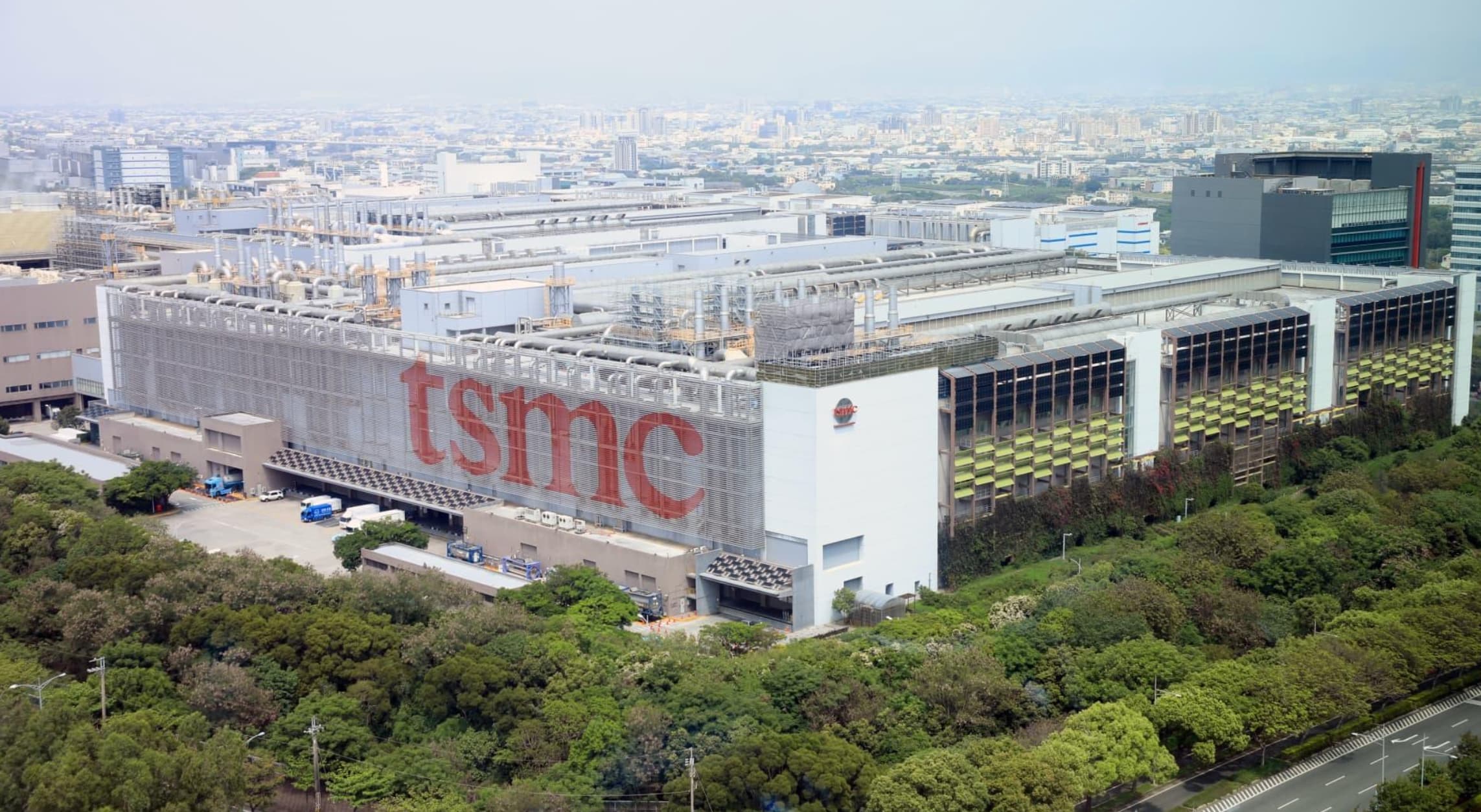
TSMC just handed the semiconductor bull case its most credible data point in weeks. The world's dominant chip foundry raised its 2026 capital expenditure guidance to $60–$64 billion and separately committed an additional $100 billion in U.S. investment — a demand signal that, taken together, gives every indication the AI infrastructure buildout is not decelerating. The Philadelphia Semiconductor Index responded with a nearly 5% surge on Tuesday, the sharpest single-session move in the sector since the $3.3 trillion wipeout that began June 22.
What TSMC Is Actually Saying
Foundry capex is the most reliable leading indicator in semiconductors because TSMC does not build capacity speculatively. Every dollar of the $60–$64 billion guidance range represents committed customer demand from hyperscalers, custom silicon designers, and AI accelerator manufacturers willing to put deposits against future wafer starts. When TSMC raises that number, it is not expressing optimism about the AI cycle — it is reporting purchase orders. That distinction matters enormously for traders trying to assess whether the sector's June-July sell-off reflected genuine demand destruction or temporary sentiment deterioration.
Nvidia and Broadcom were identified as the primary beneficiaries of the updated guidance, and the price action confirmed it — NVDA added 2.39% and AVGO gained 2.77% on Tuesday's session. Both moves make fundamental sense. Nvidia's data center business posted $62.3 billion in revenue in its fiscal Q4 2026, and the company's forward P/E of approximately 43x — elevated by historical standards — has been under pressure precisely because investors feared that figure represented peak demand rather than a base from which to grow. TSMC's order book directly contradicts the peak narrative. For Broadcom, whose custom AI silicon business serving Google's TPU program and Meta's MTIA chip is now a multi-billion-dollar revenue line, TSMC's capacity expansion is a prerequisite for its own growth trajectory through 2027 and beyond.
The $100 billion additional U.S. investment commitment carries both commercial and geopolitical significance. On the commercial side, U.S.-based capacity reduces Alphabet's, Apple's, and Nvidia's exposure to Taiwan Strait risk — a discount that had been embedded in valuations but never fully quantified. On the geopolitical side, the commitment reinforces the CHIPS Act framework and positions TSMC as the manufacturing backbone of American AI competitiveness, making it politically durable across administration changes in a way that pure offshore supply chains are not. For semiconductor investors with a multi-year horizon, domestic TSMC capacity is not just a tariff hedge — it is a structural risk reduction that deserves a premium in DCF models.
The Damage That Still Needs Healing
The sector rebound is real, but the hole is deep. Global semiconductor stocks shed $3.3 trillion in market value between June 22 and the trough earlier this week — a drawdown that hit diversified chipmakers harder than pure-play AI names. Applied Materials declined more than 5% in that stretch, Lam Research fell more than 2%, and Intel entered today's session down 33% for the month, making it the worst-performing large-cap chip stock by a margin that is not close. The AMAT and LRCX declines reflect a specific concern: if the AI buildout were to pause, equipment spending — which leads wafer production by 12 to 18 months — would be the first to roll over. TSMC's guidance raise directly addresses that concern for the AI-specific equipment cycle, though the structural divergence between AI chips and the slower-growth automotive, PC, and smartphone segments remains a genuine challenge for diversified names.
The Street's market coverage from July 22 documented the breadth of Tuesday's semiconductor recovery, with Intel, Micron, Marvell, and AMD all participating alongside the headline NVDA and AVGO moves. Breadth matters in a sector recovery — a rally that only lifts the AI-pure-plays while leaving equipment names and diversified chipmakers behind is a rotation story, not a sector re-rating. Tuesday's session showed enough breadth to suggest genuine sentiment improvement rather than narrow momentum chasing.
The Deloitte 2026 Semiconductor Industry Outlook projects global semiconductor annual sales reaching $975 billion this year — a historic peak driven almost entirely by AI accelerator demand. That figure provides the macro scaffolding for TSMC's capex decision. If the industry is approaching a $1 trillion annual revenue run rate for the first time, a foundry spending $60–$64 billion to support it is not overcapitalizing — it is barely keeping pace. The ratio of capex to industry revenue implied by those numbers is actually lower than historical averages during prior semiconductor supercycles, which argues that the AI buildout is still in middle innings rather than approaching its peak.
Intel and AMD Are Today's Binary Events
Intel's Q2 report after today's close is the single most consequential near-term print for the sector's recovery narrative. Consensus sits at $0.22 EPS — a dramatic swing from the -$0.10 loss reported a year ago — on revenue of $14.4 billion, implying 11.6% year-over-year growth. Susquehanna analyst Christopher Rolland raised his price target to $115 from $80 ahead of the print, citing server demand as the primary upside driver, a bullish call that carries significant risk given INTC's 33% month-to-date decline. CEO Lip-Bu Tan, who joined in March 2025 after his turnaround of Cadence Design Systems, is executing the IDM 2.0 initiative with the April 2026 reacquisition of Apollo Fab 34 for $14.2 billion — a $7.7 billion cash plus $6.5 billion debt transaction that signals long-term commitment to in-house manufacturing at a moment when the market wants short-term FCF improvement.
AMD's Advancing AI event, running concurrently today, adds another layer of complexity to the session. Zacks highlighted the event with Jefferies anticipating CPU announcements targeting broader markets and Bank of America flagging server demand as a near-term tailwind. AMD's planned Helios AI rack system — designed to compete directly with Nvidia's Grace Blackwell and Vera Rubin products — is the competitive detail traders should watch most carefully. If AMD can demonstrate credible large-scale rack-level competition with Nvidia at a meaningful price-per-flop discount, it introduces genuine market share risk into NVDA's data center revenue projections for 2027. That is a longer-dated risk, but the Advancing AI event is where AMD will begin building the narrative.
The specific level to watch for confirmation that Tuesday's SOX rebound is sustainable rather than a short-covering rally is a close above the June 22 level — the day the $3.3 trillion drawdown began. Intel's print tonight provides the clearest binary trigger: a beat on both EPS and revenue guidance would confirm that the AI server demand signal from TSMC is flowing through to actual chip sales, validating the sector recovery and setting up a potential run toward prior highs in NVDA, AVGO, and AMD heading into August.
The Weekly Investor
Daily market analysis for active traders. Free.