TSMC's $100B Arizona Bet Can't Stop the Selloff
TSMC posted record Q2 net income up 77.4% and dropped a $265B Arizona bombshell — then fell 4%. Here's what traders need to know.
Key Points
- TSMC reported Q2 net income of NT$706.56 billion, a record fifth consecutive quarter, on $40.2B revenue — both above consensus — while CEO C.C. Wei unveiled an additional $100B Arizona commitment bringing total U.S. pledged spend to $265B.
- The stock dropped ~4% in pre-market Thursday anyway, dragging NVDA, AMD, and MU lower, as investors rotated out of positions priced for perfection into a higher-capex, margin-pressure narrative.
- The real trade now is TSMC's Q3 guidance range of $44.6B–$45.8B — that band becomes the floor for sector expectations heading into Microsoft, Meta, and Alphabet earnings the final week of July.
TSMC reported Q2 net income of NT$706.56 billion — a 77.4% year-over-year surge and a record for the fifth straight quarter — on revenue of $40.2 billion, up 36% YoY, clearing both consensus bars with room to spare. Then CEO C.C. Wei announced an additional $100 billion investment in Arizona, lifting TSMC's total committed U.S. spend to $265 billion. The stock fell anyway, dropping roughly 4% in pre-market Thursday and dragging the entire semiconductor complex with it.
The Numbers Behind the Record
The beat was unambiguous. Analysts had modeled NT$1.264 trillion in revenue and NT$632.64 billion in net income. TSMC delivered NT$1.27 trillion and NT$706.56 billion, respectively — a 77.4% profit surge that puts the company in rarefied territory for a business operating at this scale. Gross margin held firm, consistent with prior quarters, and CFO Wendell Huang pointed directly to the ramp-up of 2-nanometer production as the primary demand engine for the second half.
The process node breakdown tells you everything about where the money is. Chips built on 7-nanometer or smaller nodes represented 77% of total wafer revenue in Q2. The 5nm node led at 33% share, with 3nm close behind at 30% — meaning nearly two-thirds of wafer revenue is coming from the two most advanced nodes TSMC operates at scale. That concentration is both a strength and a vulnerability: it reflects genuine AI-driven demand, but it also means any slowdown in leading-edge orders hits revenue disproportionately hard.
High Performance Computing — the segment that captures AI accelerator demand from Nvidia, AMD, and the hyperscalers — now constitutes 66% of TSMC's total revenue. That figure has climbed steadily for six consecutive quarters. The implication for investors is structural: TSMC is no longer a diversified foundry in any meaningful sense. It is an AI infrastructure company that also makes chips for smartphones and automotive applications on the side. The smartphone recovery thesis that many analysts used to justify TSMC's 2024 valuation has been thoroughly displaced by the HPC narrative, which means the stock now trades almost entirely on AI capex sentiment — and AI capex sentiment is volatile.
The Arizona Bet and What It Actually Costs
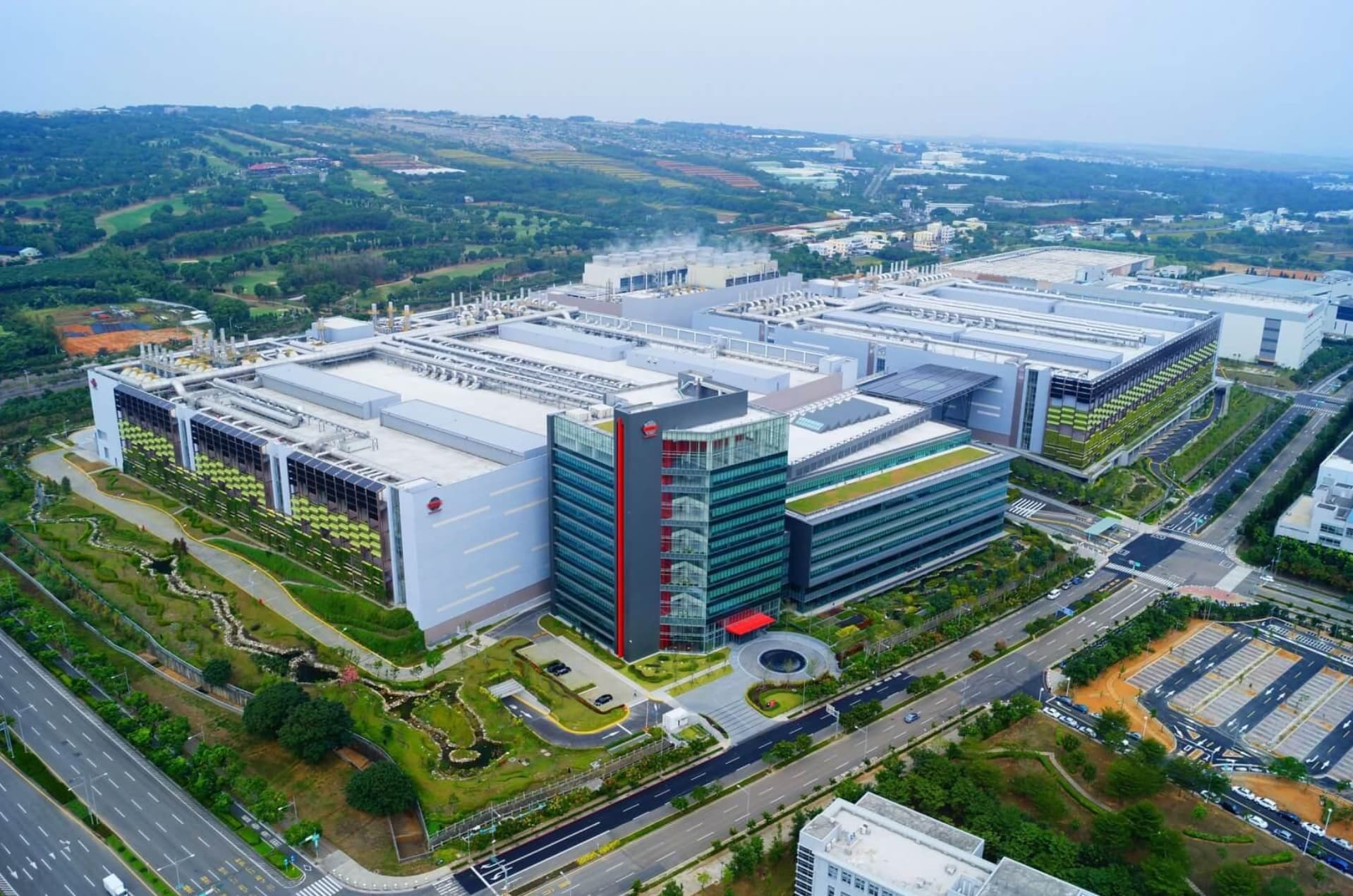
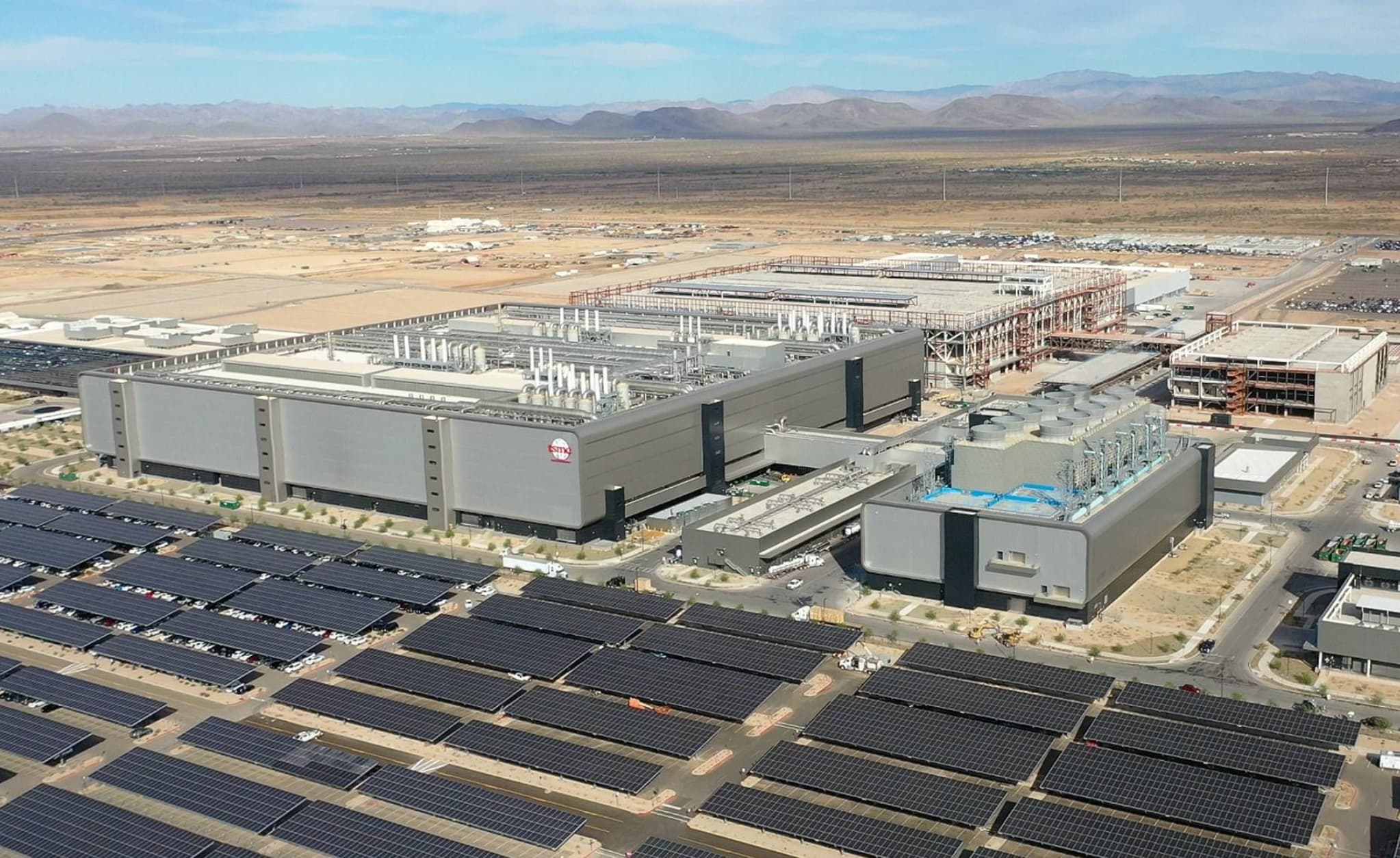
The $100 billion additional Arizona commitment is the headline that will dominate coverage through the weekend, but the fine print matters more for traders. TSMC has now pledged a cumulative $265 billion to U.S. manufacturing — a number that dwarfs any prior semiconductor onshoring commitment from a single company. Wei framed the announcement as a response to sustained customer demand for geographically diversified supply chains, specifically naming U.S.-based hyperscalers and defense customers as the pull factors.
The capex revision is where this gets complicated. TSMC lifted its full-year 2026 capex guidance to $60B–$64B, up meaningfully from the prior $52B–$56B range. That $8 billion increase at the midpoint is not trivial for a company generating roughly $160 billion in annual revenue — it compresses free cash flow in the near term and raises legitimate questions about return on invested capital for the Arizona facilities, which historically operate at higher cost structures than TSMC's Taiwan fabs. Early Arizona fab output has carried a reported cost premium of 10%–15% versus comparable Taiwan production, a gap TSMC has indicated it expects to narrow but has not yet closed.
Full-year 2026 capex of $60B–$64B against a Q3 revenue midpoint of $45.2B implies the company is spending at roughly 35%–37% of annualized revenue on capital expenditure — a ratio that would concern analysts at most industrial companies but is increasingly normalized in the AI infrastructure buildout narrative. The question is whether that normalization holds if hyperscaler earnings next week show any sign of capex discipline.
What Traders Watch Next
ASML's simultaneous print adds context. The Dutch lithography monopolist reported Q2 net sales of €9.3 billion and net income of €2.9 billion, with gross margin of 54.0% and EPS of €7.59, while dramatically upgrading its full-year 2026 revenue outlook to €43B–€45B from prior guidance of €36B–€40B. ASML's SEC 6-K filing underpins that guidance revision. ASML's U.S.-listed ADR had already returned 66.6% year-to-date through July 14 — and it still fell after earnings. JPMorgan characterized the move as evidence of "how high the bar is for semis earnings," citing an aggressive pullback in memory and hardware with no single identifiable negative catalyst.
That framing is critical for positioning. When both TSMC and ASML beat handily and both stocks decline, the message from the buy side is not that the fundamentals are bad — it is that the positioning was already maxed out. Funds that loaded up on semis in Q1 and Q2 on the AI infrastructure thesis are now using strong earnings prints as exit liquidity. That dynamic doesn't reverse on its own; it requires either a new catalyst to pull in fresh buyers or a price correction deep enough to reset valuations to levels where incremental buyers see margin of safety.
AMD dropped 2.64% to $543.14 on TSMC's earnings day despite having no direct negative news of its own. AMD is up 160.5% year-to-date — the highest-beta major name in the semiconductor complex — and it carries the most exposure to any shift in hyperscaler sentiment because its MI450 series commitments from OpenAI and Meta are the primary pillars of its forward estimates. Morgan Stanley maintained its Overweight on Nvidia with a $288 price target, citing four independent demand vectors — AI labs, hyperscalers, sovereign AI, and neocloud — but even that endorsement couldn't arrest Thursday's pre-market weakness.
The specific level to watch on TSM is $44.6 billion — the low end of Q3 2026 revenue guidance. If hyperscaler earnings next week (Microsoft and Meta both report July 29) produce any language suggesting moderation in AI infrastructure spending timelines, the Street will immediately pressure-test whether that $44.6B floor holds. A guidance cut or even a cautious tone from one of TSMC's top three customers — Apple, Nvidia, and AMD collectively account for roughly 45%–50% of revenue — would reprice the stock materially. Conversely, if Microsoft and Meta reaffirm or raise capex, TSMC's Q3 midpoint of $45.2B starts to look conservative, and the pre-earnings selloff becomes a buyable dip. The answer arrives in 12 days.
The Weekly Investor
Daily market analysis for active traders. Free.