TSMC's 10% Price Hike Signals AI Chip Demand Has No Ceiling
TSMC is raising advanced node prices up to 10% despite no hike planned a month ago. Q2 results drop July 16. Here's what traders must know.
Key Points
- TSMC is raising prices on advanced chipmaking nodes by 5% to 10% — a reversal from its stance just one month ago — as AI accelerator demand overwhelms available capacity.
- The pricing move validates the hyperscaler capex narrative: Goldman Sachs projects $725 billion in combined AI infrastructure spending from four cloud providers in 2026, up 77% YoY, and TSMC sits at the center of every wafer that feeds that build.
- TSMC reports Q2 2026 results on July 16 — traders should watch gross margin guidance and advanced node utilization rates for the clearest read yet on whether the AI chip supercycle is accelerating or plateauing.
TSMC reversed course on pricing in a matter of weeks — and that reversal tells traders everything about where AI chip demand stands right now. The world's dominant contract chipmaker is hiking prices on its most advanced nodes by 5% to 10%, rolling out increases it explicitly was not planning to implement just one month ago. When a company with TSMC's pricing discipline abandons restraint, the demand signal is unambiguous. Q2 results land Wednesday, July 16, and this is the most important semiconductor earnings report of the summer.
The Reversal That Changes Everything
In early June, TSMC's public posture was measured restraint on pricing — a manufacturer confident in its position but unwilling to antagonize its largest customers during a period of ongoing geopolitical sensitivity. By late June, that posture had collapsed under the weight of order volume. The 5% to 10% hike on advanced nodes — which includes its 3nm and 2nm process families — is not a standard inflationary adjustment. It is a capacity signal. When TSMC raises prices into already-elevated demand, it is telling the market that the queue of customers trying to access its fabs has grown faster than its ability to add capacity, even with aggressive capital expenditure underway.
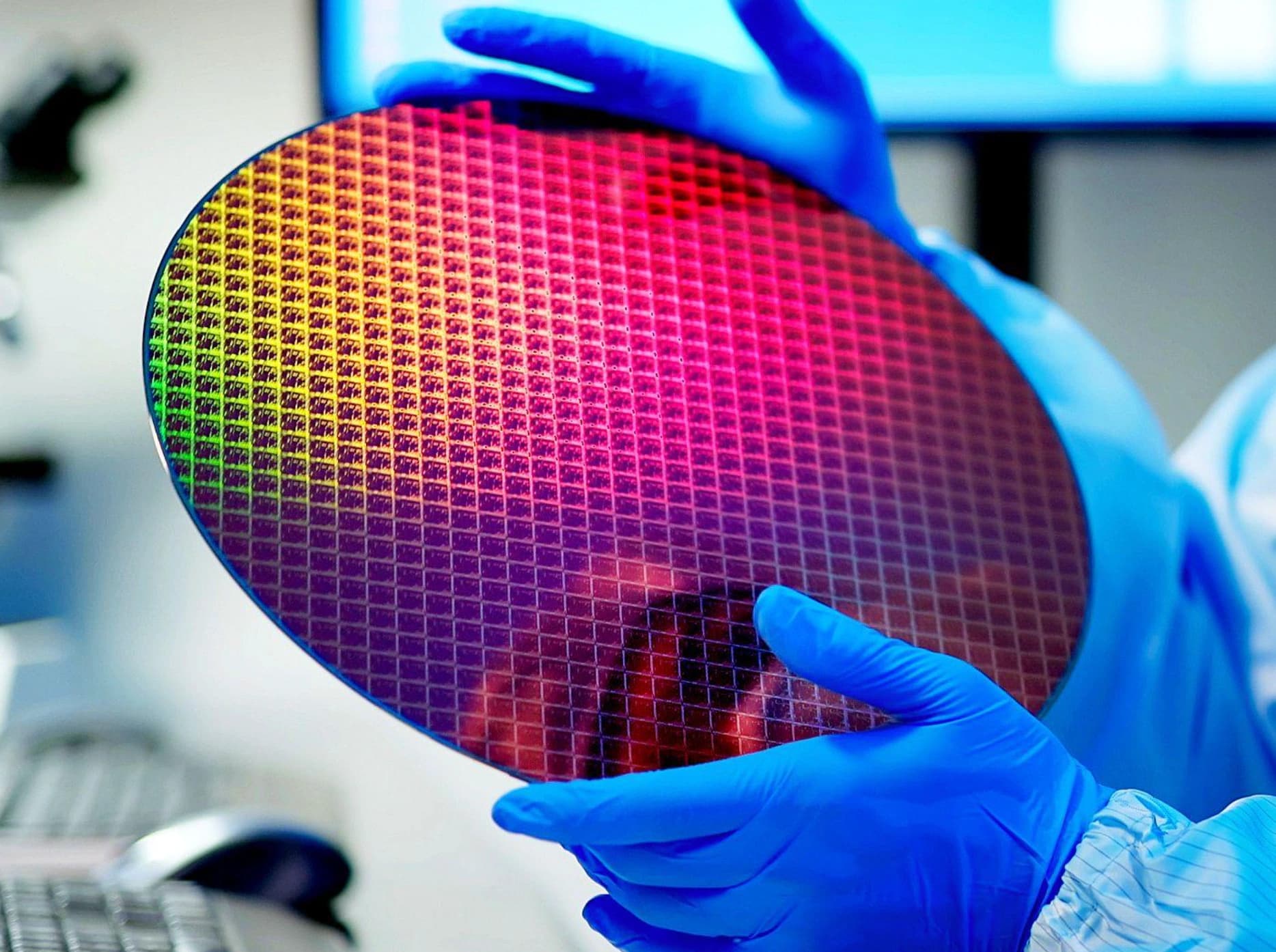
Every major AI accelerator on the market runs on TSMC silicon. NVIDIA's Blackwell architecture is fabbed at TSMC. AMD's MI-series GPUs come from TSMC. Apple's M-series chips, Qualcomm's Snapdragon compute platforms, and the custom ASICs being designed by Google (TPU), Amazon (Trainium, Inferentia), and Microsoft (Maia 200) all flow through TSMC's fabs. A 5% to 10% price increase does not derail those programs — the cost of the wafer is a rounding error relative to the revenue these chips generate — but it does change margin math for fabless chip companies and raises input cost assumptions across the entire semiconductor supply chain.
TSM's Own Numbers and the Gap to Close
TSM shares are up 35% year-to-date — a strong return by any conventional measure, but notably behind the PHLX Semiconductor Sector index's 67% gain over the same period. That 32-point gap is the opportunity thesis in a single number. The underperformance is partly explained by TSMC's geographic concentration risk in Taiwan, partly by the complexity of its relationship with the U.S. government on export controls and fab subsidization, and partly by the market's uncertainty about how quickly its overseas fabs in Arizona and Japan will reach mature utilization rates.
What is not in dispute is the trajectory. TSMC has projected AI accelerator revenue growing at a compound annual rate in the high 50% range through 2029 — a forecast the company made before the current price hikes were announced. It recently revised its global semiconductor industry revenue outlook to $1.5 trillion by 2030, up 50% from its previous projection. To put velocity behind that number: global semiconductor sales rose 93.9% from April 2025 to April 2026, moving from $56.9 billion to $110.5 billion in monthly revenue terms. TSMC, as the foundry backbone of that surge, captures an outsized share of that growth through volume and, now, pricing power.
The July 16 earnings call will be the first time management formally addresses the price hike in a public forum. Gross margin is the focal metric — TSMC's gross margins have historically tracked in the 53% to 58% range for advanced nodes, and the combination of volume leverage and now price increases should push that figure higher in the second half. Any upward revision to the full-year gross margin guide would be a direct catalyst for the stock to begin closing that gap to the broader SOX index.
What July 16 Means for the Broader Trade
The TSMC print is not just a company-specific event — it is the definitive independent read on whether the hyperscaler AI infrastructure build is tracking at the pace the market has priced. Goldman Sachs projects that Microsoft, Amazon, Alphabet, and Meta will collectively spend $725 billion on AI infrastructure in 2026, a 77% year-over-year increase. Microsoft alone carries a $190 billion capex projection for the year; Amazon has committed approximately $200 billion to AWS expansion and proprietary silicon. Those are the purchase orders that determine TSMC's order book, and on July 16, traders will find out whether the backlog is building, stable, or showing early signs of digestion.
The regulatory environment adds a secondary layer. The EU AI Act's phased rollout is now imposing documentation and risk-classification requirements on general-purpose AI systems — obligations that ultimately flow upstream to the hardware providers training and deploying those systems. Higher compliance costs for AI deployment do not directly crimp TSMC's foundry revenue in the near term, but they affect the pace at which European enterprises expand AI workloads, which is a longer-term demand variable.
Bank of America's July 1 bubble warning — which sent TSMC shares down 6% in a single session alongside AMD's 5% drop and Intel's 7% decline — remains an active overhang. BofA stopped short of calling a full bubble but flagged valuation discipline concerns across the AI trade. The price hike announcement, and the July 16 earnings report, will serve as the first major empirical test of whether BofA's caution was prescient or premature. If TSMC's Q2 numbers show gross margin expansion above 57% and management raises full-year guidance, the BofA narrative gets pushed back hard. If utilization rates on advanced nodes show any softening — even from an extraordinarily high base — the bubble-risk trade gets new oxygen heading into late July, precisely when Microsoft, Meta, and Alphabet are set to report their own AI spending trajectories. The specific level to watch for TSM: a post-earnings close above $240 would represent a technical breakout from the consolidation range that has capped the stock since April, and would be the clearest signal yet that the SOX gap is beginning to close.
The Weekly Investor
Daily market analysis for active traders. Free.