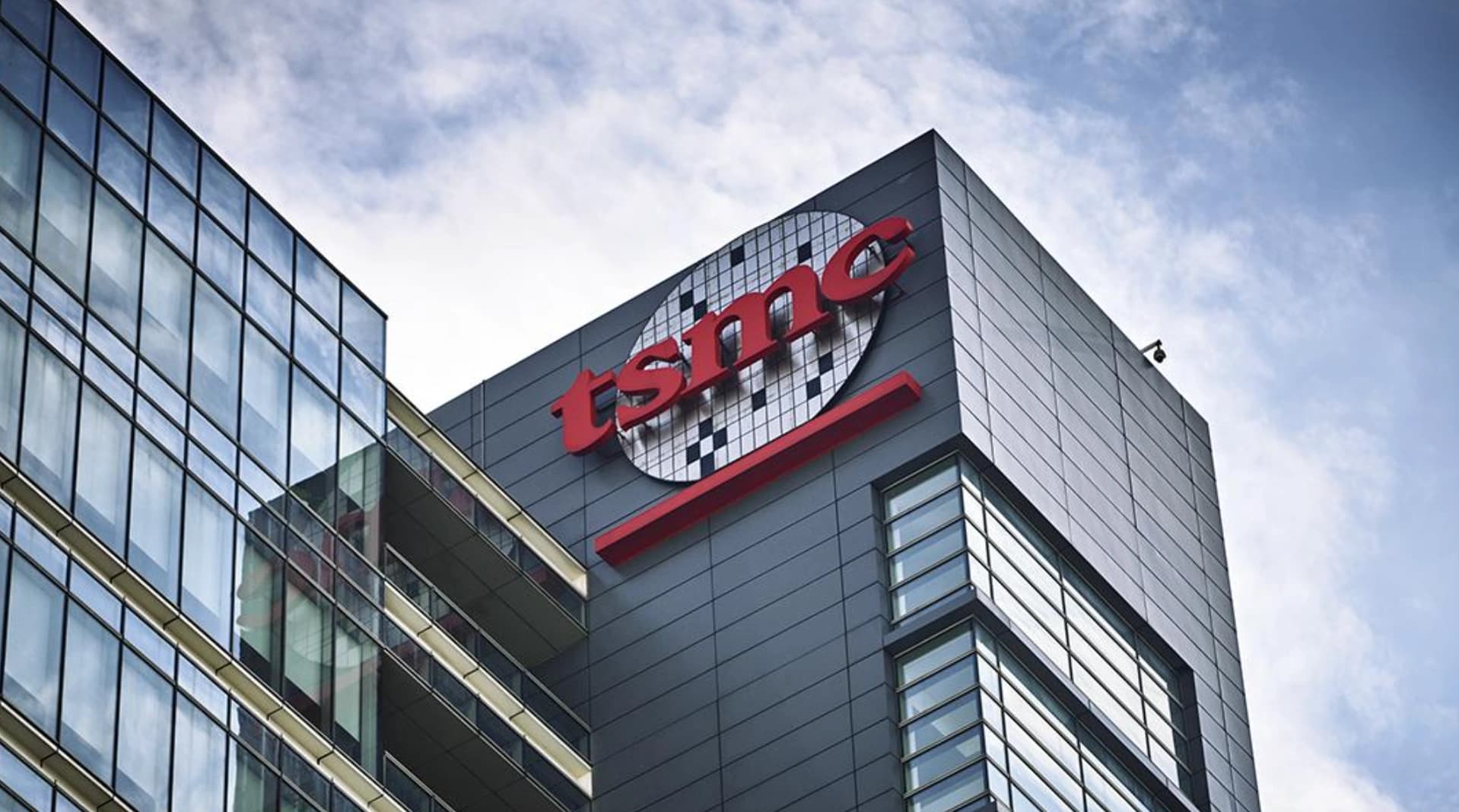

TSMC Sells Off 3.2% on 77% Profit Beat — AI Premium at Limit
TSMC drops 3.2% premarket despite a 77% profit surge and $100B U.S. investment pledge, signaling the AI chip trade may be hitting a ceiling.
Key Points
- TSMC reported Q2 revenue of $40.2 billion — up 33.7% year-on-year — and a 77% profit jump, yet U.S.-listed shares fell 3.2% in premarket trading Thursday.
- The "sell-the-news" reaction reflects a market that had already priced in AI-driven perfection, and the pullback is spreading across the entire semiconductor supply chain.
- Watch the VanEck Semiconductor ETF (SMH) at the $220 level — a sustained break below there would confirm the rotation out of chips is more than a single-session flush.
TSMC reported a 77% surge in second-quarter profit Wednesday, beat its own revenue guidance, and pledged an additional $100 billion in U.S. investment — and the market's response was to sell the stock 3.2% in premarket trading Thursday. That reaction, on numbers that would make almost any CFO weep with envy, is the clearest signal yet that the AI chip premium has reached its elasticity limit.
The Numbers That Weren't Enough
The Q2 report was, by any objective measure, exceptional. Revenue came in at TWD 1.27 trillion — approximately $40.2 billion in U.S. dollar terms — representing a 33.7% year-on-year increase and landing squarely at the top of TSMC's own prior guidance range. Profit surged 77% from the year-ago period. The company also announced it would invest an additional $100 billion in U.S. semiconductor manufacturing capacity, a headline that would have driven a 5% rally twelve months ago. On Thursday morning, it drove a 3.2% decline.
The disconnect between fundamental performance and price action is not a glitch — it is information. When a company delivers results in the 95th percentile of outcomes and the stock falls, the market is telling you that those results were already embedded in the share price. TSMC had rallied sharply through the first half of 2026 on the AI infrastructure buildout thesis, with data center customers locking in advanced node capacity for next-generation GPU and custom silicon production. Every dollar of that rally was, in retrospect, borrowing from future earnings reports. Thursday morning is the repayment.
The sell-off is not TSMC-specific — it is a supply chain event. The VanEck Semiconductor ETF (SMH) was down 2.2% in early trade, dragging the broader Nasdaq 100 to a –0.54% premarket read even as the Dow was clinging to a +0.23% gain. Arm Holdings, whose architecture underpins a growing share of AI inference chips, dropped 4% in sympathy. In Seoul overnight, SK Hynix — the dominant supplier of high-bandwidth memory for AI accelerators — plunged 11%, a move that rippled through European markets before U.S. traders had finished their first cup of coffee. STMicroelectronics shed 3%, Dutch chip equipment firm ASMI dropped 2.92%, and Germany's Infineon fell 2.8%. When the world's most profitable chip foundry posts a near-record quarter and the entire sector bleeds, the message is sector-wide, not company-specific.
Why the AI Trade Is Hitting the Ceiling
The arithmetic of the problem is straightforward. TSMC's stock, like most of the semiconductor complex, trades on forward multiples that assume continued exponential growth in AI infrastructure spending. A 77% profit increase sounds enormous — and it is — but the question the market is asking on Thursday morning is: what does the next quarter look like, and the one after that? At some point, hyperscalers — Microsoft, Amazon, Google, Meta — will need to demonstrate returns on the hundreds of billions they have committed to AI data center buildout. Until that proof point arrives, investors will start to question whether leading chip names are pricing in a growth trajectory that the underlying demand curve can sustain.
The macro backdrop adds another layer of complexity. June CPI data released this week showed a 0.4% month-over-month decline, with core CPI flatlined at zero — the kind of disinflation that normally sends growth stocks higher. And yet the Nasdaq is under pressure. That tells you the headwind is not macro; it is valuation. The 10-year Treasury yield sits at 4.58% as of Tuesday's close, meaning investors holding TSMC at peak multiples are competing against a risk-free rate that has not gone away. The Fed funds rate is at 3.63%, and futures market bets on a July rate hike have fallen below 20% following the softer inflation print — but rate cuts alone cannot re-rate a sector that is already pricing in a perfect world.
IBM's collapse adds context. Shares of the legacy tech giant fell 25% in Wednesday's session — on pace for its worst single-day performance since October 1987 — after the company warned that Q2 profits would miss expectations due to soft demand in software and infrastructure. IBM and TSMC are not the same business, but they share an exposure to enterprise technology spending cycles. If IBM's corporate clients are pulling back on software and infrastructure refresh, that is a signal worth taking seriously as AI capital expenditure commitments come up for renewal. The two data points together — TSMC's sell-the-news and IBM's profit warning — sketch the outlines of a technology sector that is bifurcating sharply between AI winners with stretched valuations and legacy players facing genuine demand headwinds.
What Traders Watch Next
The immediate question for Thursday's session is whether the semiconductor weakness remains contained to the chip complex or bleeds further into the broader Nasdaq. The Nasdaq 100's –0.54% premarket read is being driven almost entirely by semis; strip out the chip names and the index is roughly flat. That containment is fragile. If SMH breaks and holds below $220 on the session close, the technical picture for the broader growth trade deteriorates meaningfully. If buyers step in and use the TSMC dip as an entry — arguing that a 77% profit beat justifies accumulation on weakness — the narrative shifts to rotation within tech rather than rotation out of it.
The divergence in index futures is the tell traders should be watching in real time. The Dow's +0.23% green is powered almost entirely by UnitedHealth's 4% premarket pop after an earnings beat — a healthcare and insurance story, not a technology story. The Russell 2000's –0.36% read suggests small-caps are not picking up the rotation slack. That leaves the market in an awkward middle ground: not a broad risk-off move, but not a healthy rotation either.
The VIX closed at 15.67 on Wednesday, sitting comfortably sub-17 and well below the 31.05 peak logged in late March when Iran tensions and an oil spike rattled positioning. The benign fear gauge gives bulls room to operate, but it also means there is no panic-buying catalyst on the horizon if semis continue to slide. Netflix reports after the close tonight, with options pricing in a 7.20% implied move on a stock that has already rallied 35.6% YTD — another high-stakes binary that will define whether the Nasdaq holds its footing or gives back more of Wednesday's gains. The key date to circle: any guidance from TSMC management on Q3 capacity utilization and advanced node pricing, expected in the coming days, will either validate the sell-the-news reaction or provide the fundamental floor traders need to re-enter the AI chip complex with conviction.
The Weekly Investor
Daily market analysis for active traders. Free.