Tesla Q2 Earnings: Margin Is the Only Number That Matters
Tesla reports Q2 2026 after the bell tonight. Record 480K deliveries but revenue estimates trail last year — automotive gross margin ex-credits is the trade.
Key Points
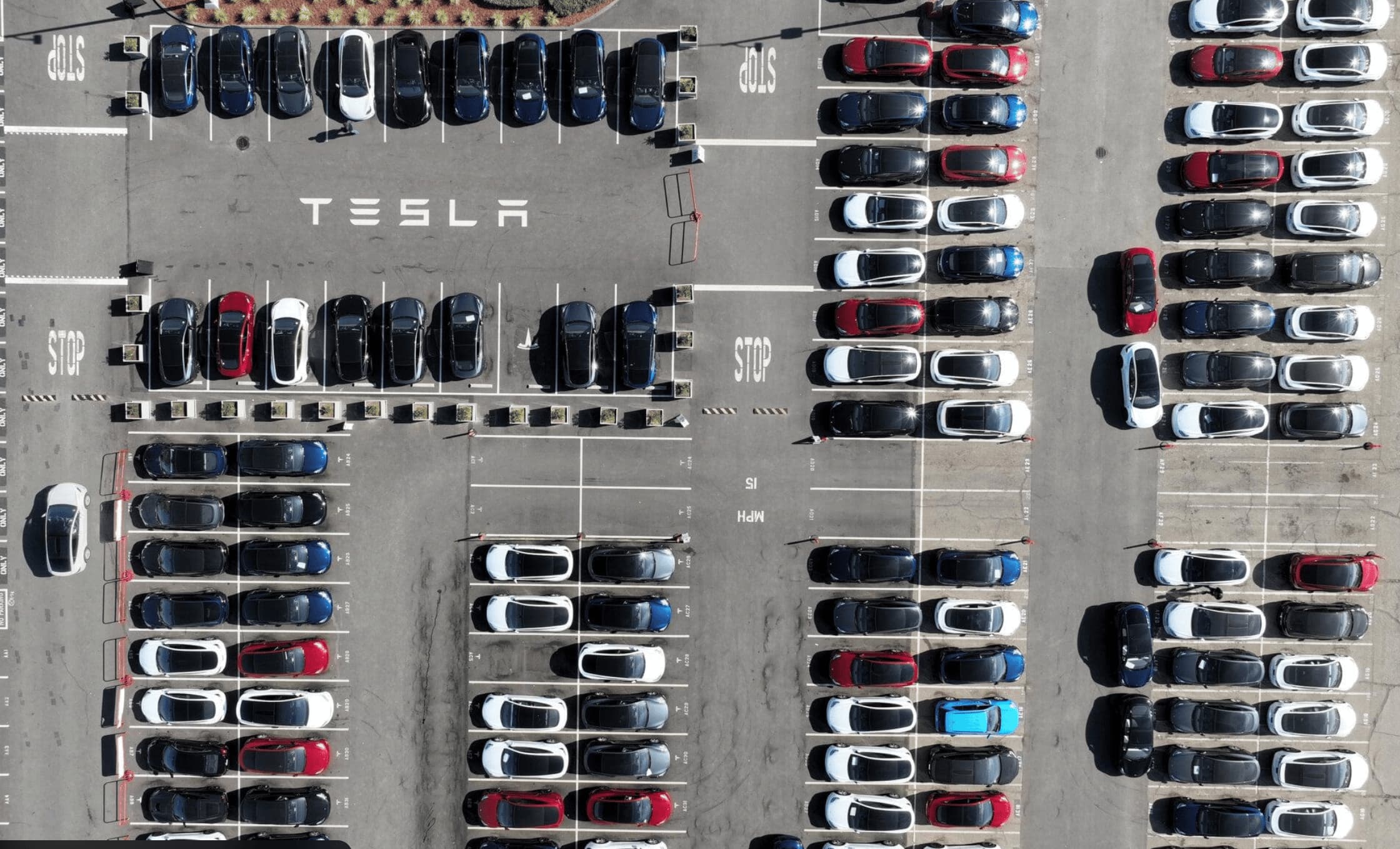
- Tesla delivered 480,126 vehicles in Q2 2026 — up 25% YoY and roughly 74,000 above consensus — yet revenue estimates still land below last year's comparable quarter.
- Analysts are split by nearly $7 billion on top-line projections, a spread that signals deep disagreement on how aggressively Tesla discounted to move record volume.
- Watch automotive gross margin ex-regulatory credits on tonight's print; a read below 17% will override the delivery beat and likely break $369 support.
Tesla just delivered 25% more cars than it did a year ago and Wall Street still isn't sure the company made more money doing it. That is the only context that matters heading into tonight's Q2 report, due after the 4 PM ET close. With the stock sitting at $380 — below both its 50- and 100-period EMAs — and the options market pricing a 7.6% swing in either direction, this is not a delivery celebration. It is a margin trial.
The Volume-Revenue Paradox
The 480,126 deliveries Tesla posted for Q2 represent its strongest second quarter on record and its first year-over-year delivery growth in two years. On a surface read, that is the blowout number that drives rallies. But the delivery figure was already public, reported weeks ago, and the stock is still trading $20 below key moving average resistance. The market is telling you something: it already knows how many cars shipped. What it doesn't know is what Tesla received per car.
Revenue estimates for Q2 range from $22.3 billion on the bear end to more than $29 billion on the bull end — a $6.7 billion spread that is extraordinary for a company of Tesla's size and analyst coverage depth. The Street consensus sits near $26.4 billion. For reference, Tesla booked higher revenue in Q2 2025 while delivering roughly 74,000 fewer vehicles. When unit volume climbs 25% and dollar revenue is still fighting to match the prior year, the average selling price has collapsed. That compression is the story of every Tesla earnings call since mid-2023, and tonight is no different.
Deutsche Bank's Edison Yu has the most bearish EPS estimate on the desk at $0.36, substantially below the $0.54 consensus — and his logic is simple: discounting deep enough to drive record deliveries destroys per-unit economics. The JPMorgan/Goldman sell-side composite model projects revenue of $27.58 billion at a 19.5% gross margin and a 5.4% operating margin, with non-GAAP EPS of $0.55 and net income of roughly $1.28 billion. The difference between those two outcomes — $0.36 versus $0.55 — is almost entirely a function of how far Tesla cut prices and how much regulatory credit revenue it leaned on to pad the gross line.
That last point matters because Tesla reports two gross margin figures: one that includes regulatory credits and one that excludes them. The credit-inclusive number will look cleaner. The credit-exclusive number — automotive gross margin ex-credits — is the one that tells you whether the core manufacturing and delivery business is healthy or being subsidized by carbon accounting. Traders should have that ex-credit line front of mind the moment the print crosses.
What the Call Is Actually Selling
Even if automotive margin disappoints, Tesla management has a well-worn playbook for redirecting the narrative. Expect the call to pivot quickly toward three topics: AI infrastructure spend, Cybercab production timeline, and Full Self-Driving take rate. These are not distractions — they are the valuation architecture for a stock trading near $400 while its core vehicle business shrinks in dollar terms. But they are also not Q2 results. They are forward guidance dressed as quarterly color.
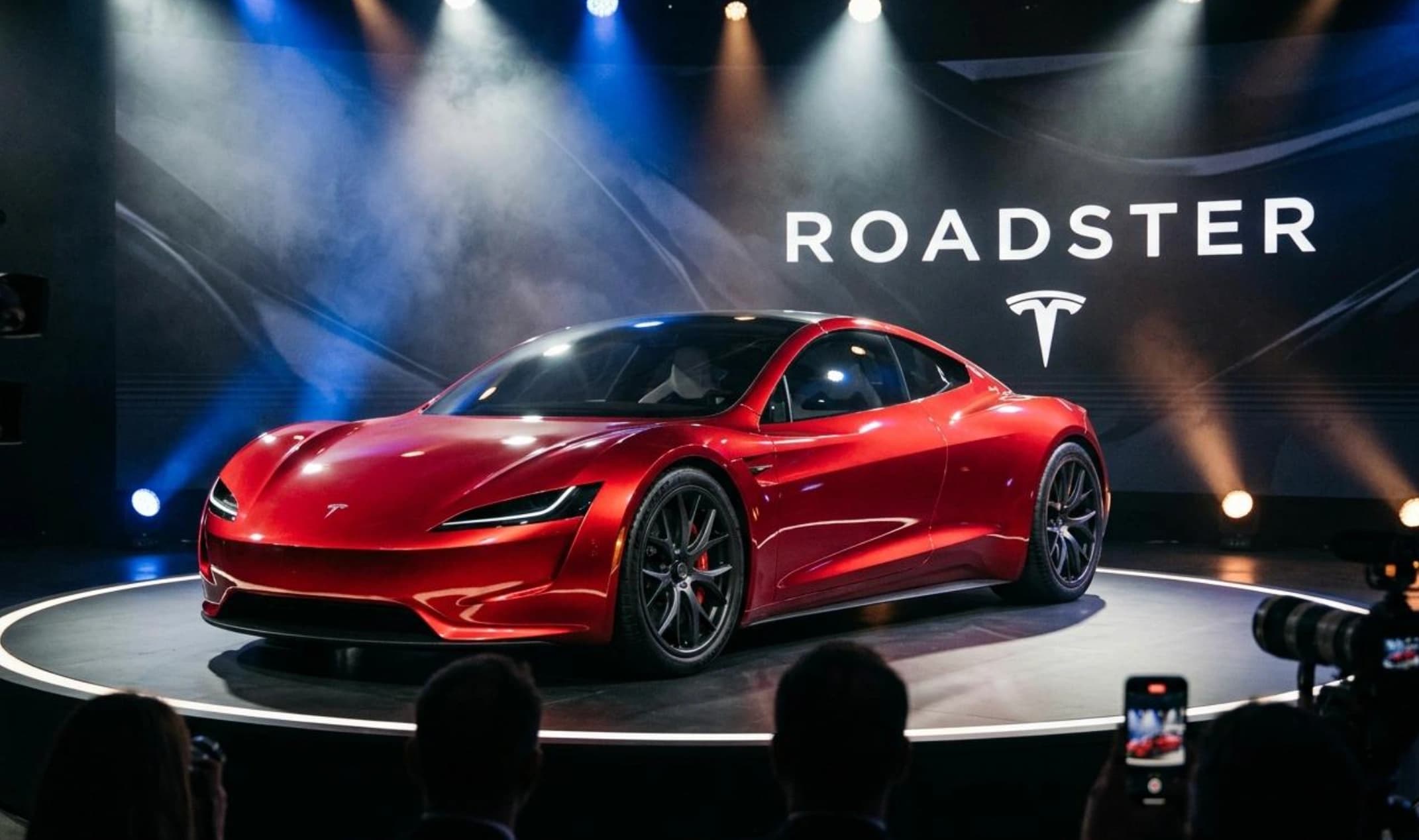
The Cybercab question is increasingly urgent. Tesla has publicly targeted volume production for 2026, and any slippage in that timeline — a pushed start date, a revised ramp target, a capacity constraint at Gigafactory Texas — will immediately pressure the bull case that currently justifies the premium multiple. FSD take rate matters for similar reasons: if customers are not paying for the autonomy stack, the software-margin thesis does not pencil out at the current share price.
There is also a new variable in tonight's read that did not exist in prior Tesla earnings cycles: SpaceX. The SpaceX IPO has created a direct competitor for Elon Musk investor dollars, and SpaceX's own earnings release hits August 6 — two weeks from tonight. That overhang is not priced into the options market's 7.6% implied move, but it is a real structural consideration for TSLA longs deciding whether to hold through the print. Musk attention and capital are now explicitly split between two public entities, and any commentary tonight that suggests his operational focus at Tesla has softened will land badly.
The macro backdrop is not friendly to the bull case either. The 10-year Treasury yield is sitting at 4.6%, making the risk-free alternative meaningfully competitive with the speculative premium baked into a stock at these multiples. Core CPI at 2.6% year-over-year keeps the Fed in no hurry to cut from its current effective rate of 3.63%. Higher-for-longer is not a new story, but it is a persistent gravitational pull on high-multiple growth names.
What Traders Watch Next
The technical setup entering tonight is unambiguous. TSLA at $380 is below both its 50-period and 100-period EMAs, which signals distribution, not accumulation. Resistance sits at $386.72 — a close above that level would challenge the downtrend and shift intraday momentum. On the downside, $369.34 is the line in the sand: a break below that level on high volume following a margin miss opens a significantly wider range of outcomes.
The options market's 7.6% implied move translates to roughly a $29 range in either direction from the $380 handle — meaning the market is pricing a potential run to $409 on the upside or a flush toward $351 on the downside. Given that the delivery number is already known and priced, the asymmetry tonight is skewed toward the downside if margins disappoint, because a beat on automotive gross ex-credits would be a genuine surprise while a miss is already partially anticipated by the bear camp.
The single number to isolate is automotive gross margin ex-regulatory credits. The JPMorgan/Goldman composite model pencils in 19.5%. Deutsche Bank is implicitly modeling something well below that. If Tesla prints at or above 19% on that line and management raises its full-year delivery target while offering any specificity on Cybercab ramp, the stock likely challenges $386.72 and potentially extends toward $395 in after-hours. If the ex-credit gross margin comes in below 17% — a level that implies the delivery surge was bought with margin destruction — expect the $369.34 support to be tested before midnight. Alphabet reports alongside Tesla tonight, so tape volatility in the 4–6 PM window will be elevated across the board. Size positions before the close; do not chase the after-hours print in either direction.
The Weekly Investor
Daily market analysis for active traders. Free.