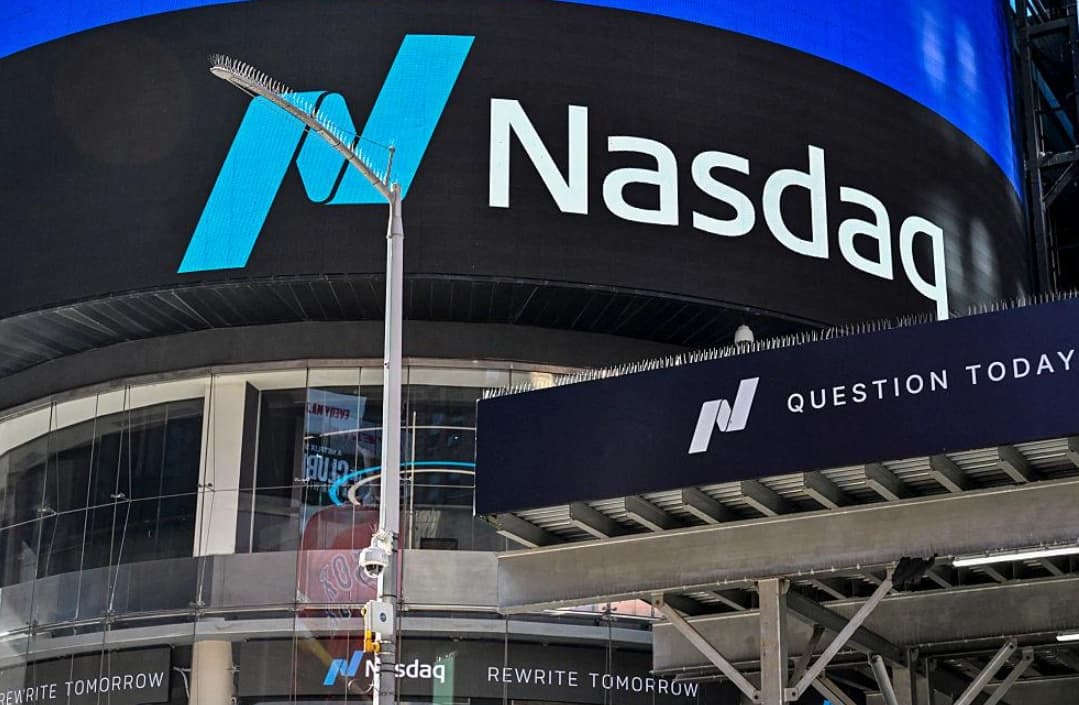
SPY Bleeds $3.8B as QQQ Pulls $3.7B in One Session
Wednesday's SPY-to-QQQ rotation is the sharpest institutional repositioning in weeks. Here's what the $3.8B exodus means for traders today.
Key Points
- QQQ absorbed $3.67 billion in net creations Wednesday while SPY simultaneously hemorrhaged $3.82 billion — the largest single-session divergence between the two funds in weeks.
- The rotation reflects concentrated institutional conviction in mega-cap tech and semiconductors following Nvidia's earnings afterglow, with SMH, SOXL, and SOXX combining for nearly $2.3 billion in inflows.
- Watch today's PCE print and any Fed commentary before the Labor Day weekend close — a hot number could stall the QQQ momentum trade cold, with SMH already giving back 1.12% at the open.
Wednesday's ETF flow data delivered the clearest institutional signal in weeks: $3.82 billion walked out of SPY in a single session while $3.67 billion simultaneously poured into QQQ, a spread that ranks among the most decisive intraday equity repositioning events of 2026. This is not noise — it is a direct vote by large allocators choosing concentrated Nasdaq exposure over broad S&P 500 beta, and it has immediate implications for how traders should be positioned heading into a three-day weekend with PCE data on the table.
The Anatomy of the Rotation
The SPY outflow did not happen in isolation. IVV — the iShares Core S&P 500 ETF, which tracks the identical index — shed another $920.5 million on the same session, bringing the total combined S&P 500 ETF redemptions to roughly $4.74 billion in a single day. That scale rules out routine rebalancing. When two funds tracking the same benchmark bleed simultaneously at that magnitude, the sellers are making a deliberate choice to exit broad market exposure, not shuffle between wrappers. The destination is equally telling: QQQ's $3.67 billion intake landed it at the top of the entire ETF creation board for the session.
The semiconductor complex amplified the signal. VanEck's SMH, Direxion's triple-leveraged SOXL, and iShares' SOXX collectively absorbed nearly $2.3 billion, confirming that the rotation was not simply a defensive realignment toward quality growth — it was an aggressive, leveraged bet on the hardware infrastructure driving artificial intelligence buildout. On Thursday, that conviction paid off visibly: SMH jumped 3.5%, SOXX gained 3%, Nvidia added 7.4%, Marvell climbed 5.8%, and Micron ticked up 4.5% in the Nvidia earnings afterglow. The Wednesday positioning preceded Thursday's move almost perfectly, which is precisely why today's partial reversal — SMH down 1.12% at the open Friday — deserves careful reading rather than panic.
Where the Money Actually Went
Beyond the headline QQQ and semi-ETF inflows, the secondary flow data tells a more nuanced story about risk appetite. VTI pulled in $416.1 million and VOO added $323.7 million — both broad domestic equity funds, but with lower expense ratios and slightly different factor tilts than SPY. The fact that domestic equity money moved into VTI and VOO while leaving SPY and IVV suggests part of the rotation is cost-driven and structural rather than purely tactical. Investors who want S&P 500 exposure at 3 basis points (VOO) versus 9.45 basis points (SPY) have been making this trade for years, but Wednesday's volume was notable even within that long-running trend.
The credit and short-duration fixed income flows added another layer. VCIT — Vanguard's Intermediate-Term Corporate Bond ETF — took in $406.4 million, while SGOV (iShares 0-3 Month Treasury) gathered $276.7 million. Those are not recession hedges; VCIT buyers are reaching for yield in investment-grade corporate paper, comfortable with moderate duration risk at the current 10-year yield of 4.66%. SGOV inflows reflect cash management, not fear. Contrast that with the other side of the ledger: HYG (iShares High Yield Corporate Bond) lost $262.6 million, TLT bled $156.8 million, and GLD shed $171.1 million. The market simultaneously dumped junk credit, long duration, and gold — three classic risk-off havens — while rotating into tech and semis. That combination is unambiguously risk-on in its construction.
South Korea's EWY losing $306.4 million in the same session is worth flagging separately. EWY is dominated by Samsung and SK Hynix — both deep semiconductor plays. The fact that investors were simultaneously buying U.S. semi ETFs and selling Korean semiconductor exposure suggests a geographic preference shift, not a sector retreat. U.S.-listed chip exposure won; EM chip exposure lost. That distinction matters for anyone holding both sides.
What Traders Watch Next
The durability of this rotation hinges on two things that arrive in close succession: today's PCE inflation print and whatever Fed officials say before the long weekend blackout. Core CPI is already running at 2.5% year-over-year, with headline CPI at 3.3% — both above the Fed's 2% target at a moment when the 10-year yield sits at 4.66% and the 2-year at 4.19%. The yield curve has re-steepened meaningfully, with a 47-basis-point spread between the 2-year and 10-year — a configuration that historically pressures growth multiples when the long end keeps climbing.
Bank of America's observation that last week marked the first net selling of U.S. equities since June is the cautionary note that complicates the Wednesday flow picture. Single sessions of massive rotation can be leading indicators or they can be exhaustion signals — the difference often reveals itself in the follow-through. Today's early action is mixed at best: QQQ is down 0.28%, SPY is essentially flat at -0.01%, and DIA is the lone gainer at +0.14%, suggesting the "old economy" cushion is absorbing what the Magnificent Seven is giving back. The equal-weight S&P 500 index finishing -0.3% on Thursday despite a solid headline advance — while the cap-weighted index looked constructive — is the breadth warning that should not be ignored going into a thin pre-holiday session.
For traders holding QQQ, SMH, or SOXX into the weekend, the specific level to monitor on SMH is the $280 area, which served as support during the last semiconductor consolidation in July. A close below that on Friday volume — historically light heading into Labor Day — would undercut the narrative that Wednesday's $2.3 billion semi inflow was smart money front-running a sustained move rather than momentum chasing near a local top. The PCE release, due this morning, is the single data point that could either validate the risk-on rotation or hand the bond bears another argument for keeping the 10-year above 4.66% indefinitely — and with it, sustained pressure on the growth-duration trade that drove Wednesday's biggest winners.
The Weekly Investor
Daily market analysis for active traders. Free.