SK Hynix Rout Exposes AI Trade's Memory Problem
SK Hynix ADRs plunged 15% Monday and now test 52-week lows. The memory selloff reveals a structural crack in the AI semiconductor thesis traders can't ignore.
Key Points
- SK Hynix ADRs (SKHY) plunged more than 15% in Monday's South Korean session and are now trading at $152.35, within striking distance of their 52-week low, after what was billed as the most anticipated semiconductor debut of 2026 turned into a two-day rout.
- The selloff transmitted instantly to U.S. chip stocks, dragging the Philadelphia Semiconductor Index down 4.8% on Monday and pulling Nvidia, AMD, and Intel each lower by 1.2% to 2%-plus — a forced reappraisal of how much AI infrastructure spending can actually support memory valuations at current multiples.
- Watch Micron at $MU as the clearest U.S. proxy: if Tuesday's partial premarket recovery of +3.2% fails to hold through the open, the semis are signaling that Monday's damage was fundamental, not technical.
SK Hynix ADRs are trading at $152.35 Tuesday morning — against a previous close of $168.01 — after a two-day collapse that has now brought the stock to the edge of its 52-week low and erased what was supposed to be the semiconductor debut of the year. The Philadelphia Semiconductor Index fell 4.8% on Monday alone, its worst single-session loss since the March 2026 Iran tensions, and the premarket bounce across chip stocks this morning looks more like exhaustion than recovery.
The Debut That Became a Warning
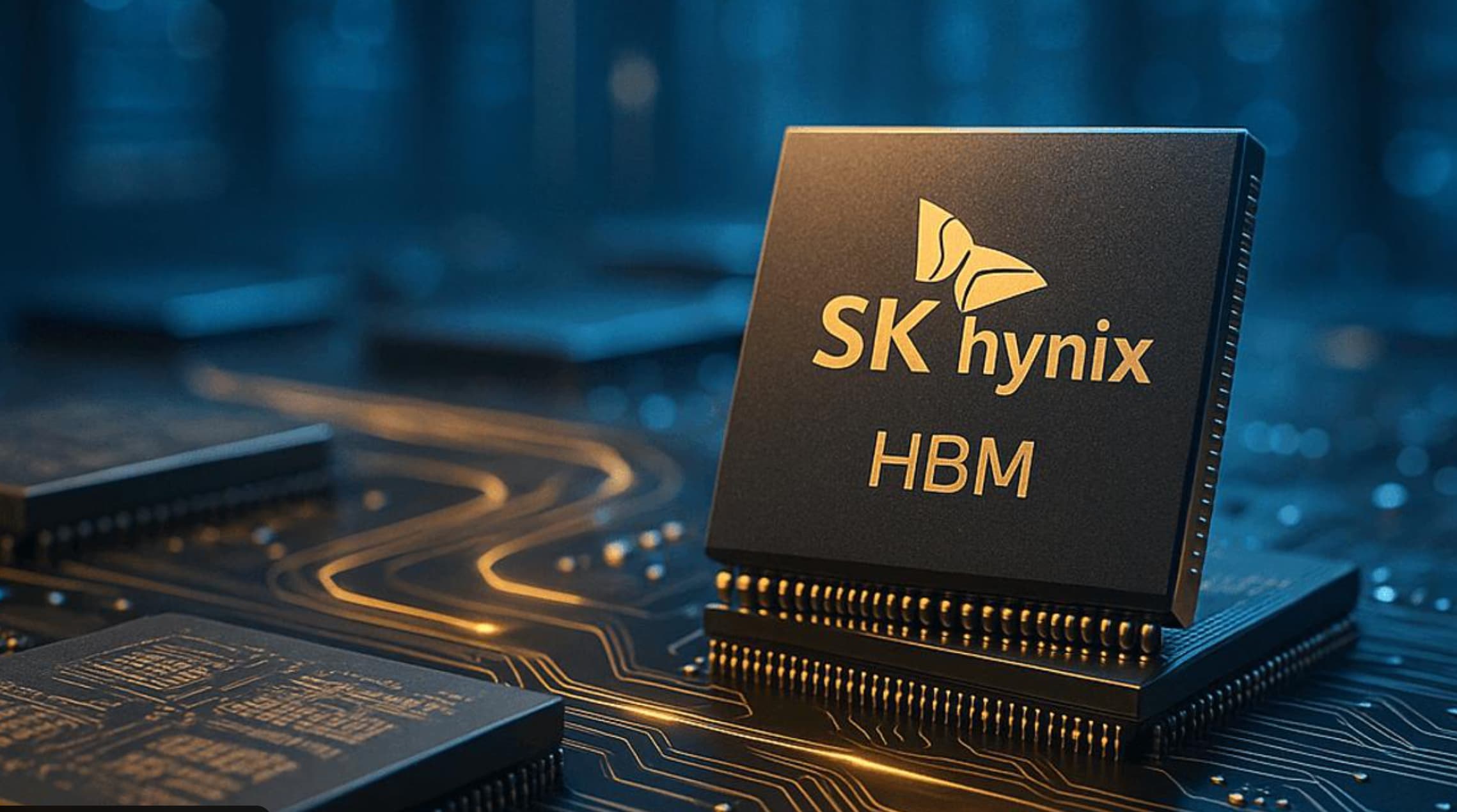
The SK Hynix Nasdaq listing was positioned as a validation event for the AI memory trade. High-bandwidth memory — HBM — is the product category that Hynix dominates, supplying the stacked DRAM that sits inside Nvidia's H-series and Blackwell GPU architectures. The investment thesis was straightforward: AI model training and inference at scale require HBM, Hynix makes the best HBM, therefore the stock's U.S. listing was an access event for investors who couldn't or wouldn't hold Korean equities directly. That thesis is not wrong on its face. The problem is the price at which the market had pre-loaded it.
SKHY's opening price implied a valuation that assumed uninterrupted HBM demand growth through at least 2028, at a time when data center capital expenditure forecasts are beginning to show their first signs of quarterly variance. When the stock dropped more than 15% in the Korean session Monday — transmitting through to the ADR in real time — it did something more damaging than a simple price correction. It publicly repriced the market's confidence in the AI infrastructure spending cycle, at least at the memory layer. Sandisk fell 5.4% in sympathy before today's partial recovery, Western Digital gave back 3.7%, and Seagate — which has less HBM exposure than any of them — still dropped 3.1%, confirming that the market was selling the category, not discriminating between balance sheets.
The AI Trade's Memory Ceiling
The deeper problem the Hynix rout surfaces is structural. Nvidia reported extraordinary demand metrics in its most recent quarter, and TSMC posted record revenue of T$1.27 trillion ($39.62 billion) in Q2 on AI-driven orders — evidence that the compute layer of the AI trade remains intact. But memory is not compute. Memory is a commodity with capital-intensive manufacturing, brutal margin cycles, and a history of demand cliff-edges that arrive faster than capacity can be pulled back. The last time the memory sector ran this hot on a single application thesis — the crypto mining cycle of 2021-2022 — the correction when it came was 60%-plus from peak to trough for the leading names.
That comparison is not a prediction; AI inference demand has more durable structural support than crypto mining ever did. But it calibrates the risk asymmetry that SKHY's collapse is now forcing traders to price. Nvidia fell 1.24% Monday, Broadcom dropped 1.37%, and AMD and Intel each shed more than 2% — and none of those declines were driven by any company-specific news. They were pure contagion from a valuation reset in the memory sub-sector. The equipment names got hit alongside them: Applied Materials and Lam Research each fell before this morning's +3.5% premarket bounce, and FormFactor and KLA dropped before recovering +3.2% and +3.0% respectively in pre-market trading. When equipment makers sell off in sympathy with end-market memory stocks, the market is not just questioning near-term earnings — it is questioning the capital expenditure cycle that justifies equipment backlogs two and three years forward.
What Traders Watch Next
Tuesday's premarket recovery across the semiconductor complex — SKHY +6.8%, Micron +3.2%, AMAT and LRCX each +3.5% — needs to be evaluated against what it is: a partial bounce off two days of historic selling, with no new fundamental catalyst underneath it. The critical test is whether these gains hold through the first 90 minutes of the cash session. Pre-market recoveries in high-beta semiconductor names after large dislocations fail at the open with significant frequency, particularly when the macro backdrop is simultaneously hostile. This morning that backdrop includes a VIX at 17.16, a CPI print due at 8:30 a.m. that could send rates sharply higher, and an oil market reacting in real time to Hormuz enforcement — none of which is constructive for a sector trading at elevated multiples.
Occidental Petroleum's 8-K filed July 10 and its +1.76% premarket move Monday illustrate exactly the sector rotation dynamic now in play: energy is catching a bid on Hormuz risk precisely as technology sells off on valuation and macro rate concerns. That rotation has legs as long as oil stays elevated and the Fed's rate path remains uncertain. For semiconductor traders specifically, Micron is the cleanest U.S. proxy for the HBM demand thesis — it reports earnings in late September, but forward guidance language from management at any interim conference appearance will be treated as a referendum on the whole sector. More immediately, watch SKHY's $151.30 intraday low from Monday: a breach of that level on Tuesday's open would confirm that the 52-week low is gone and that institutional sellers are not done, regardless of what CPI prints at 8:30. That single level is the line between a painful but contained correction and a genuine sentiment break in the AI semiconductor trade.
The Weekly Investor
Daily market analysis for active traders. Free.