September Jobs Report: The Number That Moves Markets Today
The September NFP report lands at 8:30 AM ET with consensus at +84K. Here's what the print means for rates, the dollar, and the October FOMC decision.
Key Points
- Wall Street consensus pegs September nonfarm payrolls at +84,000 — less than half of August's blowout +162,000 print — with unemployment expected to hold at 4.1%.
- The Fed resumed hiking at its September 16 meeting with a 9–3 vote to reach 3.75%–4.00%, and 16 of 18 dot-plot participants flagged at least one more increase this year.
- Vice Chair Philip Jefferson speaks today in Charlottesville on U.S. economy and monetary policy — his tone after a fractious FOMC vote is the second-biggest market event of the day.
September's Employment Situation report hit at 8:30 AM ET this morning with Wall Street braced for +84,000 nonfarm payrolls — a number that, if matched, would confirm the labor market is cooling but not cracking, leaving the Federal Reserve's October hold thesis exactly where officials want it. Miss badly to the downside, and the bond market rallies. Beat it by the same margin August beat its own consensus — which came in at +162,000, nearly triple expectations — and the hawks who dissented at September's meeting get louder heading into October 27.
The Bar August Set
There is no clean way to read September in isolation. August's +162,000 print was the kind of number that resets an entire policy cycle — it arrived when the street was modeling roughly +55,000 to +60,000, sent the two-year Treasury yield spiking, and gave the three dissenters at the September 16 FOMC meeting — Hammack, Kashkari, and Logan — concrete ammunition for their position that the Fed should have hiked by 50 basis points instead of 25. The FOMC ultimately voted 9–3 to bring the federal funds target range to 3.75%–4.00%, the first increase since 2023, but the dissent margin was the widest in years and the dot plot was unambiguous: 16 of 18 participants saw at least one more hike in 2026, and four of those saw room for two.
August's composition matters as much as its headline. More than two-thirds of those gains came from two sectors — leisure and hospitality added 62,000 jobs and local government contributed 50,000. Those categories are not the kind of broad-based, private-sector strength that forces a Fed rethink on its own, but combined with a 4.1% unemployment rate — a level consistent with full employment by most FOMC members' own estimates — they were enough to justify the September move. The three-month moving average of payroll growth climbed to 71,000 after July's previously reported 23,000 decline was revised away entirely. September's consensus of +84,000 would keep that average roughly intact.
BMO's seasonal data adds one more layer of context traders shouldn't ignore: September nonfarm payrolls miss the consensus estimate 64% of the time. The flip side is that the number has beaten expectations for four consecutive years. That's not a coin flip — it's a pattern with a thumb on the scale in both directions simultaneously, which is exactly the kind of setup that produces violent market reactions when the print lands outside the 60,000–110,000 range.
The Fed's Inflation Problem
The payrolls number is not the Fed's only variable this morning — it may not even be the most important one. ISM Manufacturing Prices Paid for September printed at 77.9 yesterday against a consensus of 73.0, a significant upside miss that signals factory-gate inflation is re-accelerating even as headline manufacturing activity at 54.5 came in slightly below the 55.0 estimate. Prices Paid above 70 historically correlates with upstream inflation feeding into PPI within two to three months. PPI for September drops October 15, and that print will matter enormously to the October 27–28 FOMC decision.
The Fed's own language at the September meeting was explicit: the FOMC said inflation "remains elevated relative to the Committee's 2 percent goal, in part reflecting supply shocks that have driven price increases in certain sectors, including energy." That framing is significant because it gives officials a structural explanation for elevated prices that doesn't require them to claim they missed the turn — but it also means energy prices stay at the center of the policy calculus. The ECB, which raised rates by 25 basis points in June and is projecting inflation above target through most of 2027, faces a structurally similar problem, as does the Bank of England, which is on hold at 3.75% but has explicitly warned of "second-round effects" from domestic wage pressures. Global central banks are not in a coordinated hiking cycle, but they are broadly aligned in one respect: none of them is cutting.
Against that backdrop, even a soft September payrolls print — say, below 60,000 — is unlikely to produce a Fed pivot. The FOMC has told markets it is watching the totality of conditions, and with Prices Paid at 77.9 and energy-driven CPI still elevated in the Fed's own characterization, one month of weak hiring does not a dovish turn make. The hawks who dissented in September wanted more, not less. A weak number quiets them for one meeting; it doesn't retire them.
What Traders Watch Next
The immediate sequencing matters. The ISM Services PMI prints at 10:00 AM ET — two hours after the jobs data — and the Services component's Prices Paid subindex will either amplify or offset what the manufacturing number showed yesterday. Services inflation has been the stickier half of the CPI basket for 18 consecutive months, and a Services Prices Paid reading above 65 today would effectively neutralize any dovish interpretation of a soft payrolls print. Watch the two numbers together, not in isolation.
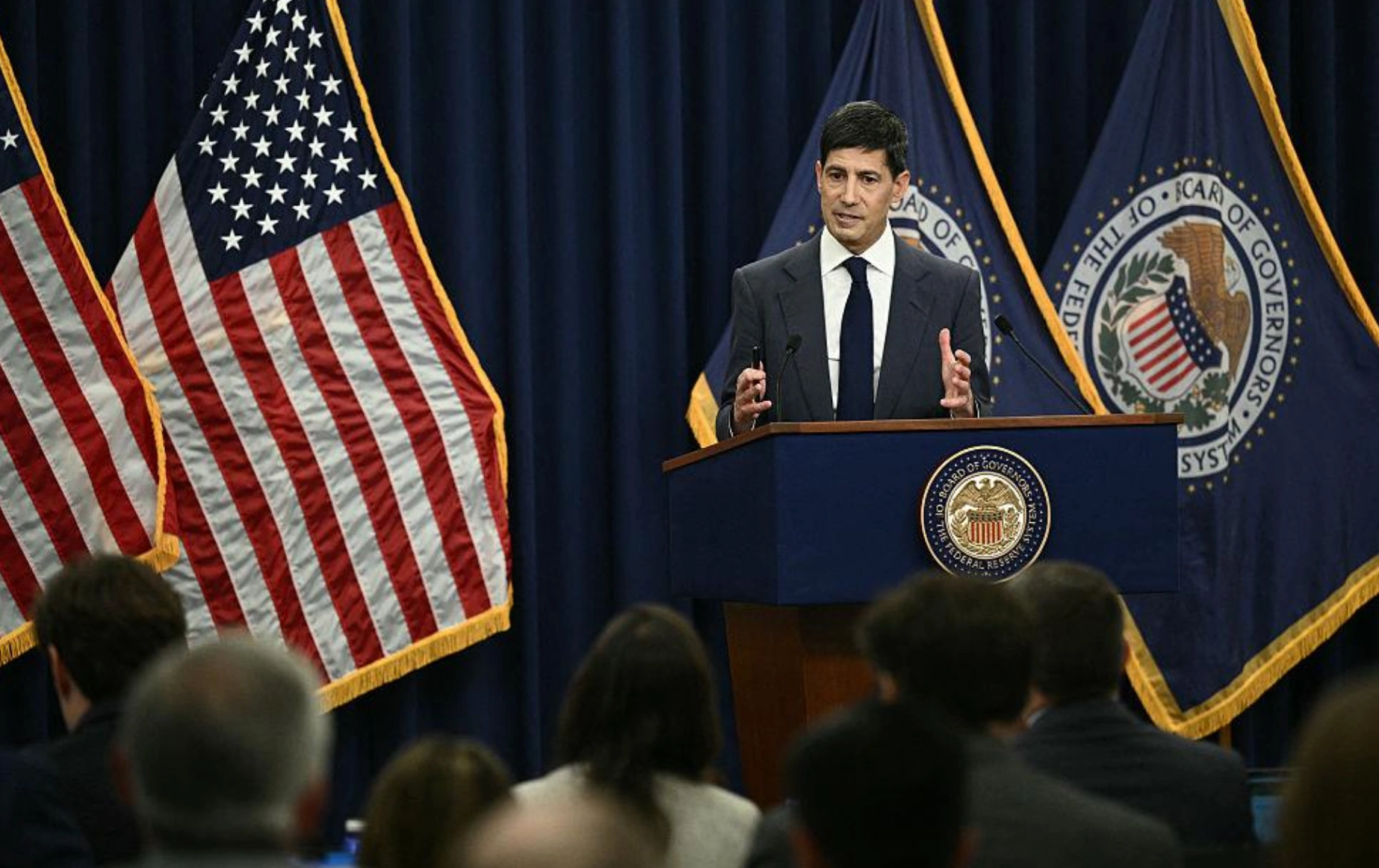
Vice Chair Philip Jefferson's appearance in Charlottesville, Virginia today on "U.S. Economy and Monetary Policy" is the highest-stakes Fed communication of the day. Jefferson is not a dissenter — he voted with the majority for the 25-basis-point hike — but his remarks will be the first extended public commentary from a senior Fed official since the September decision and the jobs data hit simultaneously. Any softening in his characterization of the inflation outlook, or any language suggesting the September hike may have been sufficient, will rally the front end of the Treasury curve. Any reiteration of the dot-plot signal — that more is coming — will push the two-year back toward its recent highs. The Fed's event calendar also shows Governor Waller and Vice Chair for Supervision Bowman speaking today, but neither is addressing monetary policy directly.
The hard calendar dates from here: FOMC minutes from the September 15–16 meeting drop October 7 — five days away — and will reveal how close the internal debate came to a 50-basis-point move. CPI for September lands October 14, retail sales and PPI on October 15, and the Q3 GDP advance estimate alongside PCE inflation on October 29, one day after the FOMC decision. Traders pricing the October meeting should treat today's jobs number as the first data point in a six-print sequence. The level to watch on the 10-year Treasury yield: a sustained break above 4.80% after today's data would signal the market is pricing a second consecutive hike at October 27, and equity multiples — particularly in rate-sensitive sectors — would compress accordingly.
The Weekly Investor
Daily market analysis for active traders. Free.