SanDisk 9th-Gen QLC Sparks Memory Sector Rally
SanDisk's 9th-gen QLC flash reveal at Investor Day is lifting Micron and Western Digital. Here's the supply-demand dynamic driving this trade.
Key Points
- SanDisk's unveiling of 9th-generation QLC flash technology at its Investor Day is the hard catalyst driving a sector-wide memory rally, lifting Micron (MU) and Western Digital (WDC) simultaneously.
- AI infrastructure buildout — with the top five hyperscalers projected to nearly double capex in 2026 and exceed $1 trillion in 2027 — is sustaining structural demand for high-density flash storage that new QLC generations directly address.
- Traders should watch Micron's near-term price action for confirmation that the move has legs beyond the initial catalyst session, with NVDA's Wednesday print serving as the next macro read on AI capex durability.
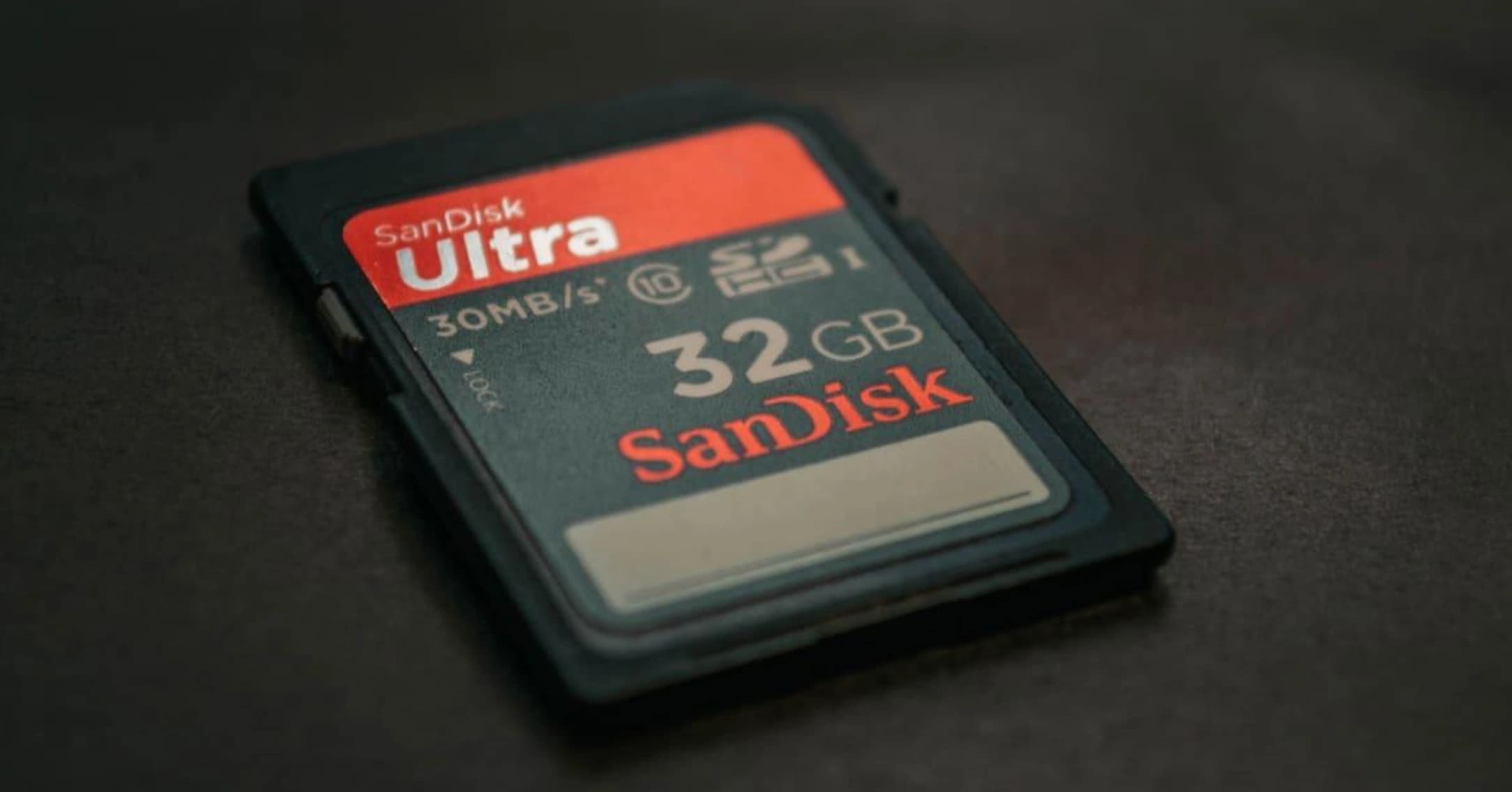
SanDisk's Investor Day dropped a product-level catalyst the memory sector needed: a 9th-generation QLC flash technology announcement that is pushing SanDisk shares higher and dragging Micron (MU) and Western Digital (WDC) along with it on Tuesday. This is not a sympathy trade built on sentiment — it is a supply-side signal in a market where AI-driven storage demand is outrunning the industry's ability to deliver high-density, cost-efficient capacity at scale.
The Tech Behind the Move
QLC — quad-level cell — flash is the highest-density commercially viable NAND architecture available, storing four bits per cell versus the three bits of the dominant TLC format. Each generational leap in QLC engineering matters because it directly determines the cost per terabyte that storage vendors can deliver to hyperscalers, enterprise customers, and increasingly to AI inference infrastructure operators who need massive amounts of fast, affordable local storage. SanDisk's 9th-generation announcement represents a meaningful engineering milestone: each generation typically delivers 30-40% improvement in bit density, which translates directly into improved margins for the manufacturer and lower total-cost-of-ownership for buyers at the scale that cloud operators run.
The practical implication for the sector is competitive positioning. SanDisk's public demonstration of 9th-gen QLC puts pressure on Samsung, SK Hynix, and Micron to accelerate their own roadmaps — or risk ceding share in the enterprise SSD and data center segment that has become the highest-margin revenue stream in the NAND industry. For Micron specifically, which has been aggressively expanding its own NAND technology node roadmap while simultaneously scaling its HBM (high-bandwidth memory) business for AI accelerators, a SanDisk product-generation announcement is both a competitive signal and a demand validator. The message from SanDisk's Investor Day is that enterprise flash demand is robust enough to justify a generation cycle acceleration — and that reads as bullish across the board.
Western Digital, which retained its NAND operations following its business separation, is positioned as the most direct read-through from SanDisk's announcement given the companies' shared technological lineage and overlapping customer base. WDC's flash business competes head-to-head with SanDisk in the same enterprise and cloud segments, and a product-generation escalation by SanDisk accelerates the competitive clock for Western Digital's own next-generation qualification timelines.
The AI Demand Floor
The memory sector rally today is not happening in a vacuum. It is occurring against a macro backdrop where the five largest hyperscalers — Microsoft, Amazon, Google, Meta, and Apple — are collectively projected to nearly double capital expenditure in 2026 relative to 2025, with aggregate AI infrastructure spending forecast to exceed $1 trillion in calendar year 2027. That capex trajectory is not simply a GPU story. It is a full-stack infrastructure build — and high-density storage is a foundational layer. Every AI training cluster requires enormous amounts of fast local storage for datasets, checkpoints, and model weights, and every inference deployment requires low-latency storage for retrieval-augmented generation pipelines that are becoming standard architecture across enterprise AI applications.
This demand dynamic is structural, not cyclical, and it changes the historical pattern that has made memory stocks notoriously difficult to own through a full cycle. The NAND industry spent 2022 and much of 2023 in severe oversupply, with average selling prices collapsing 50% from peak. The recovery that began in late 2023 and accelerated through 2024 and 2025 has been demand-led rather than supply-cut-led — a materially different and more durable recovery profile. AI infrastructure buildout has created a persistent baseline of demand that absorbs new supply capacity faster than the industry can bring it online, keeping the pricing environment constructive even as manufacturers push through aggressive technology transitions.
Micron is the most liquid, most traded U.S.-listed pure play on this thesis. MU has benefited from both the DRAM/HBM AI demand wave and NAND pricing recovery simultaneously, and the stock's trajectory into this week's session reflects those dual tailwinds. With WTI crude at $84.05 and Brent at $92.51, energy input costs for fab operations remain elevated but manageable at current NAND pricing levels — a margin dynamic that supports continued investment in next-generation node transitions.
What Traders Watch Next
The immediate trading question for the memory sector is whether today's SanDisk catalyst sustains momentum into Wednesday, or whether it gets absorbed by the gravitational pull of the NVDA earnings event. NVDA reports after the close Wednesday, and its results will function as the most comprehensive public real-time data point on AI infrastructure spending that the market receives in a given quarter. A strong NVDA print — consensus is expecting continued triple-digit data center revenue growth — would validate the hyperscaler capex thesis and extend the memory rally. A miss or cautious guide from NVDA, by contrast, would reprice AI infrastructure expectations broadly and pressure the entire semiconductor supply chain, including memory.
For traders already in MU or WDC, the SanDisk Investor Day catalyst provides a logical near-term entry justification, but position sizing ahead of the NVDA print Wednesday requires caution. The sector can give back a single-day product-catalyst gain in one after-hours session if NVDA's guidance implies any deceleration in data center demand. Applied Materials, which reported record revenue but is getting sold today in a classic post-earnings fade, is a live example of how quickly the sentiment can reverse on high-expectation names in the semiconductor supply chain — even when the underlying fundamentals are intact.
The level to watch in MU is the stock's response at Tuesday's close relative to its 20-day moving average. Memory stocks that hold above that level into the NVDA print have historically sustained momentum through the subsequent session. If the memory sector can absorb Wednesday's NVDA result without giving back today's gains, the trade has structural confirmation — and the next earnings catalyst on the calendar that directly touches storage demand will arrive with Marvell (MRVL) on Thursday, where consensus models 34.9% revenue growth to $2.71B. MRVL's data infrastructure segment is a direct AI capex read-through that would either add a third consecutive day of sector momentum or signal that the rally has run its near-term course.
The Weekly Investor
Daily market analysis for active traders. Free.