
PCE Hits 4.1%: Fed's Hike Path Just Got Clearer
May PCE inflation printed 4.1% headline, 3.4% core — both above the Fed's own upgraded forecasts. An October rate hike is no longer a tail risk.
Key Points
- May PCE printed 4.1% headline and 3.4% core year-over-year — both above the Fed's own June 17 projections of 3.6% and 3.3% respectively, issued just nine days ago.
- The Fed's dot plot already signaled a probable hike, and today's data eliminates the ambiguity: the "narrow path" Goldman cited to avoiding tightening just collapsed under the weight of accelerating inflation.
- Traders should watch the July 29 FOMC meeting and any Warsh public appearances next week for explicit guidance on whether October becomes the live hike date the market is already pricing.
May PCE came in at 4.1% year-over-year — hotter than April's 3.8% print and, critically, above the Federal Reserve's own freshly upgraded inflation forecast of 3.6% issued just nine days ago. Core PCE, stripping out food and energy, landed at 3.4%, also above the Fed's 3.3% projection and 140 basis points north of the 2% target. The Fed's problem is no longer theoretical. It is numerical, and it arrived this morning.
What the Data Actually Shows
The Bureau of Economic Analysis released the May Personal Income and Outlays report Thursday, and the internals deserve a close read beyond the headline PCE figure. Personal income rose $181.6 billion, or 0.7% month-over-month — solid wage growth that is, perversely, feeding the inflation the Fed is trying to kill. Disposable personal income climbed $164.9 billion, also up 0.7%, and personal consumption expenditures increased $156.1 billion, matching that same 0.7% pace. At the nominal level, the American consumer is still spending. The question is what they are actually buying in real terms.
Real PCE — the inflation-adjusted volume of consumption — rose only $43.8 billion, or 0.3% month-over-month. That gap between nominal 0.7% and real 0.3% is precisely 40 basis points of pure inflation drag eating into purchasing power in a single month. The services component drove $94.3 billion of the nominal PCE increase against $61.8 billion in goods — a split that matters because services inflation is the stickiest and the hardest for monetary policy to dislodge quickly. Rent, healthcare, insurance, and recreation are not items that respond to rate hikes within a quarter. The Fed knows this.
The one potentially constructive data point: the personal saving rate ticked up to 3.0% of disposable personal income in May, from 2.6% in April. Consumers are pulling back slightly even as their incomes rise. That is the earliest sign of demand-side softening — but at a saving rate still barely above three percent, it is nowhere near sufficient to cool services inflation running at the pace today's PCE implies. Real disposable personal income rose 0.3% in May, meaning households are treading water in purchasing-power terms while nominal prices continue to accelerate.
The Fed's Problem
The June 17 FOMC decision kept the benchmark rate at 3.5%–3.75% and delivered a dot plot that was already hawkish by any reasonable standard. The median FOMC forecast for the fed funds rate at end-2026 was revised up to 3.8% from 3.4% in March — a signal that the committee had already absorbed April's 3.8% PCE headline and priced in at least one hike. Nine of the meeting's participants anticipated at least one increase this year; only one expected a cut. The committee erased any near-term easing from its forward guidance and pushed rate reductions into 2027 and 2028.
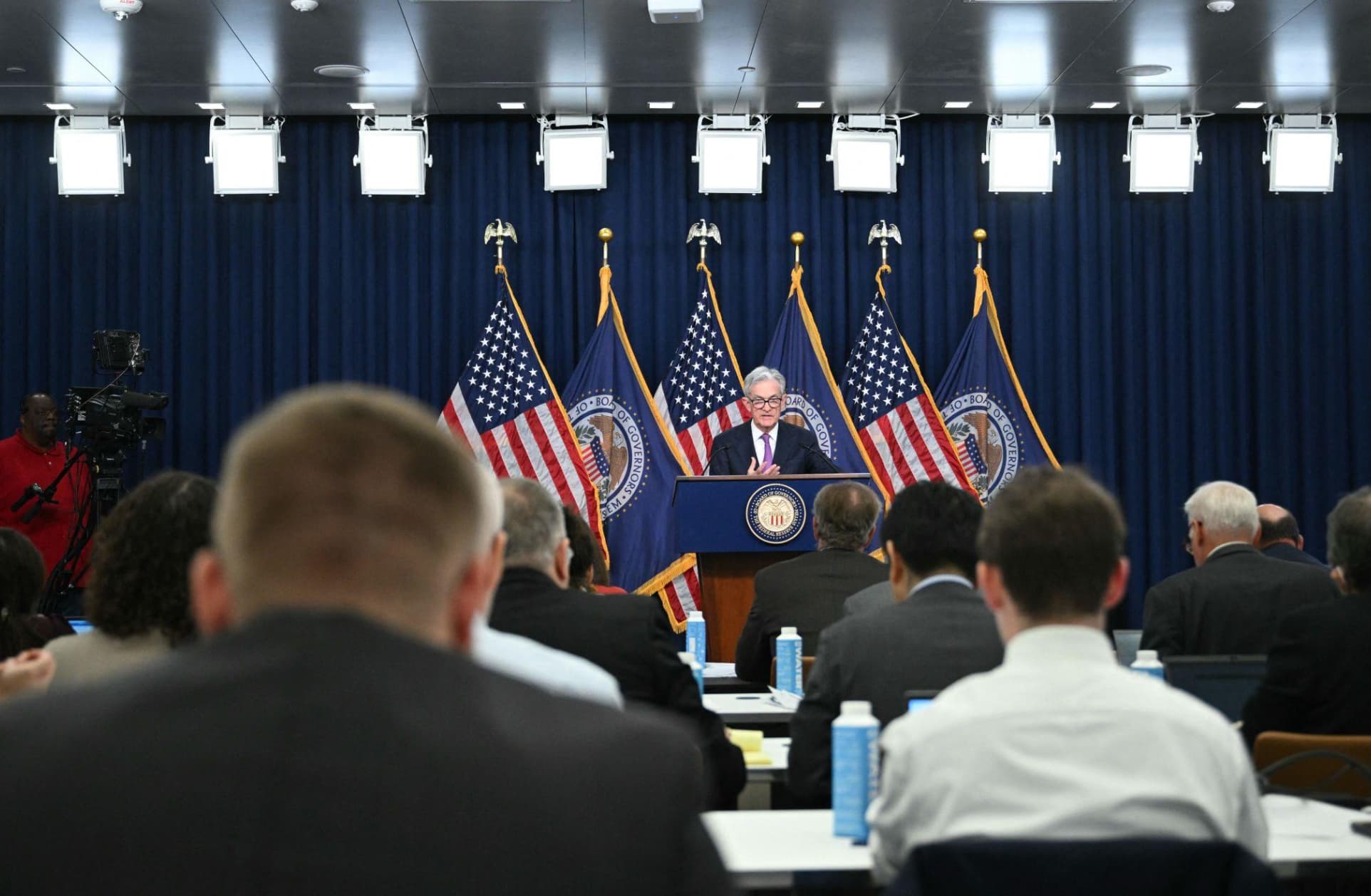
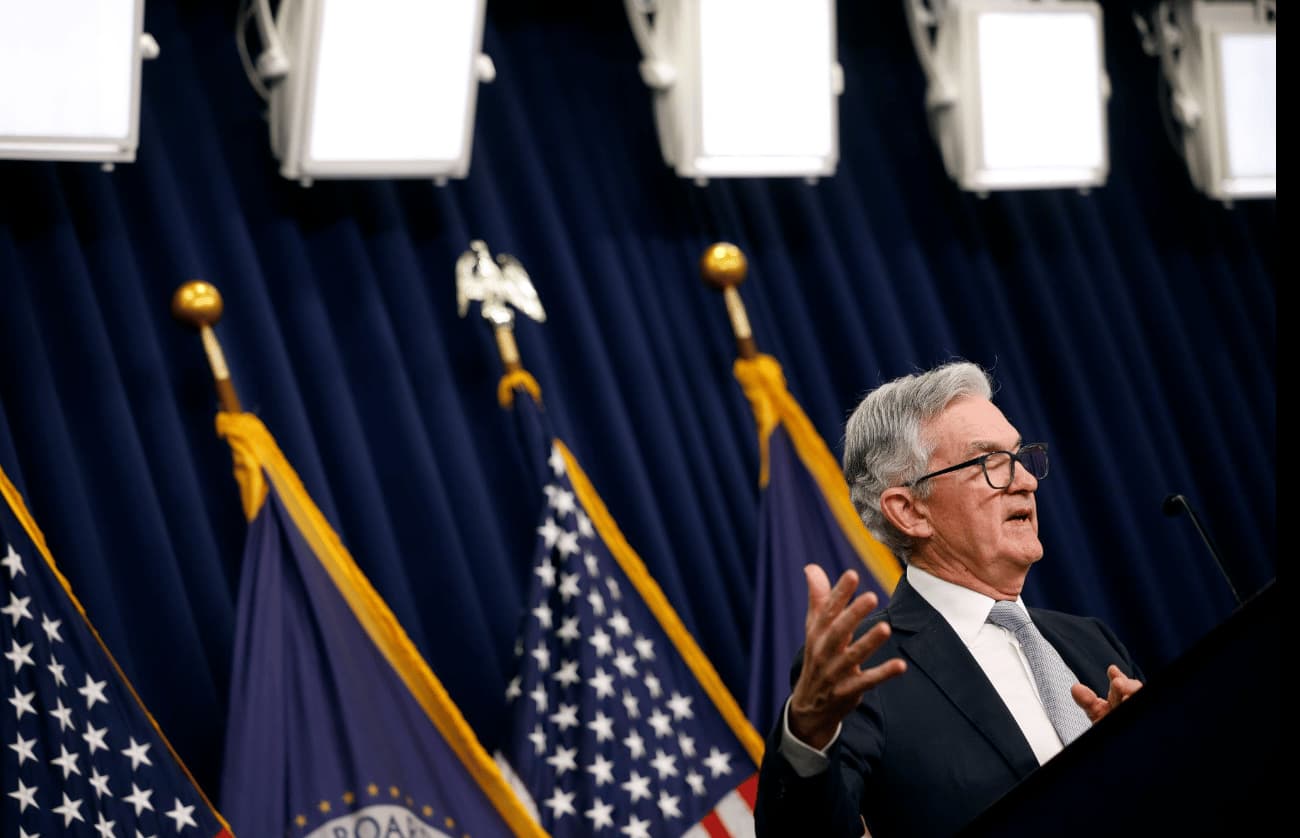
Today's 4.1% headline PCE print landed above even those upgraded projections. That is not a rounding error. That is the Fed's own forecast being eclipsed by incoming data within the span of a single monthly release. Chair Warsh, in language that should now be read as pre-commitment rather than rhetoric, stated the 2% target explicitly: "The 'two' is the left of the decimal point." With core PCE at 3.4%, the digit to the left of the decimal point is three — and it is moving in the wrong direction. A survey of 34 former Fed officials and staff conducted June 5–12 found that 17 of 32 respondents believe a rate hike would be appropriate in 2026. That survey predates today's print. The count is likely higher now.
Goldman Sachs had described the path to avoiding hikes as "narrow" following the June 17 meeting, with economist Kay Haigh noting the firm's base case was that the Fed could "just about" hold rates if incoming data cooperated. May PCE is not cooperation. The EFFR currently sits at 3.63% and SOFR at 3.62% — both consistent with the 3.5%–3.75% target range. The CME FedWatch tool had already priced a 60.7% probability of an October hike following Warsh's June 17 press conference. That probability will move higher when markets open Friday morning and reprice against a PCE number that is 50 basis points above the Fed's own ceiling.
What Traders Watch Next
The immediate market implication runs through the front end of the Treasury curve. The 2-year yield sits at 4.11% as of Wednesday's close, against the 10-year at 4.41% — a curve that has been bear-steepening as the market prices out cuts and begins seriously contemplating hikes. A hot PCE print of this magnitude should push the 2-year toward 4.25%–4.35% if October truly becomes a live meeting. Watch that level as the tell: if the 2-year breaks 4.25% on a closing basis in the next session, the market has fully repriced to one hike as base case.
Beyond the rates complex, the equity implications are asymmetric and sector-specific. High-multiple growth names are the most mechanically vulnerable to a rising discount rate — particularly anything trading above 30x forward earnings where duration risk is concentrated. Consumer discretionary faces a double hit: higher rates compress valuations while the 0.3% real PCE growth rate signals the consumer engine is losing torque in volume terms. Financials, specifically banks with significant floating-rate loan books, may be the unambiguous beneficiary of an October hike scenario, but only if credit quality holds at the unemployment rate's current 4.3% — itself a level that bears watching as monetary tightening bites.
The next scheduled catalyst is the July 29 FOMC meeting. Between now and then, traders get one more jobs report — due the first Friday of July — and another CPI print in mid-July. As CNBC reported following the June decision, the Fed's path is explicitly data-dependent, and Warsh has shown no appetite for pre-committing to a hike in the abstract. But today's data does the committing for him. If July CPI follows May PCE's direction and prints above 4.2% — matching or exceeding the current CPI YoY reading — the October hike shifts from probable to near-certain. The 10-year yield at 4.41% is the level to watch: a sustained break above 4.55% would signal the bond market has accepted a new higher-for-longer regime that equity multiples have not yet absorbed.
The Weekly Investor
Daily market analysis for active traders. Free.