PayPal -13%: Dead Stripe Deal Wipes $17B in a Session
PayPal shares crater 13% after a Stripe acquisition deal collapse. With PYPL already under pressure, traders need to know where the next floor is.
Key Points
- PayPal is down approximately 13.4% in Friday premarket trading after a rumored or reported acquisition deal with Stripe collapsed, erasing roughly $17 billion in market capitalization in a single session.
- The breakdown of a transformational deal removes what had become a meaningful premium embedded in PYPL's valuation, exposing the stock to a re-rating toward its standalone fundamental value in an environment of 4.66% 10-year yields.
- Traders should watch the $58–$60 zone as the next significant technical support level; a close below it on elevated volume would open the door to a full retest of the 2026 lows.
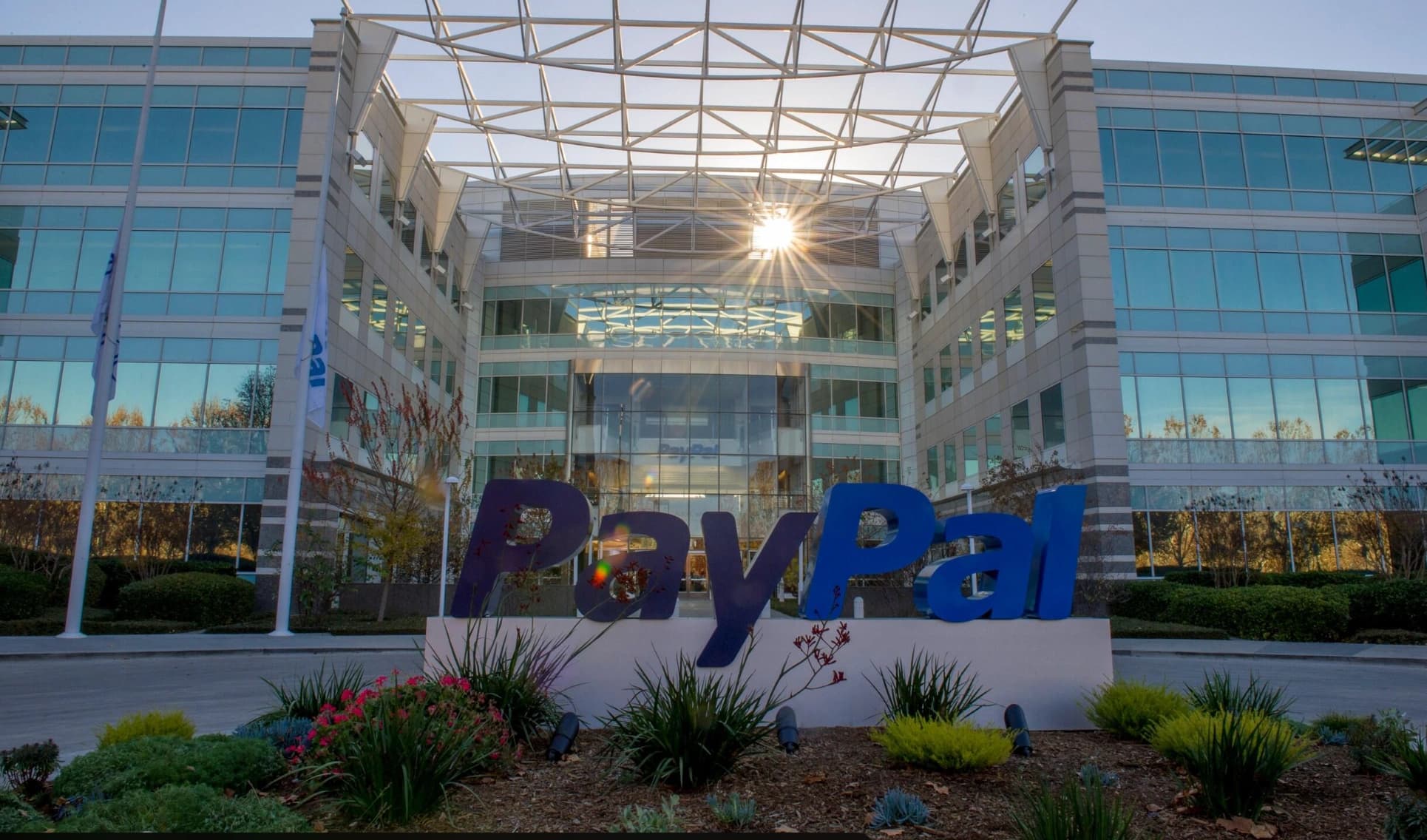
PayPal is collapsing. The stock is down 13.4% in Friday pre-market trading — a drawdown that by any rough calculation erases somewhere between $15 billion and $18 billion in market capitalization before the opening bell — after reports confirmed that a potential acquisition deal between PayPal and Stripe has died. In a fintech sector that was already navigating the twin headwinds of rising real yields and intensifying competition from Apple Pay, Google Pay, and bank-owned real-time payment rails, the deal collapse arrives at the worst possible moment: a pre-holiday Friday with thin liquidity and a tape already under pressure from semiconductor-driven tech selling.
What the Stripe Deal Death Actually Means
The precise terms of the failed Stripe transaction have not been publicly detailed in full, but the market's reaction provides its own valuation commentary. A 13.4% single-session drop of this magnitude in a large-cap financial technology name is not a routine correction — it is a repricing event. Before news of any potential deal surfaced, PayPal had been trading as a mature, low-growth payments processor: a company with enormous transaction volume, 400-plus million active accounts, and a brand that was dominant 10 years ago but has since been outflanked by faster-moving competitors on both the consumer and merchant sides. Any acquisition premium that became embedded in PYPL's price in anticipation of a transformational deal combination is now being surgically removed.
Stripe, for its context, is the dominant private payments infrastructure company — processing transactions for millions of businesses globally and valued at various points between $50 billion and $70 billion depending on the funding round. A PayPal-Stripe combination would have represented one of the most significant consolidations in financial technology history, creating a payments entity with unrivaled reach across both consumer-facing and developer-facing rails. The strategic logic was real: PayPal needed Stripe's developer ecosystem and growth trajectory; Stripe needed PayPal's consumer brand and regulatory infrastructure. That the deal has collapsed — for reasons that remain only partially public — leaves both companies exposed to their individual competitive pressures without the synergistic buffer the combination would have provided.
For PYPL specifically, the standalone story is difficult. The company has been executing a cost-reduction and margin-improvement playbook under its current leadership, and recent quarters have shown progress on operating leverage. But revenue growth has been the stubborn problem: in a payments ecosystem growing at 8-10% annually, PayPal has struggled to consistently capture its proportionate share, losing merchant checkout volume to Stripe and consumer wallet share to Apple Pay at an accelerating rate. Without Stripe's growth engine attached, investors are left holding a stock that will be priced on those standalone metrics — and in a 4.66% 10-year Treasury yield environment, the discount rate applied to every dollar of future cash flow makes the valuation exercise considerably less flattering than it was two years ago.
The Fintech Sector Read-Through
The PYPL selloff does not exist in a vacuum. The broader fintech and digital payments sector is absorbing a read-through from this collapse that traders should not dismiss as noise. If a deal of this scale — between two of the most prominent names in the payments space — could not reach completion, it raises immediate questions about the M&A premium embedded in other mid-cap fintech names that have been trading above their standalone intrinsic value on the assumption that consolidation is coming. Block (formerly Square), Adyen, and Marqeta all carry some degree of "strategic acquisition target" premium in their multiples. Today's PYPL action is a reminder that M&A premiums are not permanent fixtures in a stock's valuation — they evaporate instantly and completely the moment a deal dies.
There is also a macro context that made this particular deal difficult to finance and structurally challenging to execute. With the Fed Funds Rate at 3.63% and SOFR at 3.64%, the cost of deal financing remains materially higher than the near-zero rate environment that enabled the wave of tech M&A in 2020 and 2021. The 10-year Treasury yield at 4.66% means that any leveraged component of a large-scale acquisition faces a significantly higher interest burden than acquirers faced just three years ago. Deals that penciled out at 1% rates require dramatically better synergy assumptions at 4.66% — and when those synergy assumptions get stress-tested in due diligence, deals fall apart. That is the rate environment's invisible hand in corporate finance, and PayPal's shareholders are feeling it acutely this morning.
Thursday's broader market session had been broadly positive — the S&P 500 gained 0.72% to 7,731 on Nvidia's blowout print — but PayPal's extended-hours collapse reversed any gains the stock had accumulated in that session and then some. The juxtaposition is instructive: in the same 24-hour window, Nvidia confirmed that AI infrastructure spending remains robust and that semiconductor demand has not hit a ceiling, while PayPal confirmed that the fintech consolidation trade that investors had been counting on as a valuation catalyst has, at least in this iteration, failed to materialize.
Where the Stock Goes From Here
The options market and pre-market positioning suggest that $58 to $60 per share is the zone where buy-side desks have accumulated meaningful limit orders — a level that corresponds to the stock's trading range through the first quarter of 2026 before deal speculation began to inflate the price. A close below $58 on today's session, which on thin pre-Labor Day volume is entirely possible if institutional sellers decide to clean up positions before the long weekend, would represent a full erasure of any strategic premium and would bring PYPL to a valuation where its trailing free cash flow yield begins to look genuinely attractive to value-oriented buyers.
The forward price-to-earnings multiple at current depressed prices is approaching the low-to-mid teens on most sell-side models — a level that historically has attracted long-only value funds to PayPal stock. But value traps and value opportunities look identical at the moment of maximum pain, and the key discriminating variable will be the next earnings print. If management can demonstrate in the upcoming quarter that active account growth is stabilizing, that take rates are holding, and that operating margins continue to expand toward the mid-20% range, the standalone thesis becomes defensible at these prices. If, however, the Stripe deal's collapse was partially driven by unfavorable due diligence findings about PayPal's competitive trajectory — a scenario the market is quietly beginning to price in — then the $58 floor is not a floor at all. The September 10 CPI print and any subsequent Fed communication on rate trajectory will set the discount rate context; the October earnings call will set the fundamental one. Between now and then, PYPL is a stock to watch from the sideline or hedge aggressively.
The Weekly Investor
Daily market analysis for active traders. Free.