OpenAI GPT-6.1 Sol, $70B Run Rate, $30B Raise: DevDay Scorecard
OpenAI launched GPT-6.1 Sol at DevDay 2026, revealed a $70B revenue run rate, and is in talks for a $30B raise — all the day before an expected IPO filing.
Key Points
- OpenAI's annualized revenue run rate has grown more than 70% since the start of Q3 2026, nearing $70B, with B2B revenue more than doubling in the period.
- GPT-6.1 Sol launched just one week after GPT-6 Sol, marking an acceleration in OpenAI's release cadence that directly pressures every enterprise AI competitor.
- Watch OpenAI's $30B funding round terms and IPO timing — if the raise prices above its last private valuation, it resets the benchmark for every AI unicorn still in private markets.
OpenAI landed three simultaneous punches on Tuesday: a new model, a revenue milestone, and a capital raise signal — all timed to DevDay's 2,500-person audience in San Francisco and designed to land the day before an expected IPO filing. The company's annualized revenue run rate is nearing $70B, up more than 70% since the start of Q3, with B2B revenue more than doubling in the same window and consumer revenue additions in Q3 alone exceeding all of 2025. That is not a startup metric. That is a hyperscaler trajectory compressed into a single fiscal quarter.
The Model Release Cadence Is a Competitive Weapon
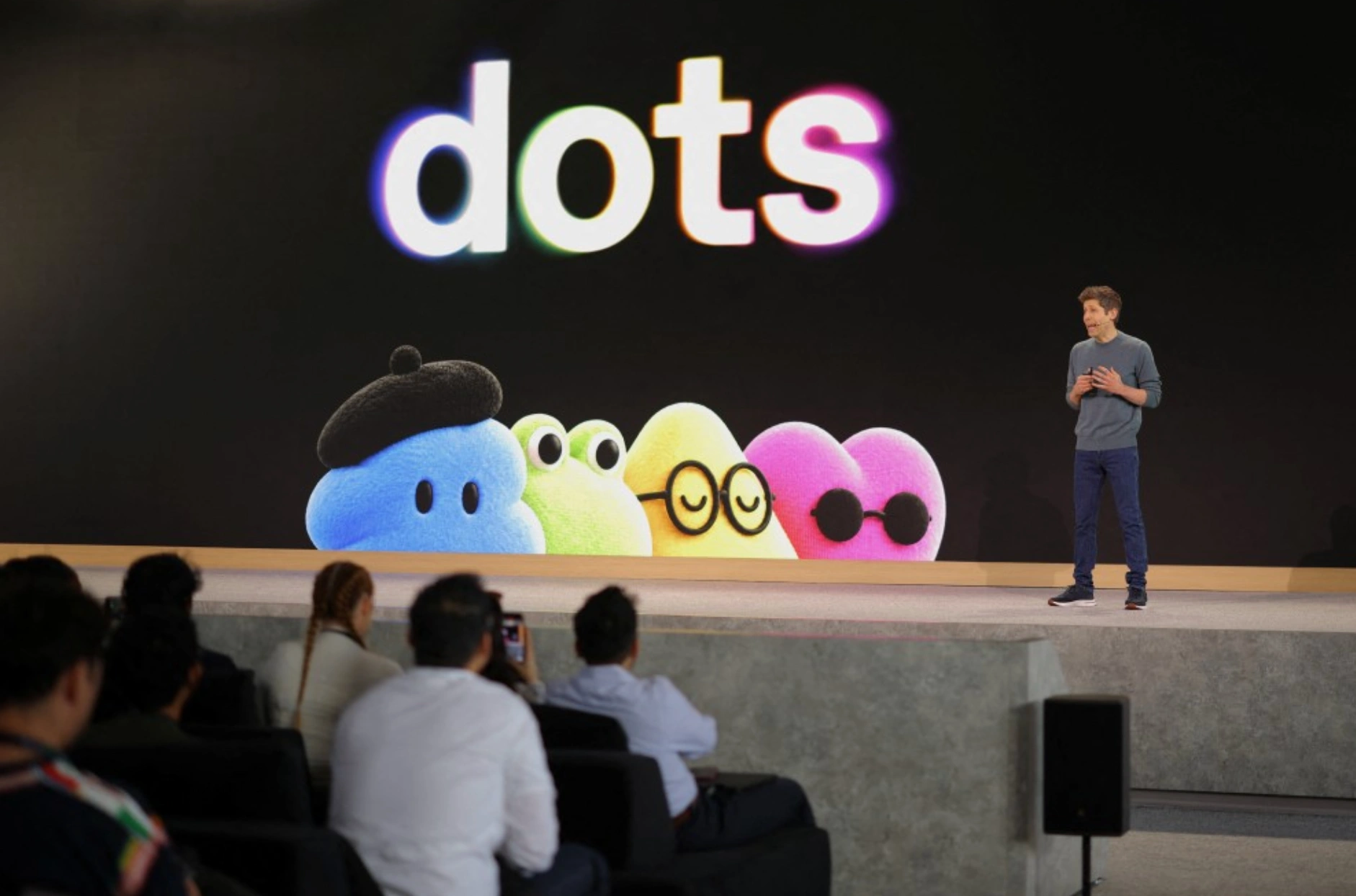
GPT-6.1 Sol is the story within the story. Sam Altman keynoted DevDay on Tuesday and introduced the model just seven days after OpenAI released GPT-6 Sol — a timeline that would have been operationally unthinkable for a frontier AI lab two years ago. The company described it as a "major upgrade" with meaningfully stronger performance across professional work, computer use, and agentic coding. The speed of iteration is itself the product. When a lab can ship a major model upgrade inside a single week, the implicit message to enterprise customers is that the improvement curve is continuous and the switching cost to any competitor just got higher.
OpenAI pulled GPT-6.1 Astra from the DevDay lineup entirely, confirming the model did not meet its internal safety standards — a public admission that carries weight precisely because the company made it voluntarily. In an environment where AI safety claims are routinely treated as marketing, the decision to kill a model release rather than ship it and patch later is either genuine institutional discipline or a calculated brand move ahead of IPO scrutiny. Either way, it matters for enterprise sales cycles: corporate procurement and legal teams evaluating AI vendors increasingly score safety governance as a line item, and OpenAI just handed itself a concrete example to cite.
The new collaborative infrastructure — ChatGPT Space and Pages — is targeting the enterprise workflow layer that Microsoft Copilot, Google Workspace AI, and Notion AI are all competing for simultaneously. ChatGPT Space allows teammates and OpenAI's "dots" agents to work together in shared environments. Pages creates a new document type where humans and agents co-create images, writing, charts, and visualizations. Neither feature is revolutionary in isolation, but both are direct encroachments on Microsoft's enterprise AI integration story at a moment when Redmond is already under FTC antitrust scrutiny for its cloud and AI bundling practices.
The Revenue Numbers Demand Context
Nearing $70B in annualized revenue run rate means OpenAI has effectively become the fastest-growing software business in the recorded history of the technology industry, measured by the speed of reaching this revenue scale from zero. For comparison, Salesforce took roughly 20 years to reach $35B in annual revenue. OpenAI is on track to double that figure from a standing start. B2B revenue more than doubling in a single quarter confirms the thesis that enterprise adoption — which moves slower than consumer but generates higher average contract values and far lower churn — has now cleared the procurement and security review bottleneck that held it back through 2024 and most of 2025.
Adding more consumer revenue in Q3 than in all of 2025 combined is an equally significant data point that the market may be underweighting. Consumer AI revenue is structurally stickier than it appears — users who integrate ChatGPT into daily writing, coding, research, and planning workflows exhibit retention patterns closer to productivity software than to social media. That changes the long-term revenue quality argument. If the consumer cohorts acquired in Q3 retain at rates comparable to what OpenAI has seen in enterprise, the $70B run rate is a floor, not a ceiling, heading into 2027.
CNBC's DevDay live coverage noted the revenue figures were released deliberately to coincide with the event, suggesting OpenAI's communications team timed the data drop for maximum IPO-adjacent impact. That is standard pre-IPO practice — establish a revenue narrative in public markets before the S-1 locks in the formal disclosure. The $30B funding round in early-stage discussions with investors, per a source familiar with the talks, would arrive on top of a capital structure that already absorbed tens of billions in previous raises from Microsoft, SoftBank, and the consortium behind the Stargate infrastructure initiative.
The IPO Overhang and What It Prices
The $30B raise discussion and the IPO timing are not separate events — they are sequential steps in a single capital strategy. A pre-IPO raise at a valuation above OpenAI's last known private mark establishes a price anchor that the IPO roadshow then has to clear or match. If the $30B round prices OpenAI above $300B — a figure that would represent less than 5x the current annualized run rate, cheap by software comps — it compresses the valuation gap for every AI-native company still in private markets, including Anthropic, which dropped its own IPO prospectus this week revealing plans to spend $518B on AI infrastructure over a decade with six partners including Google, Amazon, Microsoft, and Broadcom.
The competitive read-through for public market investors is direct. Every dollar of OpenAI enterprise revenue growth is a dollar that is not going to Microsoft Azure AI services, Google Cloud's Gemini API, or Amazon Bedrock. The hyperscalers have spent billions to make those platforms stickier — Azure's Copilot integration, Google's Workspace embedding, Amazon's enterprise Bedrock contracts — and OpenAI is now directly attacking the workflow layer rather than operating as a complementary API provider underneath it. That tension is not new, but at $70B in annualized run rate, it is no longer a theoretical competitive threat. It is a measurable market share battle.
For traders, the actionable question is not whether OpenAI is worth buying — it is not publicly traded yet — but what its IPO pricing implies for the existing AI infrastructure stack. Nvidia's $150B buyback authorization and $108B Q3 revenue guidance reflect a company monetizing the buildout that OpenAI and Anthropic are driving. TSMC's 46% year-to-date gain reflects the same dynamic one layer down. If OpenAI's IPO prices above $300B and the $30B raise closes before year-end, watch for a re-rating of the entire AI application layer: companies like Palantir, C3.ai, and any enterprise software vendor with credible AI integration will face renewed pressure to demonstrate that OpenAI's growth is additive rather than substitutive. The IPO filing date — expected imminently — is the single most important event on the AI sector calendar between now and the end of the year.
The Weekly Investor
Daily market analysis for active traders. Free.