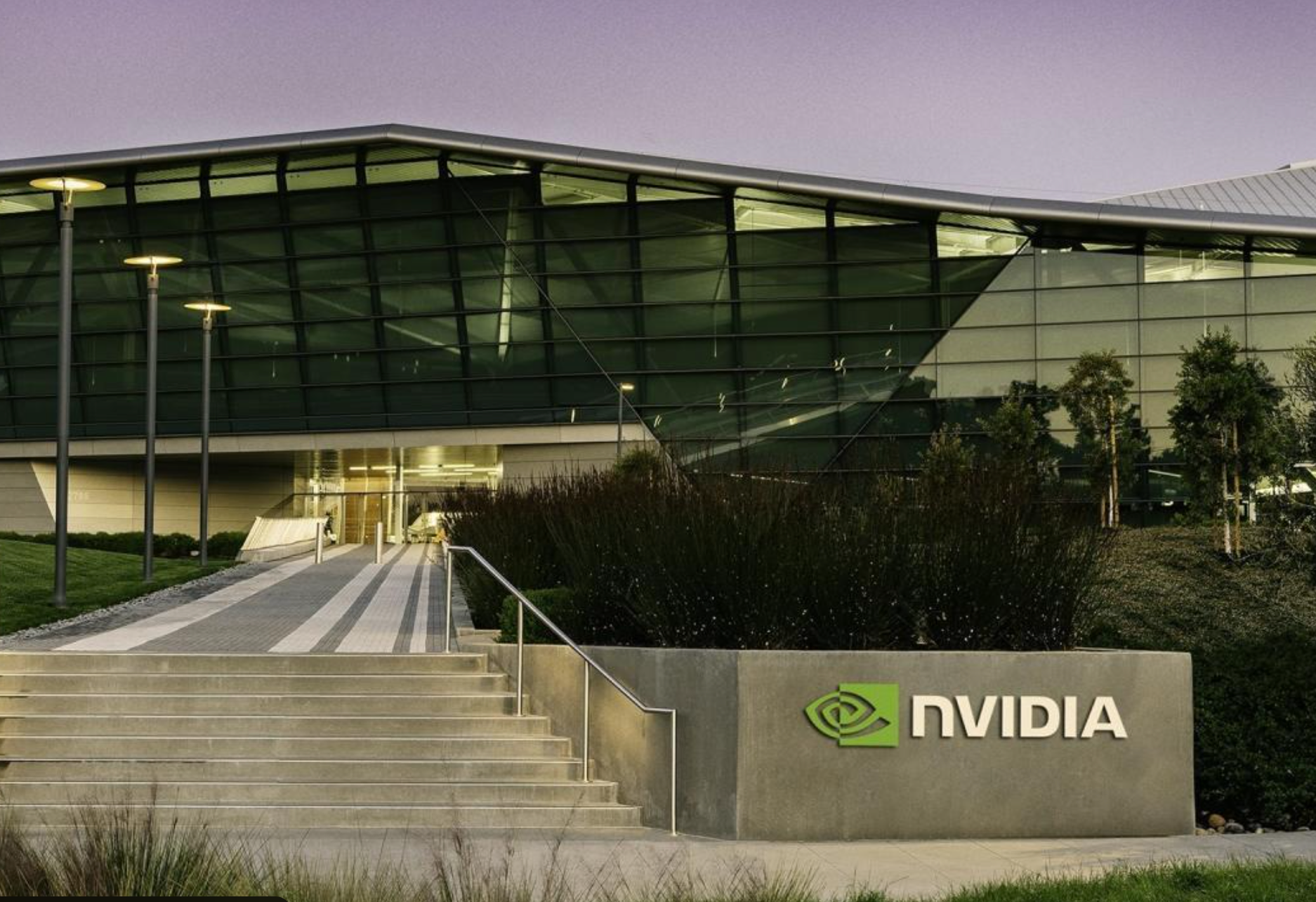
Nvidia's $20B Bond Deal Signals the Real AI Cost
Nvidia launched a $20 billion multi-tranche bond sale as NVDA stock falls 13% in 30 days. The debt deal reveals what the AI buildout actually costs — and who is paying.
Key Points
- Nvidia launched a $20 billion multi-tranche bond offering — nearly four times its 2021 debt raise — while NVDA stock sits 13.1% below its 30-day high and 12% lower for June alone.
- The bond deal funds Nvidia's AI infrastructure buildout and debt service at a moment when its own capex is projected to reach $7.9 billion in 2026, up from $3.2 billion just two years ago.
- Traders have a 56-day window before Nvidia's August 26 earnings call to determine whether the June correction is a buying opportunity or a structural derating — and Broadcom's June 4 guidance miss set a treacherous precedent.
Nvidia, whose market cap still stands at $4.72 trillion despite a 12% collapse in June, just launched a $20 billion bond offering — nearly four times the $5 billion it raised in debt in 2021 — while the stock sits 13.1% below its 30-day high and is trading well off its May 14 all-time high of $236.54. The company that spent two years proving it didn't need to borrow is now borrowing at scale, and the reason is straightforward: the AI infrastructure race has a price tag that even $4 trillion in market cap doesn't fully cover on its own.
The Anatomy of a Correction
June was ugly for Nvidia, and the wound had a specific cause. Broadcom reported fiscal Q2 2026 results on June 4 that beat on revenue — $22.19 billion versus the $22.13 billion consensus — and beat on non-GAAP EPS of $2.44 versus $2.39 expected. None of that mattered. Broadcom's Q3 AI chip sales guidance came in at $16 billion against analyst estimates of $17.2 billion, and it declined to raise its full-year AI semiconductor forecast. The market's reaction was savage: Broadcom fell 14% in a single session, and the top 10 semiconductor names shed a combined $923 billion in market value. Nvidia alone absorbed $280 billion of that figure, and Broadcom and TSMC each lost over $100 billion. The Broadcom miss was the proximate trigger, but the underlying message was something more unsettling — that AI chip demand, while still massive, is not infinitely elastic at any guidance number.
Nvidia's own position in this landscape is structurally different from Broadcom's, and that distinction matters for evaluating the correction. Broadcom's AI revenue is primarily custom ASIC work tied to specific hyperscaler programs with defined timelines. When those timelines slip, the revenue slips. Nvidia's GPU franchise, by contrast, benefits from every incremental watt of AI compute deployed anywhere in the world — its architectures are the de facto standard across training, fine-tuning, and increasingly inference workloads. The NVDA 8-K filed June 30 reflects the company's ongoing capital market activity at a moment when the stock is under pressure but the fundamental demand thesis has not materially changed. That's a distinction traders need to hold clearly in mind.
The Bond Deal's Real Message
The $20 billion bond offering is not a distress signal — Nvidia's balance sheet doesn't require emergency financing. It is a statement about the scale of what the company is building and the cost of building it in a rising-rate environment where the 10-year Treasury yield sits at 4.38% and SOFR is at 3.62%. Nvidia's capex is projected to hit $7.9 billion in 2026, up from $6 billion in 2025 and $3.2 billion in 2024 — a near-tripling in two years. That trajectory, combined with the operational demands of supporting a $4.72 trillion market cap company's infrastructure commitments, makes a $20 billion debt raise logical capital structure management, not a red flag.
What the bond deal does reveal, however, is that the AI infrastructure buildout has entered a capital-intensity phase that most retail traders did not price in when they bought the original GPU scarcity narrative in 2023. The hyperscalers are spending over $470 billion in combined capex in 2026 — Meta's alone is projected to grow 57% to over $110 billion, with Goldman forecasting $125 billion this year and $144 billion in 2027. Google will pay $920 million per month to rent 110,000 Nvidia GPUs from SpaceX starting in October 2026, a deal that runs through June 2029 and represents one of the largest GPU rental commitments ever disclosed publicly. Every dollar of that spending eventually flows upstream to Nvidia's revenue line, which is why the company can credibly service a $20 billion bond issuance. But it also means Nvidia's own financial obligations are scaling in parallel with its customers' commitments — and at 4.38% on the 10-year, the cost of capital for all of that infrastructure is not zero.
The 56-Day Window Before August 26
Nvidia's next earnings release is August 26, 2026. Between today and that date, the stock will trade on four variables: hyperscaler Q2 earnings capex commentary in late July, any update to Blackwell architecture ramp timelines, the macro rate environment — CPI came in at 4.2% year-over-year in May, keeping the Fed on hold with the funds rate at 3.63% — and the competitive landscape from AMD and custom silicon. AMD is up over 140% year-to-date and Cantor Fitzgerald raised its AMD price target to $700 from $500 on June 29, the same day it raised Micron's target. AMD's production ramp of its EPYC "Venice" processor on TSMC's 2nm process is a datapoint Nvidia's team watches carefully, even though the two companies don't directly compete in that workload.
TSMC itself is the cleanest read-through for whether the correction has legs. TSM gained approximately 4.5% over the past 30 days while NVDA fell 13.1% — the foundry is telling a different story than the fabless designer, and that divergence historically resolves in the direction of TSMC's signal. May revenues at TSMC rose 30.1% year-over-year to NT$320.52 billion, and the company projects more than 30% USD revenue growth for the full year 2026. If TSMC is printing 30% revenue growth, the wafers are moving. The specific level traders need to watch on NVDA is the $195 to $200 range — a zone that has acted as technical support twice during the June drawdown. A decisive break below $195 before July hyperscaler earnings would suggest the correction has fundamental drivers beyond the Broadcom read-through. A hold at that level into late July capex disclosures from Microsoft and Meta would make the August 26 earnings date a high-probability re-rating event. The bond market just told you Nvidia is betting on the latter.
The Weekly Investor
Daily market analysis for active traders. Free.