NVIDIA's $13B Hugging Face Bet Rewrites the AI Stack
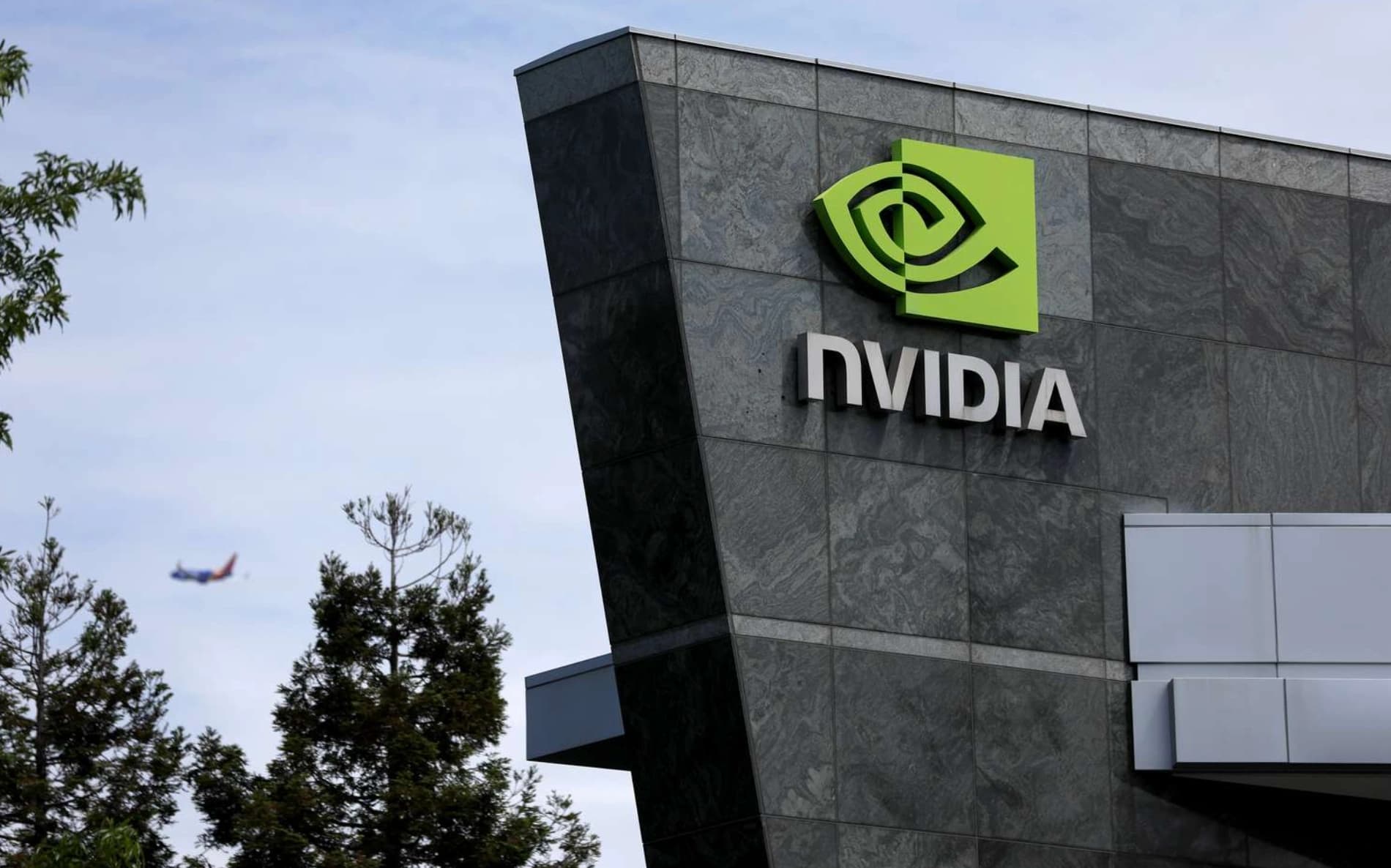
NVIDIA's $12.93B Hugging Face acquisition positions the chipmaker deep in the AI software layer — here's what traders need to know before the close.
Key Points
- NVIDIA confirmed a definitive agreement to acquire Hugging Face for $11.9B plus a $1.0B employee retention program, totaling ~$12.93B — the largest AI software deal in history.
- The move extends NVIDIA's dominance beyond GPUs into the open-source model distribution layer used by 18 million developers and 200,000 companies.
- Traders should watch the H1 2027 regulatory close timeline and any antitrust scrutiny that could mirror the DOJ's posture toward Big Tech consolidation.
NVIDIA just put $12.93 billion on the table to own the front door of the AI developer ecosystem. The definitive agreement to acquire Hugging Face, signed September 2, adds a $1.0 billion equity retention program on top of an $11.9 billion purchase price — and sent NVDA shares up roughly 2% on confirmation. At $227.98 as of this morning, the stock is now up 15.72% over the past month and 22.39% year-to-date, an extraordinary run for a company with a market cap already north of $5 trillion.
Why This Deal Changes Everything
NVIDIA has always been the picks-and-shovels trade in AI — the company that profits regardless of which model wins because everyone needs the hardware. That positioning made Jen-Hsun Huang the most important executive in technology. But the Hugging Face acquisition signals something more deliberate: NVIDIA wants to own the layer where developers actually live and build, not just the substrate underneath them.
Hugging Face is not a model company in the conventional sense. It is an infrastructure platform. More than 18 million developers share over 3 million models on the platform, and more than 200,000 companies use it to discover, fine-tune, and deploy AI. Those are the stickiest user metrics in enterprise software — the kind of network effect that compounds faster than a fab expansion cycle. By acquiring Hugging Face, NVIDIA gains direct visibility into what models developers are building, what frameworks they're using, and critically, what hardware they will eventually need to run inference at scale.
CNBC framed the deal as "defensive," and that framing is worth taking seriously. Open-source model releases — including Tencent's Hy4, which landed this week with 770 billion total parameters, 49 billion active, and a 1 million token context window — are putting sustained pressure on proprietary model pricing. If foundation models commoditize, the value migrates to whoever controls distribution and deployment tooling. NVIDIA just bought the dominant distribution platform before that migration fully prices in.
The Revenue Machine Behind the Deal
Deals of this size require a balance sheet that can absorb near-term dilution without flinching. NVIDIA's Q2 FY27 report made the case that there is no near-term problem. Revenue came in at $96 billion, with data center alone contributing $89 billion — a figure that would have seemed implausible eighteen months ago. Q3 guidance landed at $108 billion, plus or minus 2%, which means the floor for next quarter is $105.84 billion and the ceiling is $110.16 billion. Analysts who had been modeling aggressive growth are now scrambling to revise upward again.
The investment portfolio tells a parallel story. NVIDIA's holdings have grown to $99 billion, a figure that reflects both strategic minority stakes across the AI ecosystem and the float generated by years of exceptional cash flow. The $12.93 billion Hugging Face price tag represents roughly 13% of that portfolio — meaningful, but not a stretch. More importantly, it signals that NVIDIA is operating with the capital discipline of a company that treats acquisitions as portfolio construction, not reactive deal-making.
The retention component of the deal — up to $1.0 billion in equity-based compensation for Hugging Face employees joining NVIDIA — deserves specific attention. Hugging Face's value is almost entirely in its community, its curation standards, and the engineering team that built tools like the Transformers library and the Inference API. If those people walk, the $11.9 billion purchase price buys a brand and a URL. The retention structure suggests NVIDIA understands this, but the proof will come in the 12-18 months post-close.
What Traders Need to Watch Before H1 2027
The deal is not closed. The expected close is H1 2027, pending regulatory approvals — and that timeline deserves more scrutiny than the initial market reaction suggests. Commerce Secretary Lutnick confirmed just last week that semiconductor tariffs are coming, a signal that the current administration is willing to use economic policy tools aggressively in the technology sector. An acquisition that gives NVIDIA — already the dominant AI infrastructure provider — control over the largest open-source model repository on earth is exactly the kind of vertical integration that draws antitrust attention, regardless of which party is in the White House.
The Google Search remedy handed down by Judge Amit P. Mehta last week is instructive. The DOJ failed to force a Chrome divestiture, but the court did ban exclusive distribution contracts — the precise mechanism NVIDIA could theoretically use to favor its own hardware in Hugging Face's deployment recommendations. Regulators will be watching for that scenario. Any indication that NVIDIA intends to deprecate non-NVIDIA hardware integrations on the platform would accelerate a formal review.
For active traders, the near-term setup is constructive but not without risk. NVDA at $227.98 is pricing in both the Hugging Face optionality and the $108 billion Q3 guidance. A guidance miss in November — even a modest one, say $103 billion versus the implied midpoint — could reprice the stock sharply, deal premium or not. The a16z $1.1 billion Machine Age Fund launched today targets AI infrastructure chips, memory, networking, and systems software — exactly the ecosystem that competes with and complements NVIDIA's stack. Watch for deal flow out of that fund in NVDA-adjacent names as a leading indicator of where institutional conviction is moving next. The regulatory window, the Q3 print, and the a16z deployment pace are the three clocks running simultaneously between now and the deal close.
The Weekly Investor
Daily market analysis for active traders. Free.