Nasdaq Futures Surge 1.3% as AI Chips Reclaim the Tape
Nasdaq-100 futures jump 1.3% Tuesday as semiconductor and AI infrastructure stocks lead a rebound from Monday's Iran-driven selloff ahead of Big Tech earnings.
Key Points
- Nasdaq-100 futures jumped +1.3% Tuesday premarket, with QQQ trading at $705.68, as semiconductor and AI infrastructure names overwhelmed Monday's geopolitical-driven selloff.
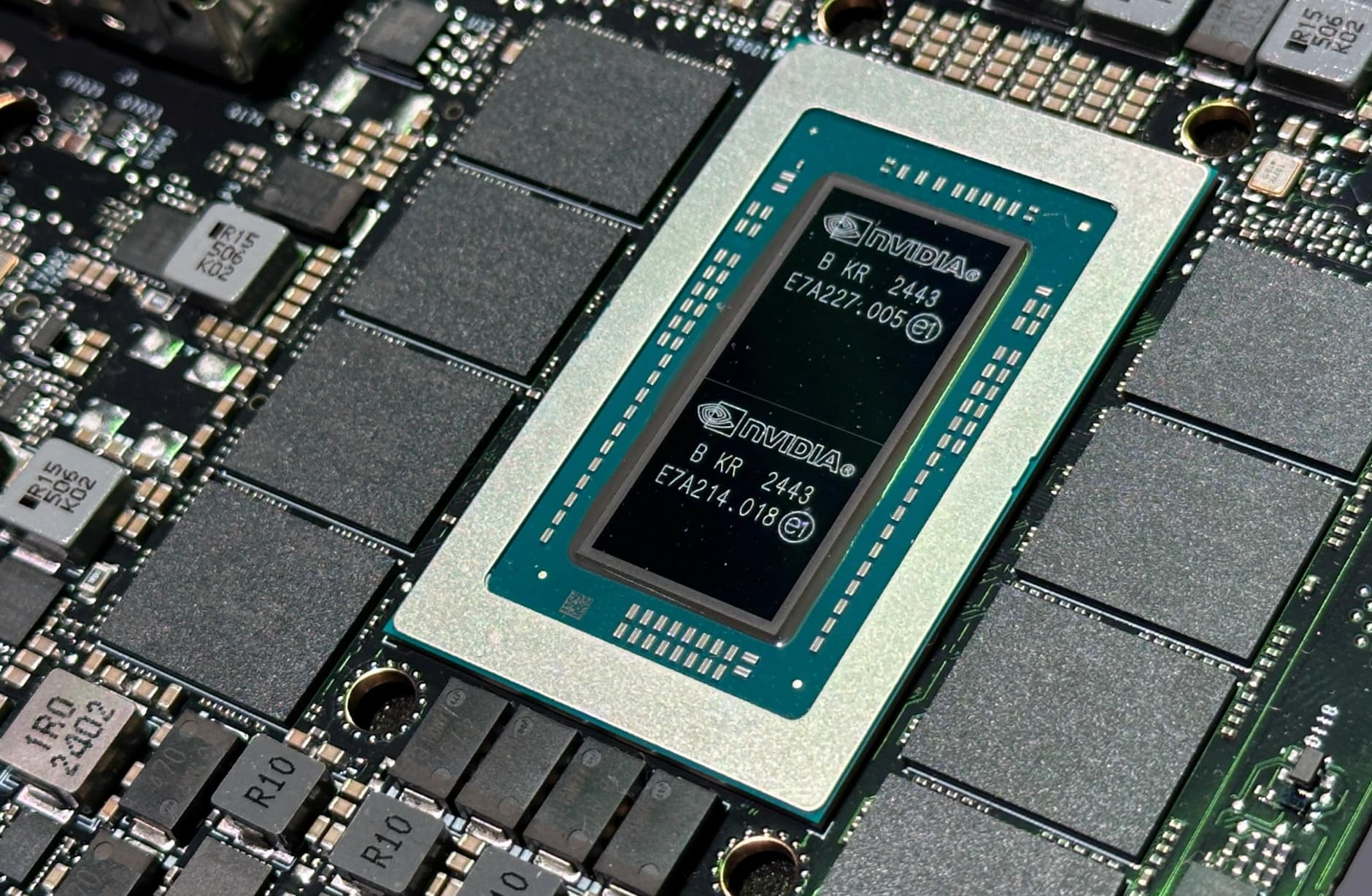
- Nvidia's disclosure of a 9.3% stake in Nebius Group — plus $2.8 billion in new AI cloud contracts for IREN — are driving concentrated buying in AI infrastructure plays.
- Alphabet and Tesla report later this week; Alphabet's CapEx guidance in particular will determine whether Tuesday's bounce has legs or fades into earnings-week noise.
Nasdaq-100 futures are up 1.3% Tuesday, with QQQ trading at $705.68 in premarket — a direct reversal of Monday's broad selloff that sent the Dow down 307 points and the S&P 500 to 7,443.28. The engine this morning is unmistakably semiconductors and AI infrastructure, and the catalyst isn't macro — it's capital flows chasing two specific disclosures that landed after Monday's close.
The Nvidia Effect Takes a New Form
Nebius Group is the most important premarket print this morning, and the reason is simple: Nvidia just told the SEC it owns 9.3% of the company. The filing disclosed Nvidia beneficially holds 22.26 million Class A shares — including 21.07 million issuable through a pre-funded warrant acquired March 11, 2026 — and the market is treating this exactly as it should: as a strategic endorsement from the most important capital allocator in AI infrastructure. NBIS is up 7.60% premarket, coming off a Monday close of $182.62, which itself sits 43% below the stock's 52-week peak. That discount matters. When Nvidia takes a nearly 10% stake in a name still nearly half off its highs, it compresses the risk profile for investors who've been waiting for a re-entry signal. Freedom Capital followed the filing with a Buy initiation at a $200 price target; Northland separately raised its target to $410 from $248. Two analyst upgrades on top of an Nvidia filing in a single morning is not a coincidence — it's a coordinated reassessment of what Nebius is worth inside the AI ecosystem.
The read-through hits the broader semiconductor tape immediately. Marvell (MRVL) and CoreWeave (CRWV) are each up between 4% and 6% premarket. Memory chips are joining the move: Micron (MU) and SanDisk (SNDK) are both rebounding more than 2% after a three-session slump triggered by South Korean pension fund rebalancing liquidations — technically-driven selling that had nothing to do with fundamentals. That selling pressure appears to have exhausted itself, and Tuesday's AI-driven bid is filling the vacuum. Intel (INTC) is adding another layer to the semis story, rising 5% premarket on reports the company will announce data center workforce reductions ahead of Thursday's earnings. Cost discipline reads as margin expansion to the market right now, and INTC's move — however modest in absolute terms — is keeping the Philadelphia Semiconductor Index narrative intact heading into the week's biggest prints.
What the Geopolitical Overhang Actually Costs
Monday's selloff was real, but it was also contained in a way that tells you something specific about market structure. The S&P 500 lost only 0.19% on what the tape characterized as the tenth consecutive night of US military strikes against Iran. The Nasdaq Composite fell just 0.05%. Those are not panic numbers — they are positioning adjustments from traders who know oil-shock inflation fears are legitimate but who also aren't willing to abandon AI momentum ahead of earnings. The VIX closed Monday at 18.65, down 0.64% on the session despite the geopolitical headline risk, and the intraday range of 17.68 to 19.50 placed it at the 21st percentile of its 52-week range. Sub-20 VIX during active Middle East military operations is the market's way of saying the geopolitical risk premium is priced, not ignored.
The rates picture reinforces that read. The 10-year Treasury yield sits at 4.59% Tuesday morning and the 2-year is at 4.20% — a positive spread of 39 basis points that reflects a curve still normalizing after years of inversion, not one pricing a renewed inflation shock. Fed funds futures are assigning an 83.4% probability to the Fed holding rates unchanged at the July meeting, per CME FedWatch. With SOFR at 3.59% and the effective fed funds rate at 3.63%, the policy rate is already 92 basis points below the 10-year yield. The Fed has room, the curve has room, and that combination keeps the equity floor intact even when geopolitics introduces noise. The CNN Fear & Greed Index at 37.6 — firmly in "Fear" territory — is actually a contrarian setup: sustained fear readings at this level historically precede mean reversion bounces, and Tuesday's premarket action looks like exactly that dynamic playing out in real time.
What Traders Watch Next
The session-defining question isn't whether Tuesday closes green — futures momentum and VIX structure both suggest it will — it's whether the gains are broad enough to confirm a durable floor or narrow enough to signal that this is a semis-only trade that fades when the AI narrative hits its next speed bump. Steel Dynamics (STLD) is already providing the cautionary contrast: down 1.90% premarket after Q2 EPS of $3.69 missed the $3.77 consensus, even as revenue of $6.092 billion beat the $5.570 billion estimate. That's a market that is laser-focused on earnings quality right now, not just revenue beats, and it will apply the same scrutiny to every large-cap print this week.
Alphabet is the number that matters most. Schwab derivatives research director Nathan Peterson flagged the Nasdaq-100 and the PHLX Semiconductor Index as technically oversold, noting that mean reversion is plausible "especially if Alphabet announces strong, or increased, CapEx guidance." That's the specific variable: not EPS, not revenue — CapEx. If Alphabet signals it is accelerating AI infrastructure investment, it validates every AI infrastructure name on the tape and gives NBIS, IREN, MRVL, and CRWV a fundamental anchor. If Alphabet guides CapEx flat or trims it, the AI infrastructure trade loses its most important demand signal, and Tuesday's bounce becomes a sell-the-rip setup. Tesla reports the same week, but it is Alphabet's spending intentions — not Tesla's delivery counts — that will determine whether the Nasdaq-100 holds above the 20,000 level that has anchored the bull case through the Iran overhang.
The Weekly Investor
Daily market analysis for active traders. Free.