Nasdaq Futures Jump 1.5% as AI Fear Trade Cools
Nasdaq 100 futures surge 1.53% Monday as Iran tensions ease and AI sector rotation shifts from chips to software. VIX drops to 18.41. Key levels inside.
Key Points
- Nasdaq 100 futures are up 1.53% to 29,731.75 Monday morning, attempting to claw back ground after the index's worst weekly drop in months at -4.6%.
- The bounce is driven by easing Iran-related oil volatility and a visible rotation out of semiconductor names into enterprise software, with Microsoft heading for its worst June since 2000 even as Micron posted record revenue and EPS.
- Watch whether Nasdaq 100 futures can hold above 29,000 at the open — failure there signals the AI rotation is deepening, not pausing.
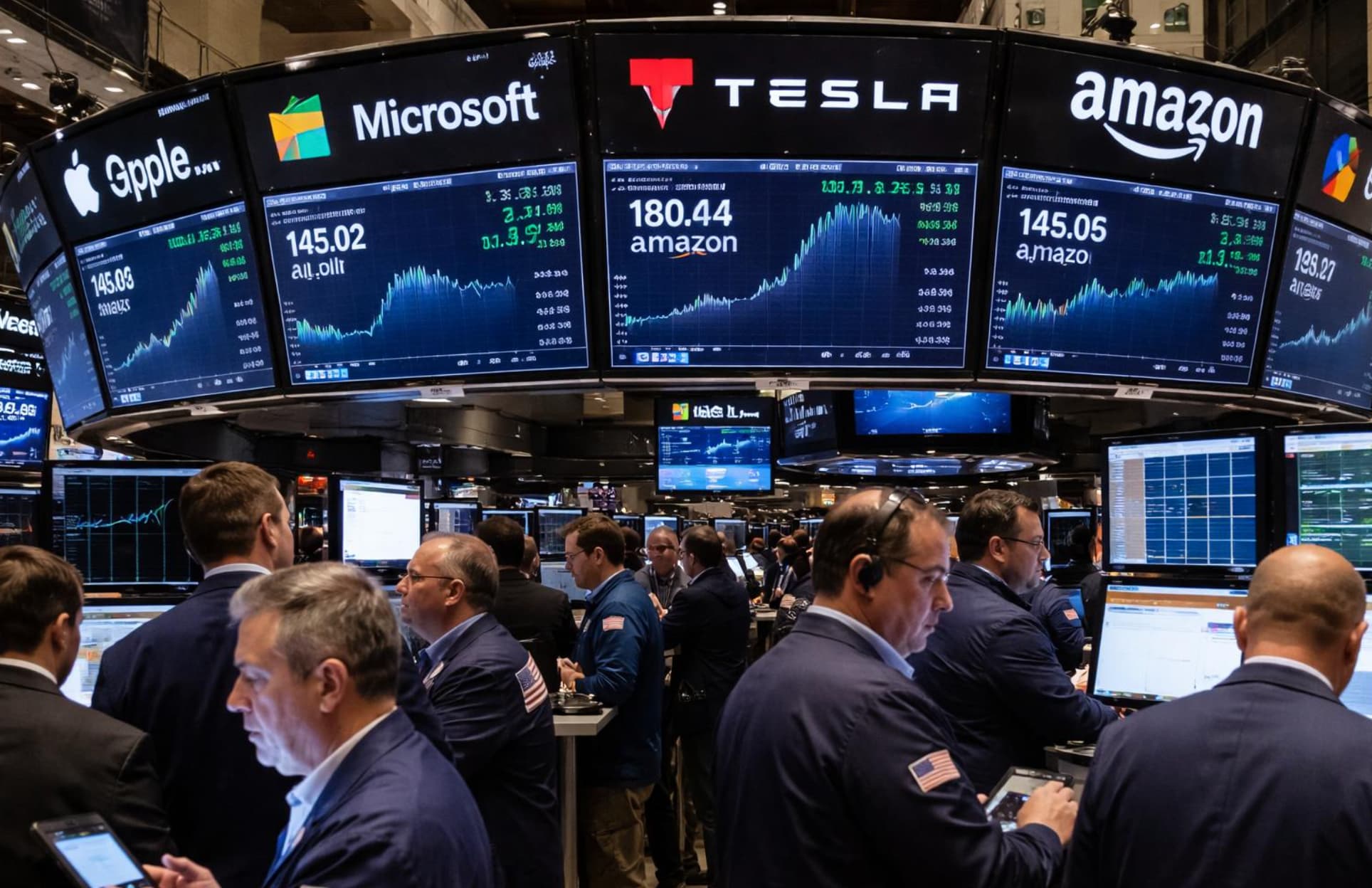
Nasdaq 100 futures are up 447 points — 1.53% — to 29,731.75 as of Monday pre-market, staging the most aggressive single-morning bounce since the index began its slide. But this is a relief rally off a -4.6% weekly loss, not a trend reversal, and the internal structure of what's leading the charge tells a far more complicated story than the headline number suggests.
The Rotation Beneath the Rally
The single most important thing to understand about this morning's futures pop is what's driving it and, critically, what is not. Semiconductor stocks — the group that powered the Nasdaq's historic run through 2024 and 2025 — remain the sector most under pressure. The catalyst is a New York Times report indicating OpenAI is considering pushing its IPO to next year, citing SpaceX's underwhelming post-debut performance and persistent volatility in AI-adjacent shares. JPMorgan responded directly, flagging concerns about the "sustainability of their infrastructure spending given the delay in funding from the capital markets." That language — infrastructure spending sustainability — is the phrase chip investors should be circling in red.
The flip side of that semiconductor pressure is enterprise software, and the rotation is now impossible to ignore. Software ETFs surged last week even as semiconductor funds bled, representing a fundamental repricing of where the AI dollar ultimately lands. The thesis is straightforward: if hyperscaler capex faces scrutiny and AI infrastructure timelines stretch, the near-term revenue winners are the software companies sitting on top of existing deployments rather than the fabs and designers supplying the next generation of hardware. Microsoft is heading for its worst June since 2000 — a company whose AI credentials are arguably stronger than any other in the index — which underscores how indiscriminate the selling in mega-cap tech has been. Bargain hunters with a software bias are the most logical buyers into this morning's gap.
Micron's print cuts against the pure bearish semiconductor narrative. The company delivered record revenue and record EPS, demonstrating that actual end-demand for memory — particularly HBM tied to AI training infrastructure — remains robust even as the market questions the pace of new investment cycles. The divergence between Micron's fundamental results and the sector's price action is the kind of disconnection that creates entry opportunities for traders willing to do the underlying work. The question is timing, and with the Nasdaq 100 having traded in a range of 29,160.50 to 29,892.75 today alone, the intraday volatility is still wide enough to inflict damage on imprecise entries.
Iran, Oil Vol, and the Macro Unlock
The equity bounce this morning is not happening in isolation — it's being enabled by a meaningful deescalation in oil market volatility following last weekend's US strikes. WTI 1-month implied volatility hit 68% at its peak last week before ending the week at 51%. As of this morning, the implied-realized vol spread on WTI 1-month options has compressed from a high of 30 points down to 14, reflecting a market that is no longer pricing in an imminent disruption to Gulf supply lanes. That compression in oil vol is functioning as a macro pressure-release valve for equities — when energy traders stop hedging for worst-case scenarios, risk appetite returns to other asset classes.
WTI crude was last quoted at $81.36 per barrel as of June 19, and Brent at $81.00. Neither has broken out, which is the equity market's preferred outcome: elevated enough to keep energy sector earnings intact, but not so elevated that inflation re-acceleration becomes the dominant narrative. That balance is precarious. Iran's formal response to the US strikes has not yet materialized in a way that markets have had to price, and any escalation announcement this week — particularly one targeting Strait of Hormuz transit — would immediately reverse the vol compression and take equity futures with it.
The broader macro read is equally uncomfortable. CPI is running at 4.2% year-over-year as of May, with core at 2.8%. The Fed Funds Effective Rate sits at 3.63%, meaning real rates are meaningfully negative on headline CPI. The 10-year Treasury yield at 4.4% provides some real rate buffer, but the 31-basis-point spread between the 10-year and 2-year — currently at 4.09% — signals a market that is not convinced the Fed has room to ease aggressively even if growth softens. Month-end rebalancing on Tuesday, June 30, will inject additional noise into Treasury markets and create cross-currents in equities that could make today's bounce look very different by Wednesday morning.
What Traders Watch Next
The most actionable number heading into today's open is 29,000 on the Nasdaq 100. Futures are currently printing 29,731.75, which provides roughly 730 points of cushion before that level comes into play — but the intraday range already established today (29,160.50 low) shows the market tested below 29,200 within the overnight session before recovering. A cash open that fades from current futures levels and breaks 29,000 on the Nasdaq 100 would be a technically significant development, reopening the debate about whether last week's -4.6% decline was a correction within an uptrend or the beginning of something more structural.
Consumer sentiment data from the University of Michigan, while not a market-moving release in normal conditions, carries additional weight this month: the headline came in at 49.5, 10.5% above the May reading, with five-year inflation expectations declining 0.6 percentage points to 3.3%. That directional improvement matters at the margin for Fed policy expectations, but sentiment remains nearly 20% below year-ago levels and 13% below February's pre-Iran-conflict baseline. The gap between a technically improving survey and a consumer who is still deeply pessimistic is not a gap that one week of geopolitical de-escalation closes.
The VIX at 18.41, down 2.54% from Friday's close of 18.89, is the options market's clearest signal that a second panic leg is not the consensus expectation. A VIX sub-18 close today would be a constructive development. A VIX that bounces back above 20 intraday would immediately reframe this morning's gap-up as a failed rally and shift the burden of proof back to the bulls. Goldman Sachs' John Flood is publicly in the "buy the dip" camp, and with retail, institutional, and corporate buyers all cited as active in the dip-buying regime, the demand side of the equation looks real. The variable is whether Iran, month-end flows, or a fresh AI capex headline arrives before that demand can do its work. The next 72 hours — through Tuesday's close and June 30 rebalancing — are the critical window.
The Weekly Investor
Daily market analysis for active traders. Free.