Micron's $54B Quarter Rewrites the Memory Playbook
Micron Q4 2026 earnings beat every metric: $54.23B revenue, 87% gross margin, $61.5B Q1 guide. Here's what traders need to know now.
Key Points
- Micron posted Q4 FY2026 revenue of $54.23B — up 379% year-over-year — with an 87% gross margin and $33.2B in free cash flow for the quarter alone.
- Insatiable AI infrastructure demand is the engine: data center segments alone — Cloud Memory at $16.28B and Core Data Center at $18.00B — combined for more than $34B in a single quarter.
- Watch the margin compression signal embedded in Q1 guidance; if gross margins slip more than 200 basis points from the 87% peak, the stock's 24x multiple becomes the conversation.
Micron Technology printed $54.23B in Q4 FY2026 revenue — a 379% year-over-year surge that blew past the $51.07B street estimate — and guided Q1 FY2027 to $61.5B, roughly $4.5B above consensus. Yet the stock moved only +0.4% in aftermarket trading. That disconnect between an all-time generational print and a muted price reaction is the most important signal in the semiconductor market right now.
The Numbers That Matter
Start with the margin structure, because 87% gross margin on a $54B revenue quarter is not a rounding error — it is a structural statement about who controls the memory market in 2026. Operating income hit $44.6B on an 82.3% operating margin. Free cash flow for the quarter alone was $33.2B. For context, Micron's entire FY2023 revenue was roughly $15.5B. The company just generated more free cash flow in a single quarter than it earned in total revenue three years ago.
For the full fiscal year, Micron closed at $133.19B in revenue — up 256% year-over-year — with diluted EPS of $75.52, a figure that represents an 811% increase from FY2025. Adjusted gross margin for the year landed at 81.1%, a gain of 40 full percentage points. The company crossed $100B in DRAM revenue for the first time in its history, a threshold that would have been called delusional in any analyst model written before the generative AI infrastructure buildout began in earnest.
Adjusted free cash flow for FY2026 totaled $62.31B. Micron ended the year holding $73.48B in cash, investments, and restricted cash — a balance sheet that transforms the company from a cyclical chip maker into a financial institution that also happens to fabricate memory. Management declared a $0.15 per share quarterly dividend payable October 29 to holders of record October 14.
The AI Infrastructure Trade Hidden Inside the Print
The segment data is where the strategic picture sharpens. Cloud Memory generated $16.28B in Q4, and Core Data Center contributed $18.00B — a combined $34.28B from data center customers in a single quarter. That figure alone exceeds what Micron generated in total annual revenue as recently as two years ago. These are not incremental improvements; they are category redefinitions driven almost entirely by AI training and inference workloads that require high-bandwidth memory at a scale no one modeled correctly.
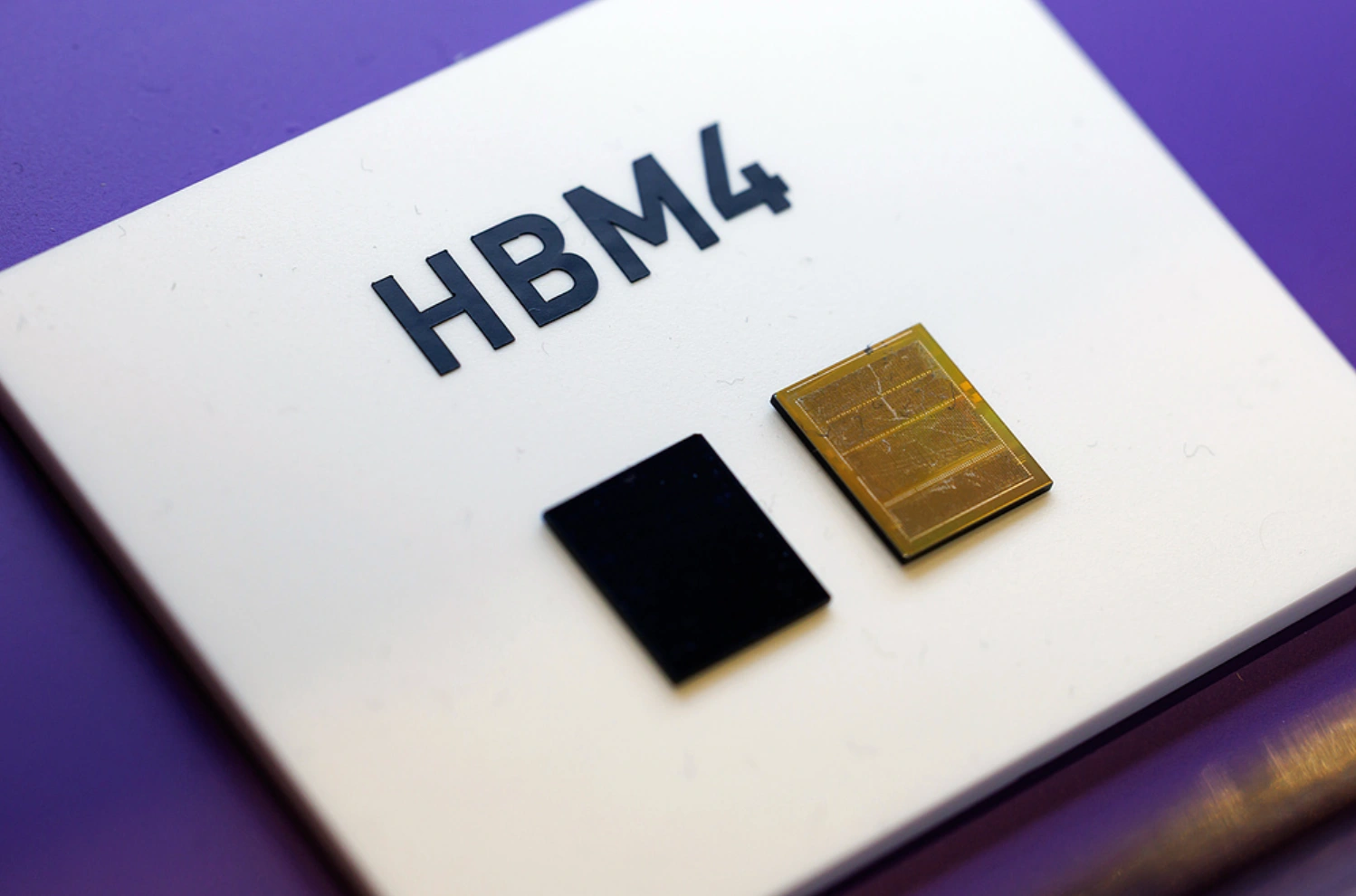
The HBM story inside Micron's results is documented in detail in the company's SEC 8-K filing, and it explains why the competitive dynamics in memory look nothing like prior cycles. HBM3E demand tied to NVIDIA's Blackwell and next-generation GPU architectures has effectively created a supply-constrained duopoly where Micron and SK Hynix set prices, not buyers. Tight market supply is the proximate cause of the 87% gross margin — and it is also the risk embedded in forward guidance. Management's Q1 revenue guide of $61.5B implies sequential growth of roughly 13%, but the EPS guide of $38.15 — while 8.5% above the $35.14 street estimate — hints at modest margin compression off the Q4 peak.
The market cap stands at $1.2 trillion at a P/E of 24.18x trailing earnings. At $75.52 in full-year EPS, that multiple is not expensive by any traditional semiconductor framework — particularly for a company generating $33B in quarterly free cash flow. The stock is up approximately 275% year-to-date and more than 550% over the trailing 12 months. The +0.4% aftermarket move after a print of this magnitude tells you the market had already largely priced the beat, and that the forward margin narrative is the only variable left to argue about.
What Traders Watch Next
TheStreet's live earnings call coverage flagged the key management commentary: demand remains hot, but pricing discipline will be tested as supply gradually responds to extraordinary margin incentives. The question is not whether Micron will report another strong quarter — it almost certainly will — but whether the 87% gross margin represents a ceiling or a plateau. If Q1 gross margins print below 85%, expect a multiple compression conversation to begin in earnest, particularly from the short community that has been systematically punished for 18 months.
Watch the TSMC 2nm ramp as a secondary indicator. TSMC's accelerating wafer output — potentially reaching 120,000 wafers per month by year-end — and the 10% to 20% order lift from Apple, NVIDIA, AMD, Qualcomm, and MediaTek all represent downstream demand signals for Micron's HBM and LPDDR products. More leading-edge compute shipped means more high-bandwidth memory consumed. The two stories are inseparable. AMD and NVIDIA both report earnings in November, and their data center revenue lines will either validate or complicate Micron's demand narrative.
The specific level to hold on a pullback is the $190–$195 range, which represented the pre-earnings consolidation zone and now functions as the first technical support. The October 29 dividend payment date is a near-term calendar anchor. Any macro deterioration in cloud capex guidance from Microsoft, Google, or Amazon before their October earnings — all reporting within the next four weeks — could reprice the entire AI infrastructure trade faster than any single chip stock's fundamentals would justify. Micron's print was historic. The stock's behavior afterward suggests the easy money in this particular cycle has been made, and the next move depends entirely on whether AI capex remains immune to macro gravity.
The Weekly Investor
Daily market analysis for active traders. Free.