Micron Reports Tonight: $50.9B Revenue on the Line
Micron reports Q4 FY2026 after the close today. EPS consensus $31.49, revenue $50.92B. The cleanest read on AI memory demand and data-center spending of the quarter.
Key Points
- Micron reports Q4 FY2026 after the close today with Street consensus at $31.49 EPS on $50.92B revenue — numbers that would represent a historic revenue scale for the company.
- The print is the single most important read on AI-driven memory demand and data-center capital spending for the entire September quarter, with FY2027 consensus implying $157.89 EPS on $252.44B revenue.
- Traders should focus on management's Q1 FY2027 guidance and any commentary on high-bandwidth memory pricing, which will determine whether the FY2027 consensus is achievable or a setup for a reset.
Micron Technology reports Q4 FY2026 earnings after the close tonight — consensus is $31.49 EPS on $50.92B in revenue — and this single print will do more to define the AI trade going into Q4 2026 than any other data point this week, including the PCE inflation number hitting the tape this morning. At $50.92B in quarterly revenue, Micron would be running at an annualized pace of roughly $200B — a figure that would have been science fiction for a memory chip company 36 months ago. The question tonight is not whether the AI buildout is real. It is whether Micron's capacity, pricing power, and mix shift toward high-bandwidth memory can sustain the growth trajectory that has the Street modeling $252.44B in FY2027 revenue and $157.89 in EPS.
What the Consensus Actually Implies
The full-year FY2026 EPS consensus of $73.70 on revenue of $130.01B is the baseline. The Q4 print of $31.49 EPS and $50.92B revenue implies a sequential acceleration from Q3 — meaning the Street is already pricing in a strong finish to the fiscal year, not a deceleration. That setup creates asymmetric risk around the print: a beat on revenue and a strong Q1 FY2027 guide would be incrementally positive but largely expected. A miss on either revenue or gross margin, or a Q1 guide that comes in below the $56.64B next-quarter consensus, would trigger forced selling from momentum holders who have ridden the AI memory trade all year.
The FY2027 numbers are where the real debate lives. A consensus of $157.89 EPS on $252.44B revenue implies Micron nearly doubling its top line in a single fiscal year — a growth rate that is only achievable if high-bandwidth memory pricing holds, if hyperscaler capex remains at current elevated levels, and if no meaningful supply response from Samsung or SK Hynix materializes to pressure DRAM spot prices. Each of those conditions is independently uncertain. Together, they represent a bull case that is fully priced into current analyst models but not yet confirmed by actual order flow and pricing data. Tonight's guidance will begin to confirm or crack that framework.
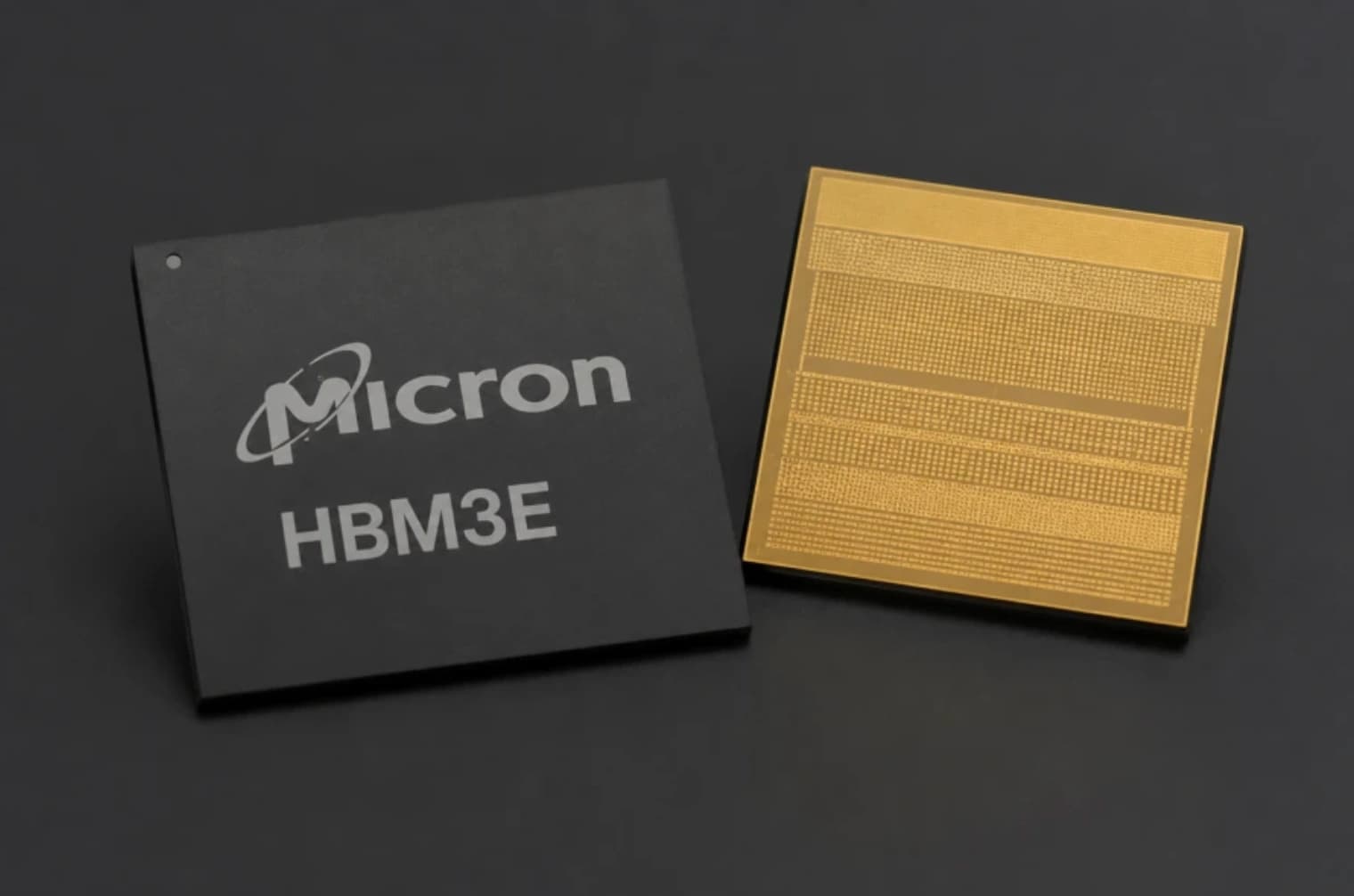
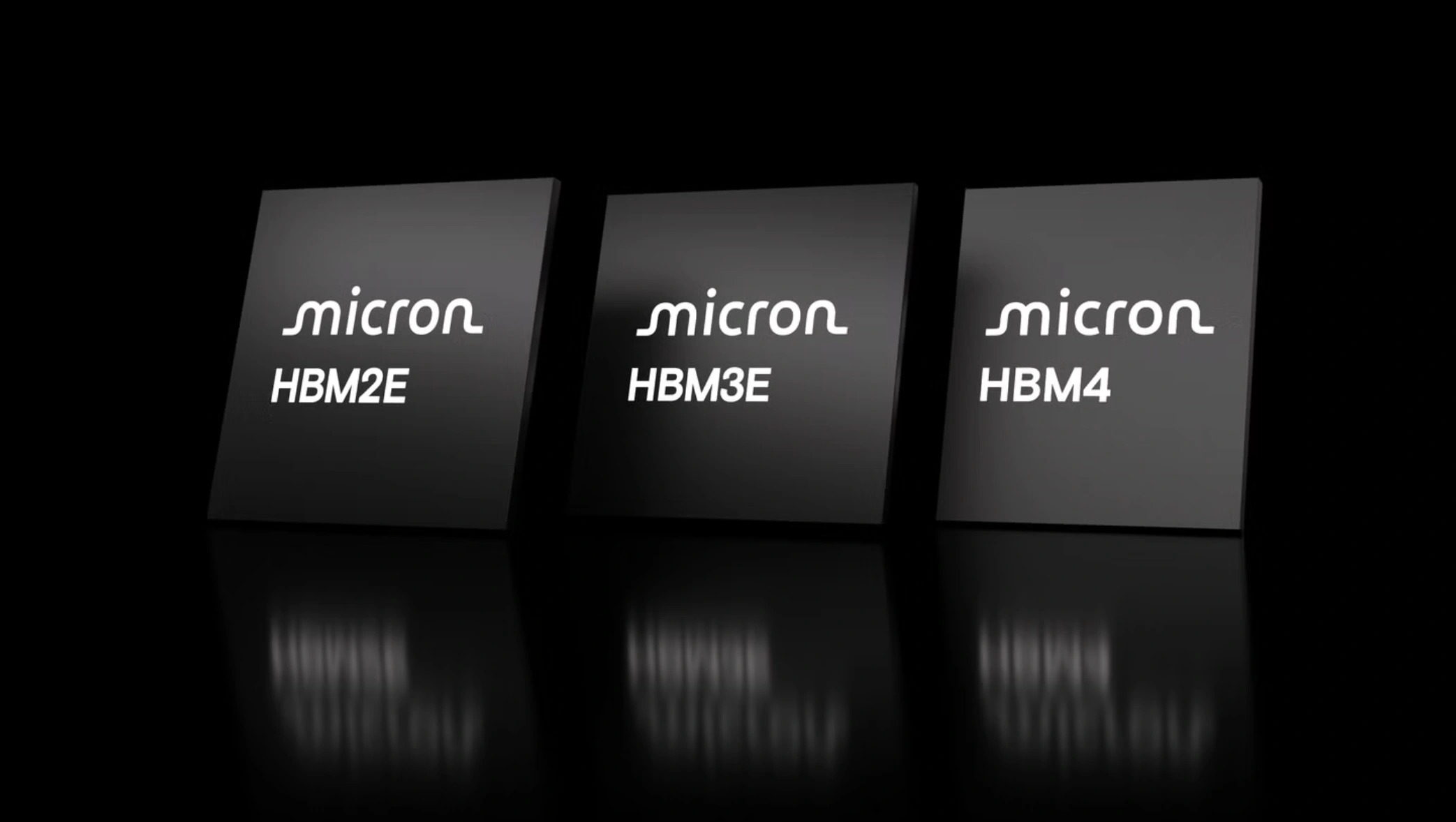
Gross margin is the most sensitive line to watch in the actual Q4 print. Memory pricing is notoriously volatile, and Micron's mix shift toward HBM — high-bandwidth memory, the product that ships inside Nvidia's H100 and successor GPU stacks — has been the key driver of margin expansion over the past four quarters. HBM carries meaningfully higher average selling prices than commodity DRAM and is currently supply-constrained, which gives Micron pricing power it has not historically enjoyed in the memory cycle. If Q4 gross margin comes in above 40%, the bull case for FY2027 becomes structurally credible. If it prints below 38%, the conversation shifts to whether the HBM premium is beginning to compress as supply catches up.
The AI Infrastructure Read-Through
Micron's earnings are not just about Micron. Every hyperscaler — Microsoft, Amazon, Google, Meta — has committed to sustained or accelerating data-center capital expenditure through 2027, and those commitments require memory at a scale the industry has never previously shipped. Micron is the only U.S.-domiciled company capable of supplying HBM at volume, which gives tonight's print a geopolitical and policy dimension that compounds its financial significance. Any commentary from management about customer order visibility — specifically whether hyperscaler HBM orders extend 12 months or 18 months into the future — will be parsed as aggressively as the headline EPS number.
Applied Materials gained 4.98% to $511.01 Tuesday and Marvell Technology added 4.80% to $264.00, both in anticipation of a clean Micron print. Lumentum jumped 5.79% to $974.65 on optical networking demand signals tied to the same AI infrastructure buildout. The semiconductor and semiconductor-adjacent complex is already positioned for a beat — which means the pain trade tonight is a miss or a cautious guide. If Micron delivers a beat but guides Q1 FY2027 revenue below $56.64B, the stocks that rallied in sympathy Tuesday — AMAT, MRVL, LITE — face immediate give-back risk, potentially amplified by the 30-year Treasury yield sitting at 5.6% and compressing growth-stock multiples at exactly the wrong moment.
The macro backdrop adds a second layer of complexity that did not exist in prior Micron earnings cycles. With the Fed projecting the overnight rate rising to 4.1% by year-end from the current 3.75%–4.00% range, the discount rate applied to Micron's FY2027 and FY2028 earnings streams is higher than it was six months ago. A company trading on a multiple of forward earnings feels that pressure immediately when rates move. Micron's ability to offset that multiple compression with accelerating earnings growth — which is precisely what the $157.89 FY2027 EPS consensus represents — is the central tension in the stock. Tonight's print either validates that growth acceleration or introduces doubt.
The Specific Levels and Catalysts Traders Watch Tonight
The after-hours reaction to Micron's print will set the tone for the semiconductor sector opening Thursday morning. Traders should track three specific numbers in sequence as the report lands: first, the Q4 revenue versus the $50.92B consensus; second, gross margin versus the 40% threshold that separates a strong print from a clean beat; and third, Q1 FY2027 revenue guidance versus the $56.64B Street expectation. All three need to land at or above consensus for the stock to sustain a meaningful after-hours rally. Two out of three likely produces a muted reaction. One out of three — particularly a gross margin miss — risks a sharp reversal of the sympathy gains that rippled through AMAT, MRVL, and the broader semiconductor complex on Tuesday.
The broader market context tonight is not neutral. PCE data landed this morning alongside rising rate expectations, and the 30-year yield at 5.6% is the highest since June 2002. In that environment, growth stocks with elevated multiples are structurally vulnerable to any narrative disruption. Micron enters tonight's print as perhaps the single company most capable of either reinforcing the AI-driven growth story or cracking it — there is no middle ground when the FY2027 consensus already prices in a near-doubling of revenue. The specific level to watch on MU in after-hours trade is the 200-day moving average and the $130 price region that served as resistance through the July and August consolidation; a sustained move above that zone on strong guidance would signal the next leg of the AI memory rally, while a failure to hold $120 on a miss would open a gap back toward the $105 support that defined the lows of the spring geopolitical disruption. The next hard catalyst after tonight's print is management's analyst day, expected in November, where the HBM roadmap and capacity commitments for FY2027 will be laid out in detail.
The Weekly Investor
Daily market analysis for active traders. Free.