Micron Earnings Tonight: AI Memory's $50B Moment of Truth
Micron reports Q4 2026 earnings after the bell tonight. Analysts expect $31.45/share on $50.75B revenue. Guidance is the only number that matters.
Key Points
- Analysts expect Micron to report Q4 2026 earnings of $31.45 per share on revenue of $50.75 billion — a staggering acceleration from $11.31 billion in the year-ago quarter.
- Micron's report is the defining AI infrastructure earnings event of September, and the forward guidance will matter far more than the backward-looking Q4 print.
- MU shares closed at $1,071.92 in after-hours Tuesday; traders should watch whether guidance clears or disappoints the elevated bar that a near-five-fold revenue surge has already set.
Micron Technology reports after the closing bell tonight, and the number that actually matters is not the one analysts have modeled — it's the one Micron's management puts on the page for Q1 2027 guidance. Consensus is looking for $31.45 per share on $50.75 billion in quarterly revenue, a figure that would represent a near-five-fold increase from the $11.31 billion Micron posted in the same quarter a year ago. That kind of growth trajectory is already partially priced into a stock trading at $1,071.92 — the risk isn't missing the quarter, it's missing what comes next.
The AI Memory Machine
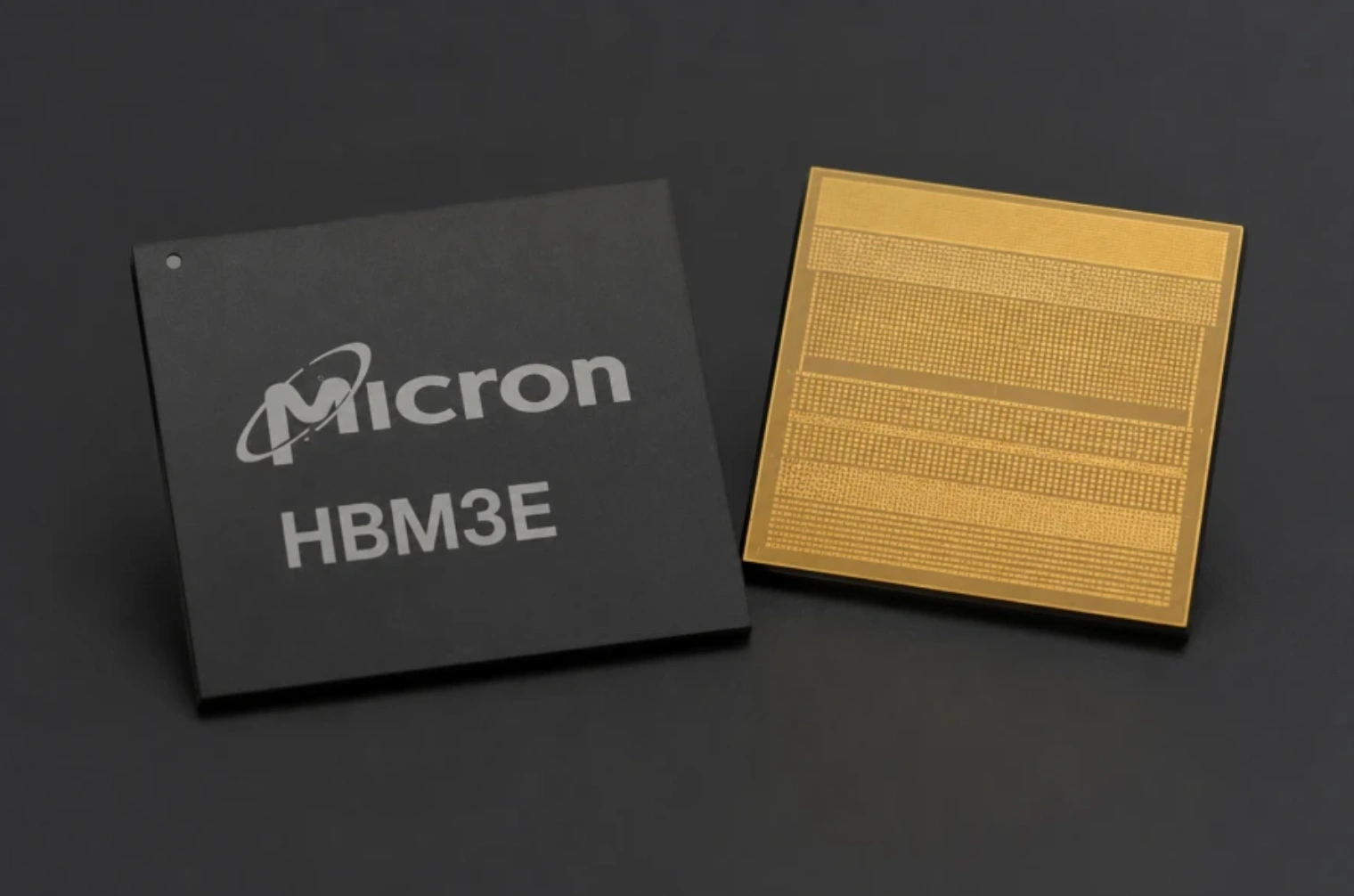
The story behind Micron's explosive revenue trajectory is not complicated, but it is consequential. Artificial intelligence infrastructure buildout — data centers, GPU clusters, hyperscaler capacity — requires massive amounts of high-bandwidth memory, and Micron is one of only three companies in the world capable of producing it at scale alongside Samsung and SK Hynix. Demand for HBM, the specialized DRAM architecture used in AI accelerators like Nvidia's H100 and B200 chips, went from niche to critical in roughly 18 months, and Micron's revenue line reflects exactly that transition.
The year-over-year comparison is almost absurd in its magnitude. A Q4 print of $50.75 billion against $11.31 billion a year prior would represent approximately 349% revenue growth — the kind of number that would be career-defining for most management teams and sector-defining for the broader semiconductor industry. It also sets an extraordinarily high baseline for future comparisons. If Micron guides Q1 2027 revenue toward $52 billion or above, the stock likely extends gains. If guidance implies even modest sequential deceleration — say, a midpoint below $48 billion — expect a post-earnings shakeout regardless of how clean the Q4 beat looks, because the market will immediately begin calculating whether peak AI memory spend is at hand.
MU has gained +0.6% in after-hours Tuesday to $1,071.92, a muted premarket signal that suggests neither panic nor euphoria — the classic setup for a binary event where the tape is waiting for management to speak. The Nasdaq Composite has gained roughly +1.6% in September, and Micron's performance has been a meaningful contributor to that leadership. A guide-down tonight would reverberate across the AI semiconductor complex: AMD, Nvidia, and ASML all trade partially on the same AI capex thesis, and a Micron miss on forward outlook would invite sellers across the group.
The Setup and the Risk
This is not Micron's first rodeo with elevated expectations, and management has learned to play the guidance game carefully. In prior earnings cycles, the company has navigated analyst enthusiasm by threading the needle between confirming strong demand and not explicitly endorsing numbers that would be impossible to repeat. The risk this quarter is that the consensus estimate for Q4 at $50.75 billion has been climbing aggressively into the print — any number within a reasonable margin of that figure will be treated as confirmation of the bull case but not necessarily a catalyst for a fresh leg higher.
The more interesting read comes from gross margin expectations. As HBM production scales, Micron has been working through a product mix shift that has meaningful margin implications. HBM commands significantly higher average selling prices than commodity DRAM, but it also carries elevated manufacturing complexity. If gross margins for Q4 come in at or above 38% — the approximate consensus range — that signals pricing power is holding and the mix shift is proceeding on schedule. Gross margins disappointing below 36% would raise questions about competitive intensity from Samsung and SK Hynix and could be a more damaging signal than a modest revenue miss.
Context for the broader session matters here. Today is September 30, the final trading day of Q3, and quarter-end portfolio rebalancing flows will be active through the close. The PCE inflation print at 8:30 AM ET could meaningfully shift the macro backdrop before Micron even opens its call tonight — a hot inflation number that drives Treasury yields higher and reprices Fed expectations would create a tougher multiple environment into which Micron is delivering earnings, regardless of the print itself. The VIX term structure — front-end at 14.21, three-month at 18.09 — reflects a market that is relatively calm today but retains meaningful hedging for Q4, a period that will include at least one more major Fed meeting and continued macro uncertainty driven by crude oil in the mid-$90s and ongoing geopolitical stress.
Jabil Circuit also reports Q4 figures premarket this morning, with shares at $320.25. Jabil is a useful secondary read on AI infrastructure and electronics manufacturing demand — its results could color sentiment into Micron's evening report.
What Traders Watch Next
Traders positioning into MU earnings tonight face a classic asymmetric payoff structure. The stock has already absorbed a dramatic re-rating over the past 12 months on the back of AI demand. A clean beat-and-raise — Q4 above $51 billion on revenue and Q1 guidance at $53 billion or above — likely adds 5-8% to the stock in after-hours, with sympathetic moves in AMD, Nvidia, and the SOXX semiconductor ETF. A meet-and-guide-lower scenario, where Q4 lands near consensus but Q1 guidance midpoint comes in below $48 billion, could produce a -10% to -15% reaction, the kind of move that rattles the broader Nasdaq given MU's index weight and thematic significance.
The critical number to watch is not just the revenue guide — it is the commentary on HBM allocation and customer commitments. If management indicates that HBM capacity for 2027 is already substantially committed at contracted prices, that is a powerful signal of demand durability. If they hedge on forward visibility or reference customer inventory digestion, that language will be parsed aggressively by sell-side analysts and algo traders within seconds of hitting the transcript. Micron's call typically begins at approximately 4:30 PM ET following the earnings release. The $1,000 level on MU — roughly 7% below Tuesday's after-hours price — is the first meaningful technical support level that would come into play on a severe guidance disappointment, and a close below that level on Thursday would shift the near-term chart structure meaningfully bearish heading into October.
The Weekly Investor
Daily market analysis for active traders. Free.