Micron Crushes Q4 Estimates, Stock Falls Anyway
Micron posted $54.23B in revenue and $33.42 EPS, beating on every line — then fell 1%. Here's why the market isn't buying it.
Key Points
- Micron delivered adjusted EPS of $33.42 versus the $31.61 consensus and revenue of $54.23 billion versus $51.07 billion expected, with Q1 guidance of $61.5 billion in revenue also clearing the $57.02 billion Street estimate.
- The stock fell 1% despite the beat because investors are focused on heavy capital expenditure commitments and an expected gross margin decline that will compress profitability relative to current levels even as revenue grows.
- The critical watch point is whether Micron's planned capex cycle and wage increases erode the 87% profit margins that have been the core bull thesis — and whether AI-driven HBM demand remains strong enough to absorb the cost pressure.
Micron delivered one of the cleanest revenue beats of the earnings cycle — and the market sold it. The memory chip maker posted adjusted EPS of **$33.42**, clearing the LSEG consensus of $31.61 by more than 5%, on revenue of **$54.23 billion** against an expectation of $51.07 billion. Forward guidance for fiscal Q1 called for **$61.5 billion in revenue** and EPS of $38.15 — well above the analyst consensus of $35.40 on $57.02 billion. Annual revenue growth came in at 379.1% versus a 351% consensus estimate. By every conventional metric, this was a blowout. The stock dropped 1%.
What the Numbers Actually Show
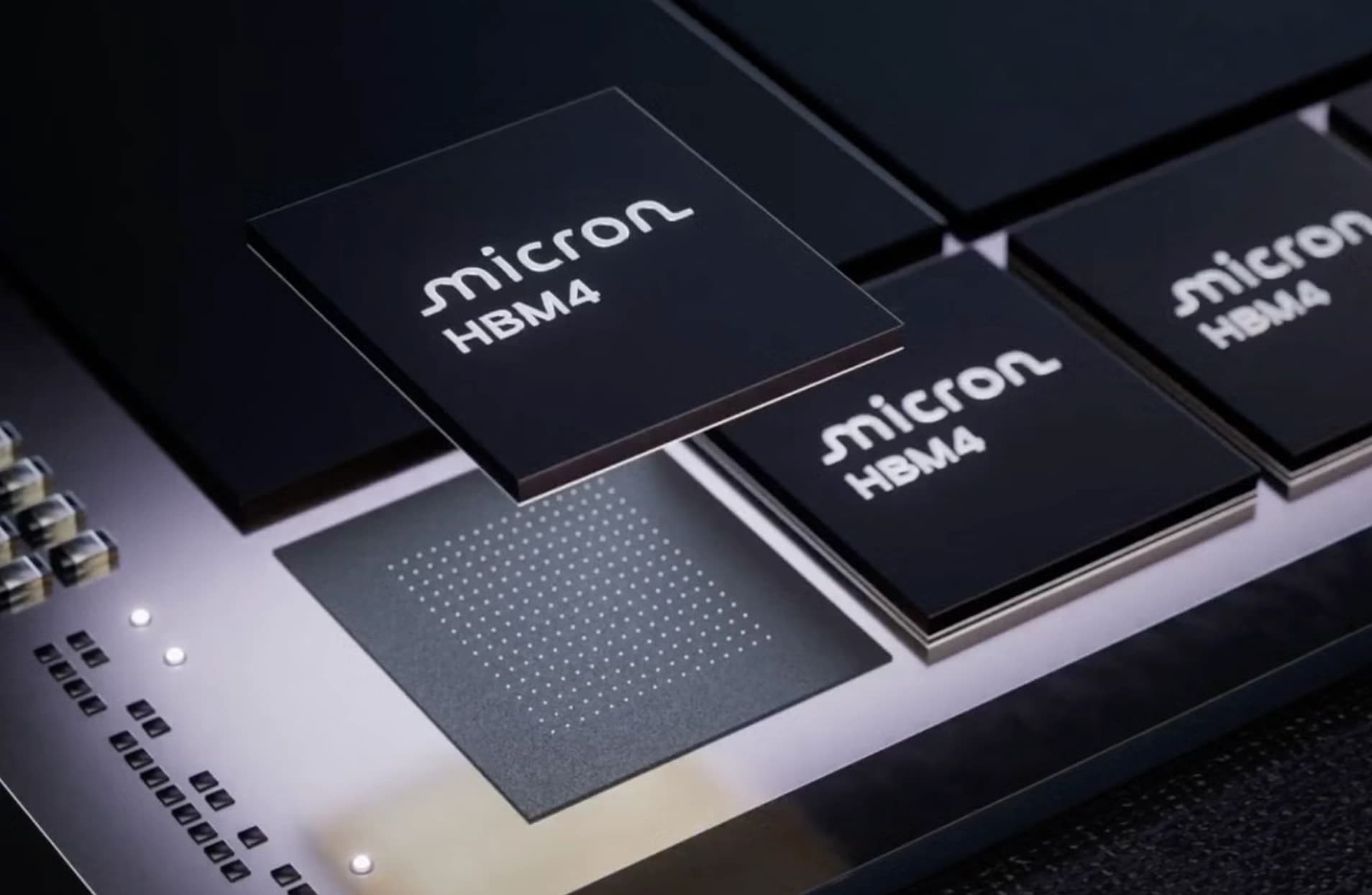
The raw figures here are genuinely extraordinary. Revenue growing 379% annually is not a semiconductor cycle upturn — it's a structural demand surge of a kind the memory industry hasn't seen since the early DRAM boom cycles of the 1990s. The driver is AI infrastructure, specifically high-bandwidth memory — HBM chips that sit inside the GPU clusters powering large language model training and inference. Micron is one of three companies in the world capable of producing HBM at scale, alongside Samsung and SK Hynix, and right now AI datacenter buildouts are consuming supply faster than the industry can expand capacity. That dynamic is the reason Micron is running operating margins that would be unrecognizable to the company's management team five years ago.
The 87% profit margin figure is the number that defines this cycle. For a company that was burning cash and executing painful layoffs as recently as 2023, an 87% profit margin signals just how completely the supply-demand balance has shifted. Datacenter customers — led by hyperscalers building AI infrastructure at a pace that shows no sign of decelerating — are paying whatever Micron charges because the alternative is falling behind in the AI buildout. That pricing power is real, and it's structural so long as AI capex remains elevated.
Quarterly results were also supported by the consumer memory recovery that had been slow to materialize earlier in 2026. NAND pricing, which had lagged the DRAM recovery, showed stabilization in the quarter, reducing one of the key overhangs that had kept more conservative analysts skeptical of the full bull case. The combination of HBM demand at the high end and consumer NAND stabilization at the base creates a more durable revenue mix than at any prior point in Micron's recent history.
Why the Market Sold the News
The 1% decline after a 5%-plus EPS beat is a signal worth decoding carefully, because it reflects something specific about where we are in Micron's investment cycle. The company is now in a phase of heavy capital expenditure commitment — the kind of spending required to build out HBM capacity at the scale necessary to meet projected AI demand through 2027 and 2028. That capex isn't optional. If Micron doesn't invest aggressively now, it cedes market share to SK Hynix, which has been the dominant HBM supplier to Nvidia's GPU platform.
But capex at scale compresses near-term free cash flow, and Micron's guidance includes an expected gross margin decline relative to current levels. The company also flagged planned increases in worker compensation — a cost that flows directly through the income statement and, at current revenue levels, is manageable, but creates a headwind against the margin trajectory that the bull case has been built on. Investors who own MU at current prices aren't just betting on revenue growth. They're betting on margin expansion or at least margin stability. A guided margin decline, even against a backdrop of strong revenue growth, introduces uncertainty about the earnings per share trajectory that the stock's valuation requires.
The options market behavior around this print also tells a story. When a stock drops on a beat of this magnitude, it usually means one of two things: either the beat was already fully priced in and position holders were waiting to sell into strength, or the forward guidance introduced new risk factors that offset the headline numbers. In Micron's case, it appears to be both. The broader semiconductor complex has been one of the primary engines of the S&P 500's AI-driven rally in 2026, with Nvidia setting the pace and memory names like Micron riding the infrastructure demand wave. When names like MU become consensus long positions in AI-themed portfolios, the bar for a positive reaction rises considerably. Beating by 5% on EPS is table stakes when the stock has already been pricing in hypergrowth.
What Traders Watch Next
The forward guidance figures deserve more attention than the initial market reaction suggests. A Q1 revenue target of $61.5 billion would represent sequential growth of approximately 13% from the Q4 print — strong by any historical standard for Micron, and above what analysts had modeled. If the company delivers on that number, the margin decline story may prove transitory, and the stock's current price could look cheap in retrospect. The bear case is that capex commitments and wage cost increases create a multi-quarter margin compression cycle that prevents EPS from growing proportionally with revenue — which would mean the stock's current valuation is actually stretched, not cheap.
Nvidia's premarket gain of 0.80% to $230.20 this morning is directly relevant to the Micron thesis. Nvidia's GPU demand is the primary end market for Micron's HBM product, and so long as Nvidia's datacenter revenue continues to accelerate, Micron's most profitable product line has a guaranteed buyer. Any softening in Nvidia's forward order book — visible either through Nvidia's own guidance or through commentary from hyperscaler customers — would immediately hit Micron's HBM pricing assumptions and blow a hole in the margin recovery story.
The specific level traders should have circled is Micron's gross margin guidance for Q1. If the company provides an explicit gross margin target that comes in above 58%, the market's current pessimism is likely overdone and the selloff on an EPS beat creates a tactical entry opportunity. If gross margin guidance prints below 55%, the 1% decline from Thursday is the beginning of a longer consolidation, not a buying opportunity. The September jobs report this morning — and whatever rate path it implies for the Fed, which already hiked in September — will set the macro backdrop against which that margin story gets evaluated. A strong jobs number keeps rate pressure elevated, which raises Micron's financing costs on its capex program and puts additional pressure on a margin story that is already under scrutiny. Watch the 10-year yield's reaction to payrolls as a direct read-through to how hard the capex math gets for Micron into Q1 2027.
The Weekly Investor
Daily market analysis for active traders. Free.