Meta's Cloud Pivot Reshapes the AI Trade in Real Time
Meta surged 8.8% Wednesday on a cloud monetization plan for excess AI compute. The rotation out of semis and into hyperscalers is accelerating.
Key Points
- Meta jumped 8.8% Wednesday after announcing plans to build a cloud business monetizing excess AI computing capacity, the largest single-day gain in the Magnificent Seven this week.
- The move accelerated a visible rotation from pure-play semiconductor names — Micron –10.6%, AMD –6.9%, Intel –9% — into hyperscalers with diversified AI revenue models.
- Traders should watch whether Meta can hold above its Wednesday close heading into the long weekend, as any payrolls-driven risk-off move Thursday morning will test whether this re-rating is structural or a one-day event.
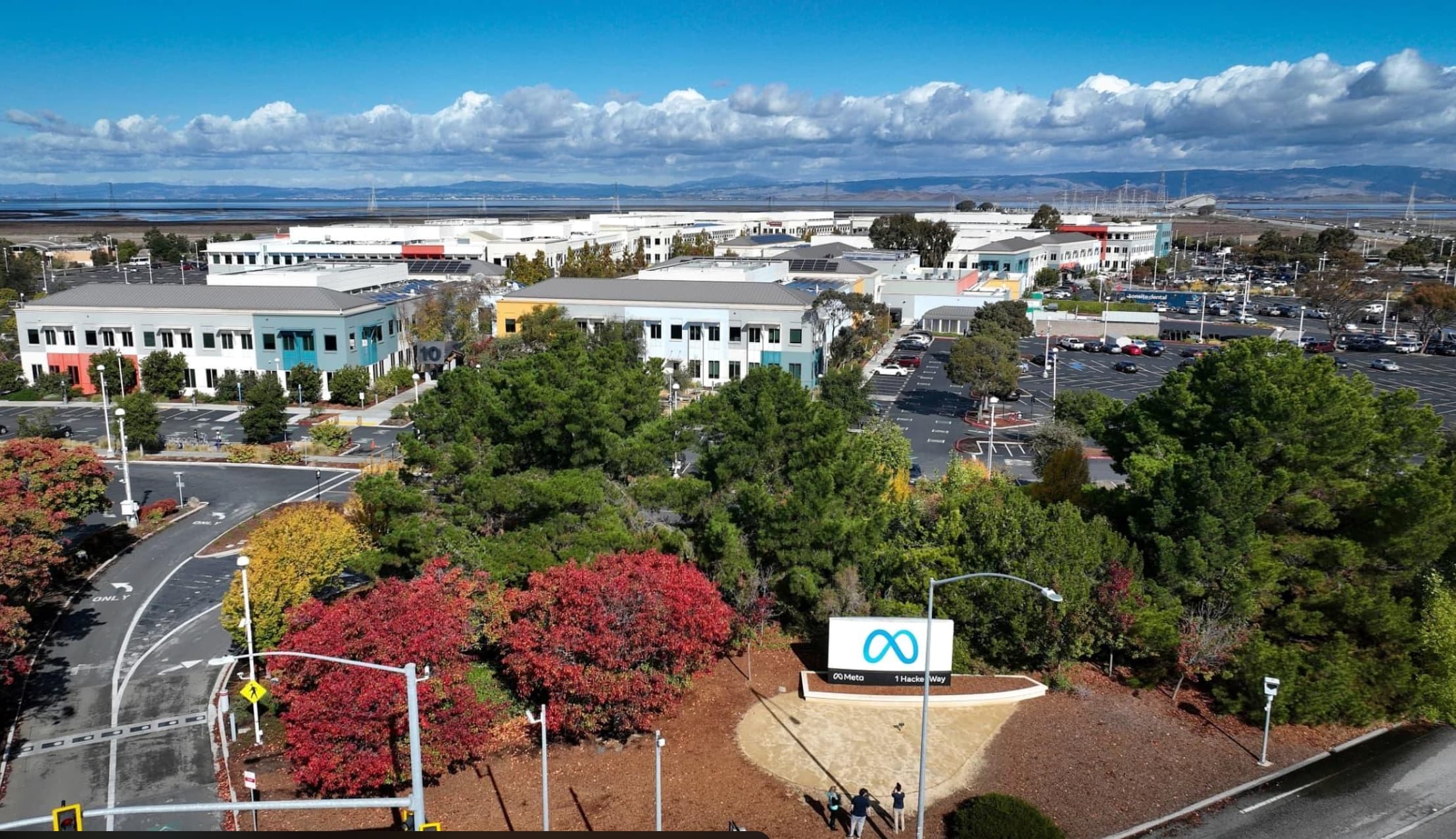
Meta jumped 8.8% Wednesday in a session where the Nasdaq Composite fell 0.66% — that's not a bounce, that's a re-rating. The company's announcement that it would build a cloud business to monetize excess AI computing capacity arrived at exactly the moment the market needed a coherent bull narrative for AI that didn't depend on semiconductor multiples that had already expanded 80% year-to-date. In one session, Meta did what three quarters of analyst upgrades couldn't: it gave institutional money a new place to put AI exposure.
The Rotation That Was Already Happening
Wednesday's semiconductor wreckage wasn't random. Micron Technology dropped 10.6%. Applied Materials fell 10%. Intel lost 9%. AMD shed 6.9%. Together, these moves represented a coordinated exit from the segment of the AI trade that had become the most crowded and most extended — chip names that had surged more than 80% in the first half of 2026, with Micron still carrying a staggering 260% year-to-date gain even after the damage. At some point, gravity reasserts itself, and Wednesday was that point.
But capital didn't leave the AI complex — it rotated within it. Microsoft added 3.05%. Amazon gained 1.4%. Alphabet rose 1.1%. These are not the same companies that benefit from a next-generation memory supercycle. They are the companies that sit between the chips and the enterprise customer, and they are now being re-priced as the layer of the AI stack that captures durable, recurring revenue. The market is effectively saying: the infrastructure buildout is real, but the monetization belongs to the platforms, not the fabricators.
Meta's announcement crystallized that thesis. The company has spent billions building AI compute capacity for its own advertising and recommendation systems — and like Amazon Web Services before it, it apparently intends to sell what it doesn't use. That's not a pivot away from AI; it's an extension of the same capital investment into a second revenue stream. The market rewarded it immediately and decisively. An 8.8% single-session gain on a company with Meta's market capitalization is not a small event — it represents tens of billions of dollars in market value created in a single afternoon.
Why This Isn't Just a One-Day Story
The hyperscaler rotation has structural support beyond Wednesday's price action. The 10-year Treasury yield sits at 4.44% and the 2-year at 4.14% — a yield curve that has finally turned positive by 30 basis points, meaning the steepening that began earlier this year is now visibly rewarding companies with long-duration revenue streams that can be discounted at a spread to Treasuries. Cloud subscription revenue — predictable, scalable, high-margin — fits that discount model far better than cyclical chip demand, which is sensitive to inventory cycles and customer capex decisions.
The macro backdrop reinforces the rotation. With headline CPI at 4.2% year-over-year and core CPI at 2.8%, the Fed is threading a needle: real rates are still negative on a headline basis, which historically favors equities with pricing power. Hyperscalers — Microsoft Azure, Amazon Web Services, Google Cloud, and now potentially Meta — have demonstrated the ability to pass costs through to enterprise customers in a way that pure-play hardware manufacturers cannot. When Micron's gross margins get squeezed by inventory normalization, there's no lever to pull. When Microsoft raises Azure pricing, customers pay it.
The Nasdaq's 0.66% decline Wednesday actually understates the internal divergence. Without Meta's 8.8% contribution, the index would have looked considerably worse. AMD's 6.9% decline alone dragged meaningfully on the QQQ, and the continuation of Sandisk's slide — another 4% in Thursday pre-market after dropping 10.6% Wednesday — signals the memory sector selloff has not found a floor. The Philadelphia Semiconductor Index is the canary: if it stabilizes Thursday on the back of a strong payrolls print, the rotation theory holds. If it continues lower regardless of macro data, the AI trade is undergoing a more fundamental reassessment of where value accrues in the stack.
What Traders Watch Next — Levels and Catalysts
The immediate test for Meta's re-rating is Thursday afternoon. Bloom Energy's 8% pre-market gain on its expanded Brookfield partnership for AI power infrastructure suggests the market is still constructive on AI-adjacent infrastructure plays — but those are smaller, more speculative names. Meta is a $1.3 trillion company. Its ability to hold Wednesday's close into a potentially volatile payrolls-driven session is the single most important technical confirmation that the rotation is structural rather than tactical.
The VIX at 17.54 Thursday morning tells you the options market is not pricing a catastrophic unwind — but it is pricing elevated uncertainty. A soft NFP print, which ADP's 98,000 miss on Wednesday morning has made more probable, would likely compress risk appetite broadly. The question is whether Meta's cloud announcement is enough of a company-specific catalyst to hold its gains in a risk-off tape — or whether it gets dragged lower with the broader Nasdaq on macro selling.
The specific level to watch for META is the stock's pre-announcement close from Tuesday. A hold above that level through Thursday's 4 PM close — with no Friday session available to repair damage — would confirm institutional conviction in the cloud monetization thesis heading into Q2 earnings season, which begins in earnest in mid-July. The hyperscalers report in the last two weeks of July, and Meta's cloud revenue line will be the most scrutinized new disclosure on any earnings call this cycle. Analysts who cover the name will be building estimates from scratch. That's a three-week window of price discovery that starts today, and Wednesday's 8.8% move is the opening bid.
The Weekly Investor
Daily market analysis for active traders. Free.