
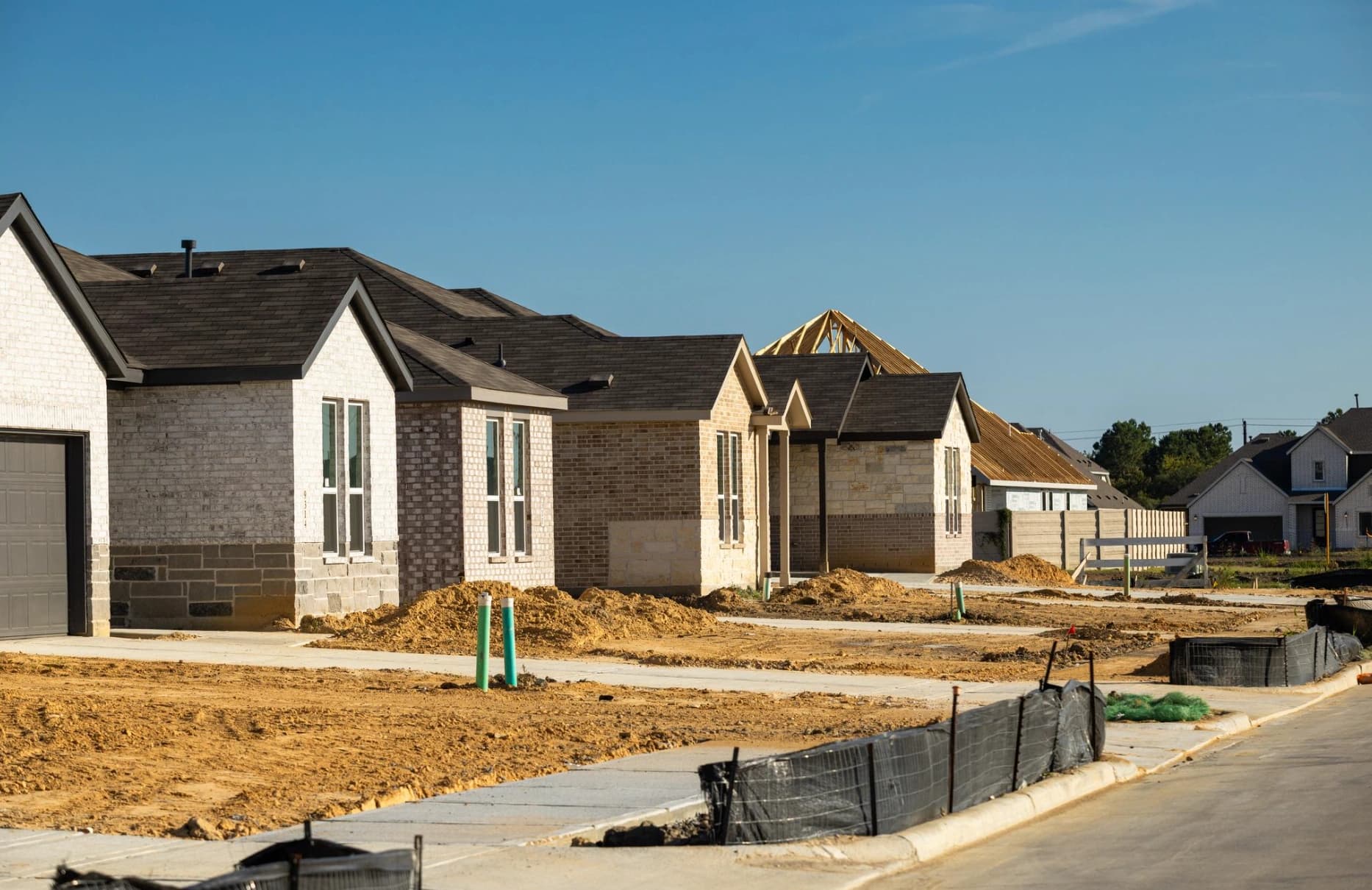
Housing Starts Slip as Mortgage Rates Stay Punishing
July housing starts expected to fall from 1.427M as the 10-year yield holds at 4.68% and NAHB sentiment drops for a second straight month.
Key Points
- July housing starts consensus came in at 1.390 million units annualized, below June's 1.427 million, as the 10-year Treasury yield holds at 4.68% and keeps mortgage borrowing costs punishing.
- The NAHB housing market index fell for a second consecutive month in August, hitting a consensus of 35.0 — a level historically consistent with outright contraction in new construction activity.
- A potential September Fed rate hike, flagged by three FOMC dissenters, threatens to extend the housing sector's pain through year-end with no obvious catalyst for relief.
July housing starts were expected at 1.390 million annualized units when Census Bureau data crossed at 8:30 AM ET this morning — that's a sequential pullback from June's 1.427 million and a clear signal that the homebuilding sector is losing momentum into the second half of 2026. With the 10-year Treasury yield parked at 4.68% and three Federal Reserve hawks pushing for another rate hike, the financing environment for new construction has rarely been this hostile outside of the 2022–2023 tightening peak.
The Rate Wall Builders Can't Climb Over
The 10-year Treasury yield is the primary benchmark for 30-year fixed mortgage rates, and at 4.68% it has been running well above the levels that defined the post-pandemic boom years. Mortgage rates on a standard 30-year fixed loan have been tracking in a range that keeps monthly payments on a median-priced home out of reach for a substantial portion of first-time buyers. That demand destruction at the entry level filters directly into homebuilder order books and, ultimately, into starts and permits data.
Building permits — the leading indicator within today's release — were expected at 1.380 million units for July, up modestly from June's 1.374 million. A marginal permit uptick would be a thin silver lining, but it does not change the structural picture: permits at this level represent activity roughly 20% to 25% below the cyclical peak seen during the 2020–2021 era of near-zero rates. Builders are not breaking ground speculatively in an environment where buyers need financing at today's rates. The incentive structure has flipped — builders are more likely to offer mortgage rate buydowns and price concessions than to expand supply aggressively.
The NAHB/Wells Fargo Housing Market Index told that story directly. The August reading carried a consensus of 35.0, against July's 34.0 — two consecutive months of decline, and still deep in contractionary territory. Any NAHB reading below 50 indicates that more builders view conditions as poor than good. At 35, the index is closer to the lows seen during the acute tightening phase of 2022 than to any baseline of healthy construction activity. Traffic of prospective buyers, a sub-component of the NAHB index, has been particularly weak, which matters because foot traffic is the earliest-leading signal of future order conversions.
Geopolitics and Energy Are Compounding the Problem
The return of Middle East tensions has injected a second-order problem into the housing market through energy prices and inflation expectations. WTI crude at $78.94 per barrel and Brent at $87.86 have pushed headline CPI to 3.3% year-over-year as of July, well above the Fed's 2% target and above the level at which the central bank feels comfortable easing. Core CPI at 2.5% shows the pressure is not purely an energy story — services inflation is sticky — but energy is keeping the headline number elevated and complicating the Fed's political calculus.
For homebuilders, energy costs affect both construction economics and buyer psychology. Elevated gas prices translate into higher transportation and materials costs across the supply chain, from lumber delivery to site preparation equipment. More importantly, when consumers feel financially squeezed at the pump and grocery store, discretionary large purchases — and a home is the largest most households ever make — get deferred. The confidence channel from energy prices to housing demand is real and it is negative right now. The University of Michigan consumer sentiment data has been tracking this dynamic, and the picture is not improving.
The Federal Reserve's July FOMC statement explicitly cited supply shocks, including energy, as a factor keeping inflation elevated. That framing matters for housing because it signals the Fed is unlikely to cut rates as a response to housing weakness alone — the central bank's mandate is price stability and maximum employment, not homebuilder margins. With unemployment at 4.1%, the labor market does not give policymakers reason to pivot. Housing can weaken further without triggering the Fed response that would meaningfully lower mortgage rates.
Import prices for July, released alongside housing data this morning, were expected to show a deceleration to +0.1% month-over-month from June's +0.3%. If confirmed, that's a mild disinflationary read — but it primarily reflects commodity and goods prices, not the services components driving core CPI. Industrial production at a consensus +0.2% month-over-month and capacity utilization at an expected 76.3% suggest the broader economy is not rolling over, which removes another potential trigger for Fed accommodation.
What the Second Half Looks Like From Here
The path forward for housing depends almost entirely on one variable: what the Fed does on September 16. If Wednesday's FOMC minutes — due at 2:00 PM ET tomorrow — reveal that the three hawkish dissenters (Hammack, Kashkari, Logan) are building broader support for a 25-basis-point hike, the 10-year yield will move higher and whatever thin hope exists for a year-end mortgage rate relief rally evaporates. A 10-year yield pushing toward 5.00% would represent a fresh multi-year high and would almost certainly push housing starts below 1.3 million on an annualized basis within one to two quarters.
The St. Louis Fed's FRED data shows that the last time the 10-year yield sustained a move above 5% — briefly in late 2023 — housing starts dropped sharply and homebuilder stocks sold off 15% to 20% before the Fed's tone shifted. That precedent is directly relevant to the current setup. The difference now is that the Fed's tone is not softening — it is hardening, with three formal dissents on record. The September 11 CPI print becomes the pivotal data point: a core CPI reading that holds at 2.5% or moves higher would give the hawks everything they need to win the September argument, and at that point the housing sector faces a 10-year yield target of 4.90% to 5.10% heading into the traditionally slower fall construction season. Traders long homebuilder equities should treat 1.380 million on today's permits print as a floor worth watching — a miss below that number combined with hawkish FOMC minutes Wednesday would be a two-punch combination the sector is not positioned to absorb.
The Weekly Investor
Daily market analysis for active traders. Free.