Grok 4.5 Launches Today: What xAI's Biggest Bet Means
Grok 4.5 goes live July 9 on xAI's V9 foundation model with 1.5T parameters. Here's what traders need to know about pricing, competition, and SpaceX.
Key Points
- Grok 4.5 goes live today on xAI's V9 foundation model at 1.5 trillion parameters, available to SuperGrok Heavy subscribers at $99/month promotional and $149/month standard — but API pricing remains publicly unconfirmed.
- The launch is the first major product event under the SpaceX-xAI umbrella following SpaceX's February acquisition of xAI and its June 12 IPO at $135 per share, compressing what was once a private AI moonshot into a publicly traded equity story.
- With no system card, no published benchmark table, and no confirmed API token pricing, traders should treat Grok 4.5 as a demand-signal event — watch API adoption disclosures and enterprise penetration data over the next 30 days.
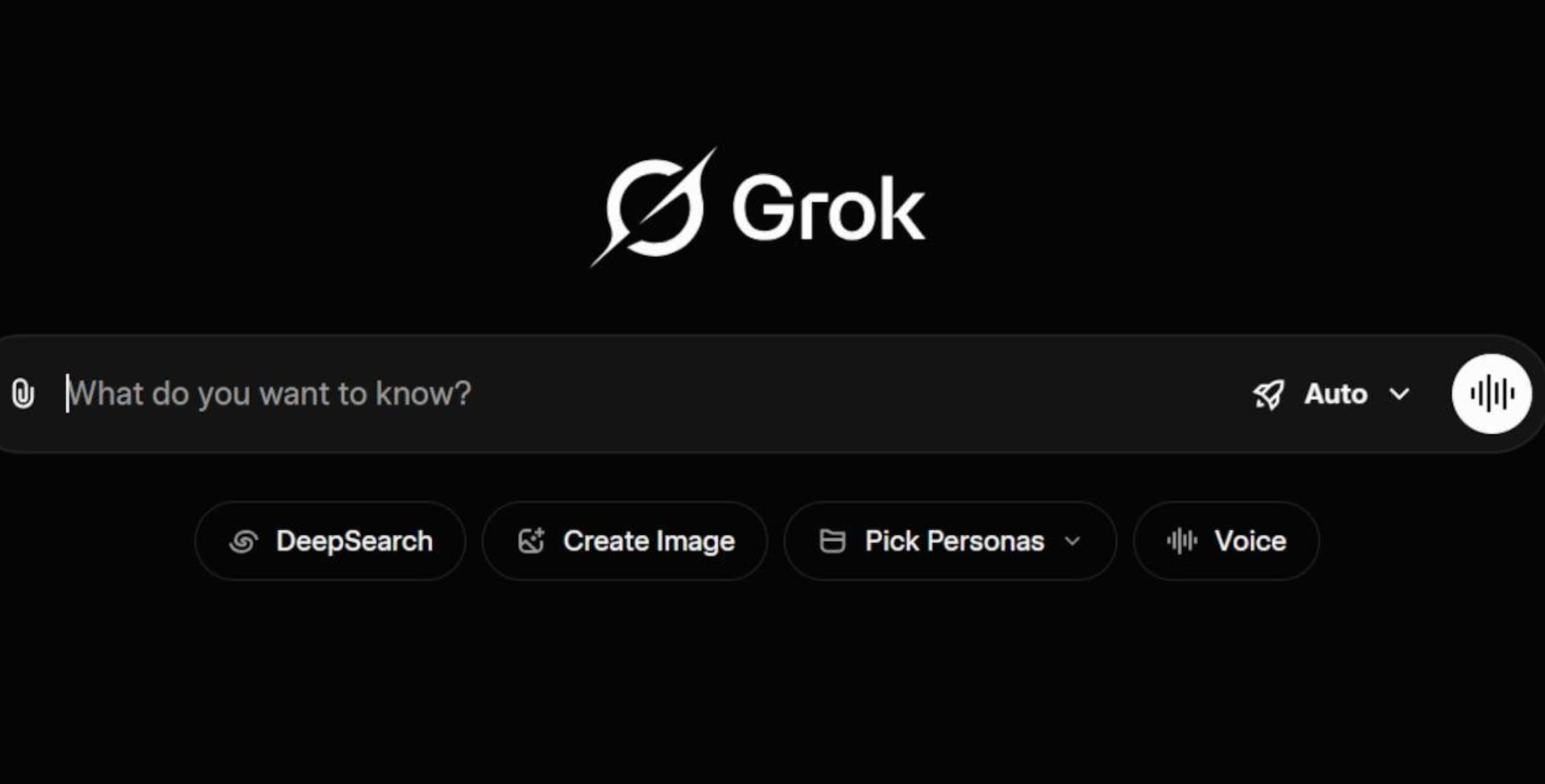
Grok 4.5 is live as of today, July 9, built on xAI's V9 foundation model with 1.5 trillion parameters — and it launches into a competitive landscape where every decimal point of benchmark performance and every cent of API pricing determines market share. SuperGrok Heavy subscribers on X and Premium+ users get access today, alongside xAI API customers. What they won't get: a system card, a published benchmark table, or confirmed per-token API pricing. That information gap is the first thing traders need to sit with before assigning any valuation premium to SpaceX's AI vertical.
The SpaceX Umbrella Changes the Equation
When SpaceX went public on June 12 at $135 per share, it brought the entirety of Elon Musk's AI ambitions into the public market in a single tradeable vehicle. The @SpaceXAI rebrand posted on July 6 wasn't cosmetic — it was the public signal that xAI's commercial products, including Grok and its API business, now operate under the SpaceX corporate identity following SpaceX's February 2, 2026 acquisition of xAI. For retail traders who spent the prior 18 months watching xAI's valuation inflate in private markets, that transition from speculative private equity to publicly quoted equity fundamentally changes the risk calculus.
The Cursor IDE training data integration is the detail that deserves more attention than it's getting. SpaceX's $60 billion acquisition of Anysphere in June 2026 wasn't just a talent play — it was a data and tooling play. Cursor's IDE training pipeline means Grok 4.5 was trained on real developer workflows, real code completion patterns, and real debugging sequences in a way that general-purpose web scraping simply cannot replicate. That's a concrete differentiation from GPT-4o and Claude Sonnet 5 in the coding benchmark category, even if xAI hasn't published the numbers yet. The absence of benchmarks isn't necessarily evidence of weakness — it may be a deliberate sequencing decision to let adoption data speak before committing to published figures that competitors can immediately target.
The pricing architecture is where the bull case gets complicated. The only confirmed consumer tier is SuperGrok Heavy at $99/month promotional and $149/month standard. Musk has claimed API pricing will undercut Anthropic's Claude Opus 4.8, which runs at $5 per million input tokens and $25 per million output tokens. If xAI prices Grok 4.5 at, say, $3 per million input tokens and $15 per million output tokens, it lands directly against Claude Sonnet 5's post-August 31 pricing of $3 input and $15 output — a dead-heat on price with a performance story that remains unverified. That's a genuinely uncertain competitive position, not a clean narrative either way.
Where Grok 4.5 Fits in the Broader AI Race
The competitive field that Grok 4.5 enters today is measurably more congested than it was twelve months ago. Google's Gemini 3.5 Pro was supposed to be the headline product of July — it isn't. Google delayed the release past its June I/O commitment after enterprise testers flagged token efficiency issues and coding performance gaps in extended agentic tasks. As of this morning, Google has not announced a confirmed general availability date. That slip is a direct market opportunity for Grok 4.5, particularly in the developer segment where coding capability is the primary purchase criterion and where Cursor's training data provides xAI with a credible differentiation story.
Anthropic's position is more nuanced. Claude Sonnet 5 carries an introductory pricing window that expires August 31, 2026 — after that date, input tokens move from $2.00 to $3.00 per million and output tokens from $10.00 to $15.00 per million. Compounding the cost pressure, Anthropic's updated tokenizer produces 1.0 to 1.35 times more tokens for identical text, meaning enterprise customers will see bill increases that arrive before the official pricing change date, simply from the tokenizer mechanics. Any enterprise developer currently benchmarking Sonnet 5 against Grok 4.5 will be running those numbers against a moving cost baseline — and that asymmetry benefits xAI if it can produce confirmed API pricing before August 31.
OpenAI is simultaneously executing its own hardware strategy with the "Jalapeño" inference chip developed with Broadcom, which reached tape-out in just nine months. That chip is designed for LLM inference workloads with a performance-per-watt objective that directly targets Nvidia's inference dominance. The competitive pressure isn't just between model providers — it's between compute stacks, chip architectures, and API economics simultaneously. Grok 4.5 enters this environment as one of the stronger parameter-count models publicly available, but parameter count stopped being a reliable proxy for real-world performance roughly eighteen months ago.
What Traders Actually Watch From Here
The 30-day adoption window is the first legitimate data point that will matter. xAI's API business is not separately disclosed within SpaceX's financials at this stage, which means traders are flying partially blind on revenue attribution. The signal to watch is enterprise integration announcements — specifically, whether any of the Fortune 500 companies currently evaluating multi-model API strategies publicly announce Grok 4.5 as a production inference provider. That kind of disclosure moves the needle on SpaceX's AI revenue narrative in a way that benchmark tables do not.
The Anthropic-Microsoft Maia 200 chip discussion adds another layer of complexity to the compute ecosystem. If Anthropic successfully migrates Claude inference workloads onto Microsoft's custom silicon — built on TSMC's 3nm process with a claimed 30%-plus performance-per-dollar advantage over rival chips — it changes the inference cost structure for one of Grok 4.5's primary competitors. Lower inference costs at Anthropic mean Claude pricing pressure intensifies regardless of the August 31 list price increase. That dynamic could actually benefit xAI if Grok 4.5 API pricing lands at a level that tracks Anthropic's real cost structure rather than its published list prices.
The regulatory environment is the tail risk that the SpaceX AI product launch doesn't price in. The FTC's comment period on AI output manipulation closes July 31, 2026 — three weeks from today. Senators Warren, Wyden, and Blumenthal have already called for scrutiny of Meta's $14.3 billion Scale AI investment and Google's $2.4 billion Windsurf deal. xAI's integration under SpaceX creates a vertically integrated AI stack that spans compute, model training, distribution via X's 600 million user base, and now developer tooling via Cursor — precisely the kind of structure that antitrust enforcers are currently defining as a nonhorizontal merger risk. That's not an imminent threat, but it is a known overhang that any position in SpaceX's AI vertical needs to carry. Watch the FTC comment period closure on July 31 and any subsequent agency guidance as the next policy catalyst.
The Weekly Investor
Daily market analysis for active traders. Free.