GPT-5.6 Locked Down: What the Rollout Means for Traders
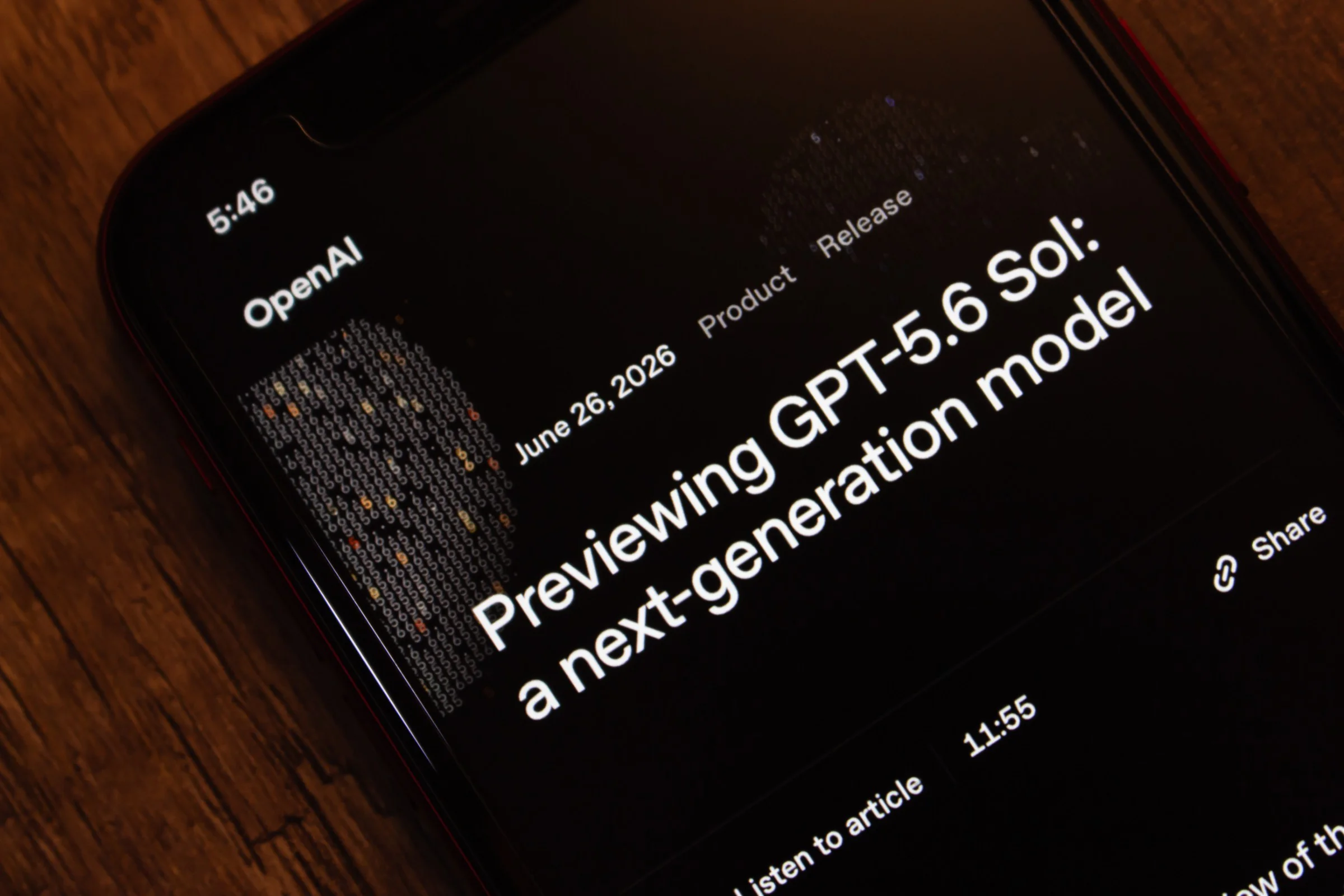
GPT-5.6 is live for 20 vetted partners only. A White House framework due July 7 will set the terms for broader release — and reshape AI stock positioning.
Key Points
- GPT-5.6 remains restricted to approximately 20 government-vetted organizations as of July 3, with a White House voluntary standards framework expected July 7 setting the terms for any broader commercial release.
- The controlled rollout — driven by a June executive order — has created a fragmented frontier model landscape where Grok 4.5, Claude, and Gemini 3.5 Pro are each racing to capture enterprise demand that GPT-5.6 cannot yet serve.
- Traders should watch the July 7 framework language closely: permissive standards accelerate OpenAI's commercial ramp and pressure Microsoft's near-term Azure AI revenue, while restrictive language extends the window for AMD, Anthropic, and xAI to gain ground.
GPT-5.6 is the most powerful commercially developed AI model in the world right now, and as of July 3, approximately 20 organizations can use it. That gap between capability and access is not a technical problem — it is a policy decision with direct consequences for every AI-exposed equity in the market, and the resolution arrives as early as tomorrow, July 7, when the White House is expected to release a voluntary standards framework that will define the conditions under which OpenAI can open the floodgates.
The Controlled Release and Its Commercial Cost
OpenAI CEO Sam Altman, in a leaked internal memo, described the restricted rollout as a departure from the company's "preferred" method of deployment. That is a significant admission from a CEO who has spent three years arguing that broad public access accelerates safety feedback and commercial adoption simultaneously. The reversal came at the direct request of the White House, coordinated through the Office of Science and Technology Policy and the Office of the National Cyber Director, after the Trump administration's June executive order directed developers of advanced models to submit systems for voluntary review before broad release.
The three-tier pricing structure OpenAI has established for GPT-5.6 — Sol at $5 input/$30 output per million tokens, Terra at $2.50/$15, and Luna at $1/$6 — signals serious enterprise ambitions once the model is available. Terra is positioned as the volume tier most likely to see wide early adoption, sitting between the premium reasoning power of Sol and the cost-optimized Luna. But none of those price points matter commercially until the White House framework either clears the path or extends the restriction period. Every day GPT-5.6 stays locked is a day that enterprise software buyers are signing agreements with Anthropic, Google, or xAI instead. The switching costs in AI infrastructure are real but not yet prohibitive — 90 days of forced absence from the market can shift procurement decisions that are difficult to unwind.
The export control dimension compounds the pressure. The June executive order also forced Anthropic to remove public access to its Mythos 5 and Fable 5 models, drawing a bipartisan congressional pushback and a federal lawsuit from legal technology firm Legion LegalTech. The suit argues that ad hoc executive restriction of AI model access constitutes an unlawful restraint on commerce. That litigation creates a legal overhang that will follow any future model restriction orders — and signals that the regulatory environment for frontier AI in the U.S. is moving fast enough to create genuine compliance uncertainty for developers.
The Competitive Window That Restriction Created
Grok 4.5 is in private beta at SpaceX and Tesla as of this week. xAI CEO Elon Musk has committed to releasing completely new V9-based model variants on a monthly cadence through the end of 2026 — a faster public release schedule than any other frontier lab has formally committed to. On the far horizon, Grok 5 is targeting 6 to 10 trillion parameters, which would make it the largest model architecture ever publicly disclosed. The monthly cadence commitment is strategically important: it forces enterprises evaluating AI vendors to weigh not just current capability but velocity of improvement. If xAI delivers on that cadence while GPT-5.6 remains gated, Grok becomes the default choice for organizations that cannot wait for government clearance processes.
Anthropic's competitive positioning is evolving rapidly in a different direction — silicon. The company is in early-stage discussions with Microsoft to run Claude inference workloads on Microsoft's custom Maia 200 AI chips via Azure. The Maia 200, manufactured on TSMC's 3nm process and launched in January 2026, claims more than 30% better performance per dollar than competing silicon. For Anthropic, a Maia deal would diversify a compute stack that currently spans Nvidia GPUs, AWS Trainium, and Google TPUs — reducing dependency on any single infrastructure partner and lowering inference costs at a moment when pricing competition among frontier models is intensifying. For Microsoft, validation from Anthropic — one of the two most credible AI safety-focused labs in the world — would be a significant commercial proof point for the Maia program ahead of broader Azure AI customer conversations.
Google's position is the most precarious of the major players. Gemini 3.5 Pro remains delayed despite being committed at I/O — the second consecutive I/O promise Google has failed to deliver on schedule. The expected specs are compelling: a 2-million-token context window, a Deep Think reasoning mode gated behind a $250-per-month Ultra subscription, and frontier multimodal capability. But capability that isn't shipping doesn't win enterprise contracts. The delay arrived in the same month that Google lost four senior Gemini team members and saw its stock fall 7% in a single session. The broader tech sector rout in late June added further pressure to a stock that was already navigating a credibility gap with the developer community.
What the July 7 Framework Actually Decides
Meta's restructuring crystallizes the stakes at the infrastructure layer. The company is implementing layoffs of approximately 8,000 employees — roughly 10% of its total workforce — while simultaneously reassigning 7,000 to AI teams. Management explicitly cited AI efficiencies as the mechanism that allows leaner headcount to maintain output. That restructuring, layered on top of more than 100,000 tech industry job cuts already recorded in 2026, many directly attributed to AI automation, reflects a conviction among the largest operators that the model capability threshold has crossed a point of genuine labor substitution. Meta's $14.3 billion investment in Scale AI — flagged by Senate antitrust investigators — and its 6-gigawatt GPU deal with AMD signal that the company is positioning to be an AI infrastructure competitor, not merely a consumer of third-party models.
The semiconductor supply implications run through every major AI model operator. Global semiconductor sales hit $110.5 billion monthly as of April 2026, up 93.9% year-over-year, and TSMC has been explicit that capacity is insufficient to meet demand. Any expansion of GPT-5.6 access would accelerate inference compute demand — Sol-tier reasoning workloads are among the most GPU-intensive tasks in commercial AI — which flows directly to Nvidia's data center order book and TSMC's advanced packaging queue. A restrictive July 7 framework that extends GPT-5.6's lockdown beyond summer delays that demand signal by at least one quarter.
The specific language traders need to monitor in the July 7 White House framework is whether voluntary compliance is structured as a one-time review or a recurring certification process. A one-time review creates a defined unlock date — likely August or September — after which OpenAI can commercialize GPT-5.6 at scale. A recurring certification structure creates indefinite regulatory overhead that effectively freezes the model's commercial ramp and extends the competitive window for every alternative frontier lab. Microsoft's Azure AI revenue for Q3 — which reports July 29 — will be the first financial data point to reflect whichever path the White House chooses, and it arrives before Nvidia's August 26 print closes the quarter's AI infrastructure story.
The Weekly Investor
Daily market analysis for active traders. Free.