GPT-5.6 Access Gating and the $725B AI Capex Bet
OpenAI's GPT-5.6 stays locked to 20 partners while hyperscalers commit $725B to AI infrastructure. White House standards could unlock broad access this week.
Key Points
- GPT-5.6 Sol, Terra, and Luna remain restricted to approximately 20 government-vetted partner organizations, with analyst consensus placing broad access in mid-to-late July pending White House voluntary AI standards finalization.
- Four hyperscalers are collectively committing $725 billion to AI infrastructure in 2026 — a 77% year-over-year increase — with Microsoft alone projecting $190 billion in capital expenditure.
- The White House AI standards framework, potentially announced this week, will directly determine the release conditions for both GPT-5.6 and Google's Gemini 3.5 Pro, making it the highest-stakes regulatory event in AI this month.
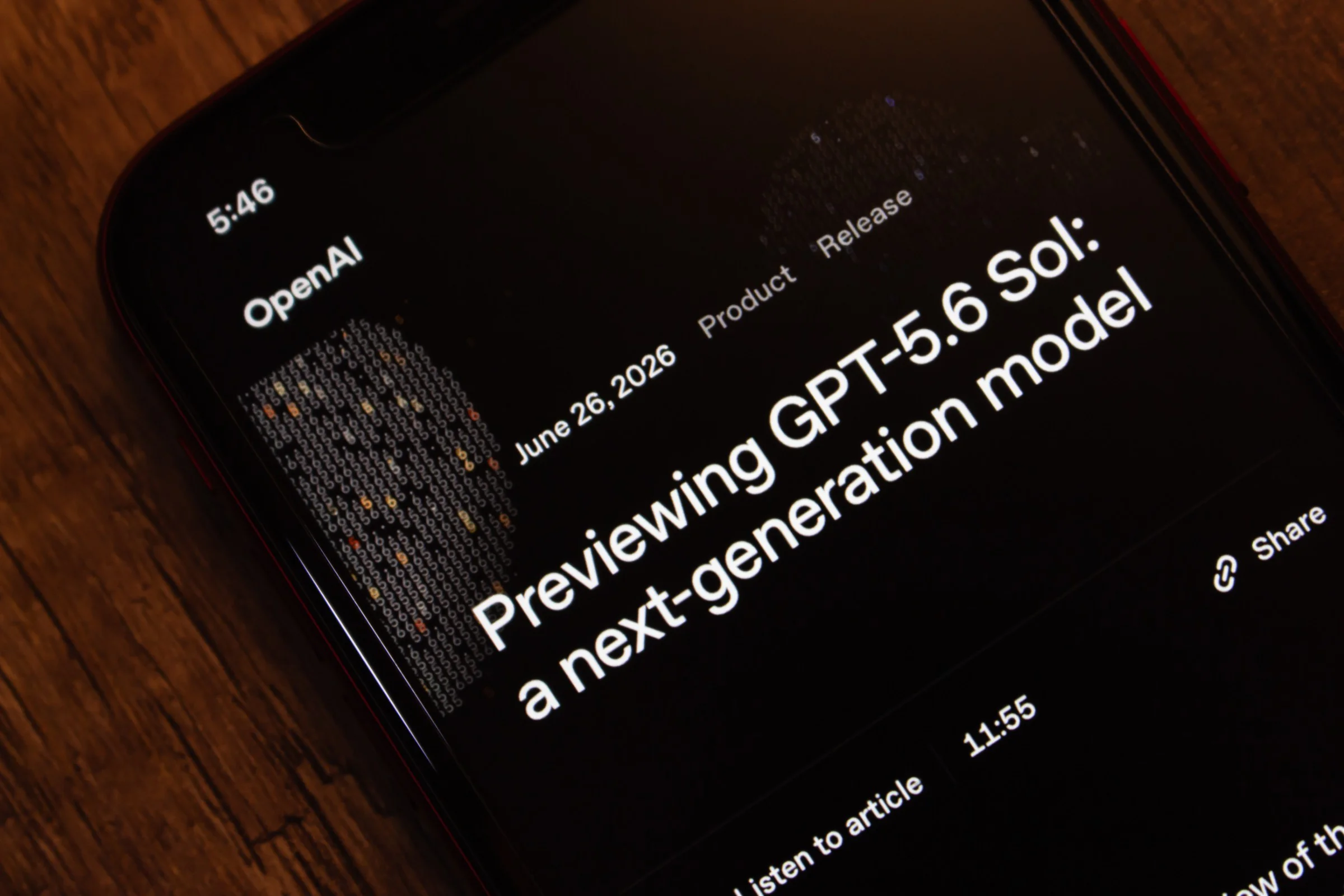
GPT-5.6 is still behind a gate. As of July 3, OpenAI's most advanced model — available in three tiers named Sol, Terra, and Luna — remains accessible only to approximately 20 government-vetted partner organizations, while the White House finalizes voluntary release standards that will determine when the rest of the market gets in. The announcement could come this week. What happens when it does will set the tone for AI platform valuations heading into a Q2 earnings season where Microsoft, Meta, and Alphabet all report in the final week of July.
The Access Economics of GPT-5.6
The three-tier pricing structure OpenAI has established for GPT-5.6 is itself a signal of strategic intent. Sol is priced at $5 input/$30 output per million tokens, positioning it as the premium, capability-first tier for the most demanding enterprise and government workloads. Terra comes in at $2.50/$15, and Luna at $1/$6 — a deliberate stack designed to capture different segments of the AI developer market simultaneously. Analyst consensus identifies Terra as the tier most likely to see the widest early adoption once broad access is granted, given its balance of capability and cost relative to existing GPT-4-class alternatives that enterprises already have integrated into production workflows.
OpenAI's own posture on the access gating is notable. The company stated publicly that it "does not believe this kind of government access process should become the long-term default" — a signal that the current restriction is a political accommodation, not a product strategy. The company is watching the White House finalize its voluntary standards framework under pressure from the same dynamic that has shaped every major AI policy move of the past 18 months: the administration wants to project oversight without implementing the kind of hard regulation that Brussels has embraced. The Financial Times reported that talks between the White House and leading AI firms are in advanced stages, with Reuters separately confirming Google is among the companies at the table specifically ahead of its planned Gemini 3.5 Pro release.
The UN AI for Good Global Commission holds its first meeting tomorrow, July 8, in Geneva — a gathering of tech leaders and heads of state that will run parallel to the US domestic framework process. The divergence between US and EU approaches remains stark. While the EU is considering expanding the Digital Markets Act to classify AI businesses as gatekeepers and mandate interoperability, the Trump administration has focused its regulatory energy on existing antitrust tools and, notably, a December 2025 Executive Order directing the FTC to challenge state-level AI regulations as potentially inconsistent with the FTC Act. For traders, the practical implication is that US-listed AI platform companies face a lighter near-term regulatory burden than European peers — a factor that continues to support premium valuations despite today's broader tech pressure.
The $725 Billion Infrastructure Bet
The access gating on GPT-5.6 is happening against a capital expenditure backdrop that has no historical precedent in the technology industry. Goldman Sachs pegs total AI infrastructure spending by the four largest hyperscalers at $725 billion for 2026, a 77% increase year-over-year. Microsoft's share alone — $190 billion in projected capex — exceeds the entire annual revenue of most Fortune 100 companies. Amazon is reinforcing that commitment in real time, currently in the process of raising $25 billion via bond markets to fund its own AI buildout, mirroring Nvidia's $20 billion debt deal disclosed in its July 2 SEC 8-K filing.
Microsoft's launch of the Microsoft Frontier Company, announced via its July 6 8-K, crystallizes how the hyperscalers are evolving beyond raw compute sales into direct enterprise AI deployment. The $2.5 billion operating business, staffed by 6,000 industry and engineering experts, counts the London Stock Exchange Group, Unilever, Land O'Lakes, and Accenture among its early partners. Two days before that announcement, Amazon Web Services committed $1 billion to its own forward-deployed AI engineer model. The pattern is consistent: hyperscalers are not merely selling infrastructure, they are embedding themselves in enterprise workflows in ways that make switching costs prohibitive over a 3-5 year horizon.
The venture capital market has registered the same signal. Global startups raised a record $510 billion in the first half of 2026, with AI — and specifically OpenAI and Anthropic — accounting for a disproportionate share of total deployed capital. That capital formation is not speculative in the traditional sense; it is being pulled by committed enterprise demand from buyers who have already embedded AI into production systems and are now competing on the quality of their model access. The firms that secure Terra-tier GPT-5.6 access earliest will hold a measurable competitive advantage in financial services, legal, and enterprise software verticals — which is precisely why the 20-organization gating list matters as a market signal, not just a policy footnote.
What the Regulatory Calendar Means for Traders
The convergence of the White House standards announcement, the UN Geneva summit on July 8, and the FTC's July 31 comment deadline on AI accuracy creates a regulatory calendar that traders should map against the earnings schedule with precision. Microsoft, Meta, and Alphabet reporting in the final week of July means that any regulatory development between now and then that materially alters the AI deployment timeline — either accelerating GPT-5.6 broad access or introducing friction — will be interpreted through the lens of Q2 cloud revenue growth rates.
The FTC's proposed policy statement on AI accuracy, which cleared a 2-0 bipartisan commission vote, is worth tracking beyond the July 31 comment deadline. Section 5 of the FTC Act is a broad enforcement vehicle, and the commission's framing — that AI companies may be "manipulating the behavior of their AI systems contrary to reasonable consumer expectations" — is elastic enough to reach product decisions that companies currently treat as purely technical. The SEC's parallel focus on "AI washing" in investor disclosures adds a second enforcement vector for any public company that has leaned heavily on AI narrative in its 10-K or earnings call language without the revenue to substantiate it.
The antitrust dimension is escalating in parallel. Senators Warren, Wyden, and Blumenthal have formally called on the FTC and DOJ to scrutinize deals from Nvidia, Meta, and Google — specifically citing Meta's $14.3 billion investment in Scale AI and Google's $2.4 billion nonexclusive licensing agreement with Windsurf as potentially anticompetitive structures. Meanwhile, the Trump administration's FTC has advanced a broad antitrust probe into Microsoft covering its cloud, AI, and software businesses, a continuation of a Biden-era investigation that has gained new momentum. For traders, the specific date to anchor is TSMC's Q2 earnings on July 16 — if TSMC confirms that AI accelerator demand remains undiminished through mid-2026, it will validate the entire hyperscaler capex thesis and provide a floor under Microsoft and Alphabet heading into their own reports. If TSMC's data center demand commentary shows any softening, expect the White House standards announcement to be reinterpreted as a supply constraint rather than a catalyst — and watch Microsoft at the $480 level as the first line of defense for the AI trade heading into late July.
The Weekly Investor
Daily market analysis for active traders. Free.