Fed's Inflation Problem Just Got Worse: PCE Holds at 3.3%
Core PCE holds at 3.3% YoY in August with monthly acceleration to +0.3%, tightening the screws on the Fed ahead of October 28 FOMC decision.
Key Points
- Core PCE held at 3.3% year-over-year in August while the monthly print accelerated to +0.3%, up from +0.2% — a re-acceleration that is 165 basis points above the Fed's 2% target.
- The Fed hiked 25bps to 3.75%–4.00% on September 15, and today's sticky inflation print hardens the case for a follow-up move at the October 28 FOMC meeting.
- Watch remarks from Kashkari, Barkin, and Goolsbee today — with Warsh providing minimal forward guidance, regional presidents are the live signal on whether October becomes a done deal.
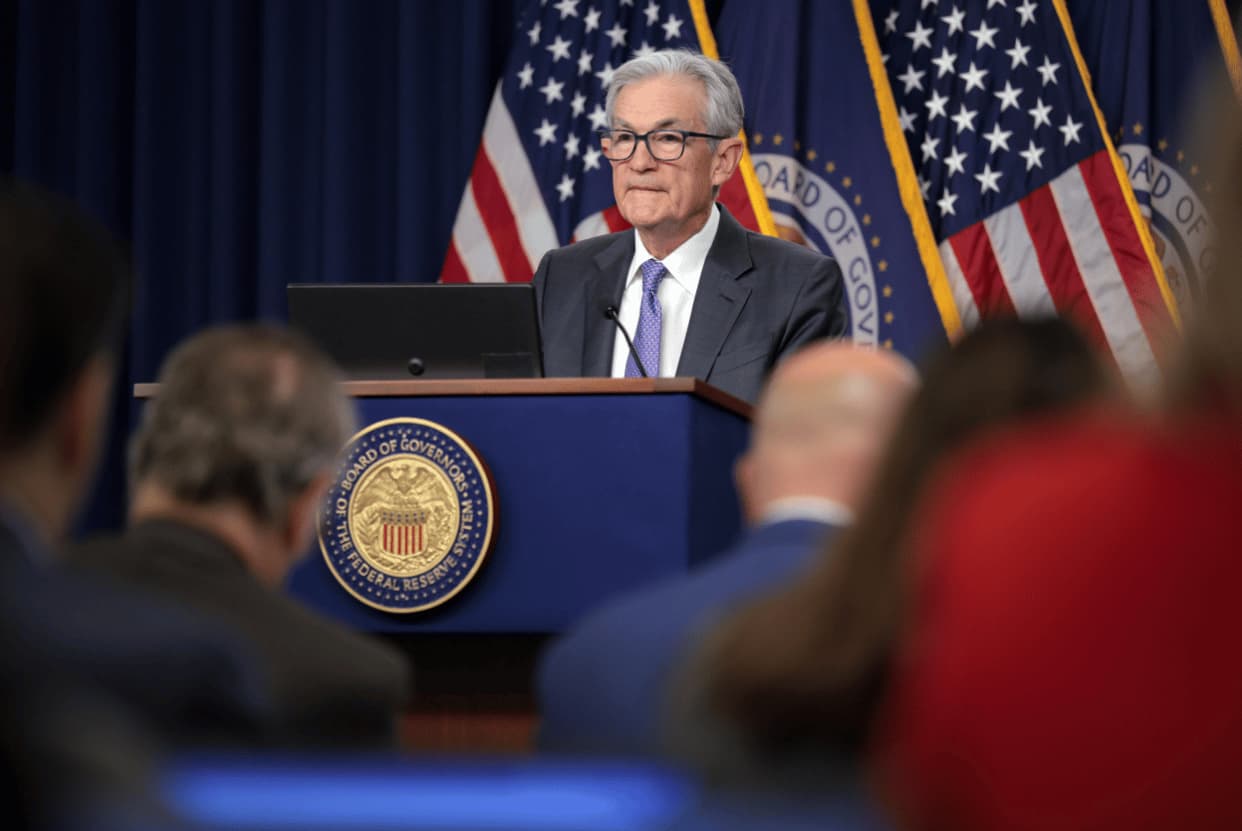
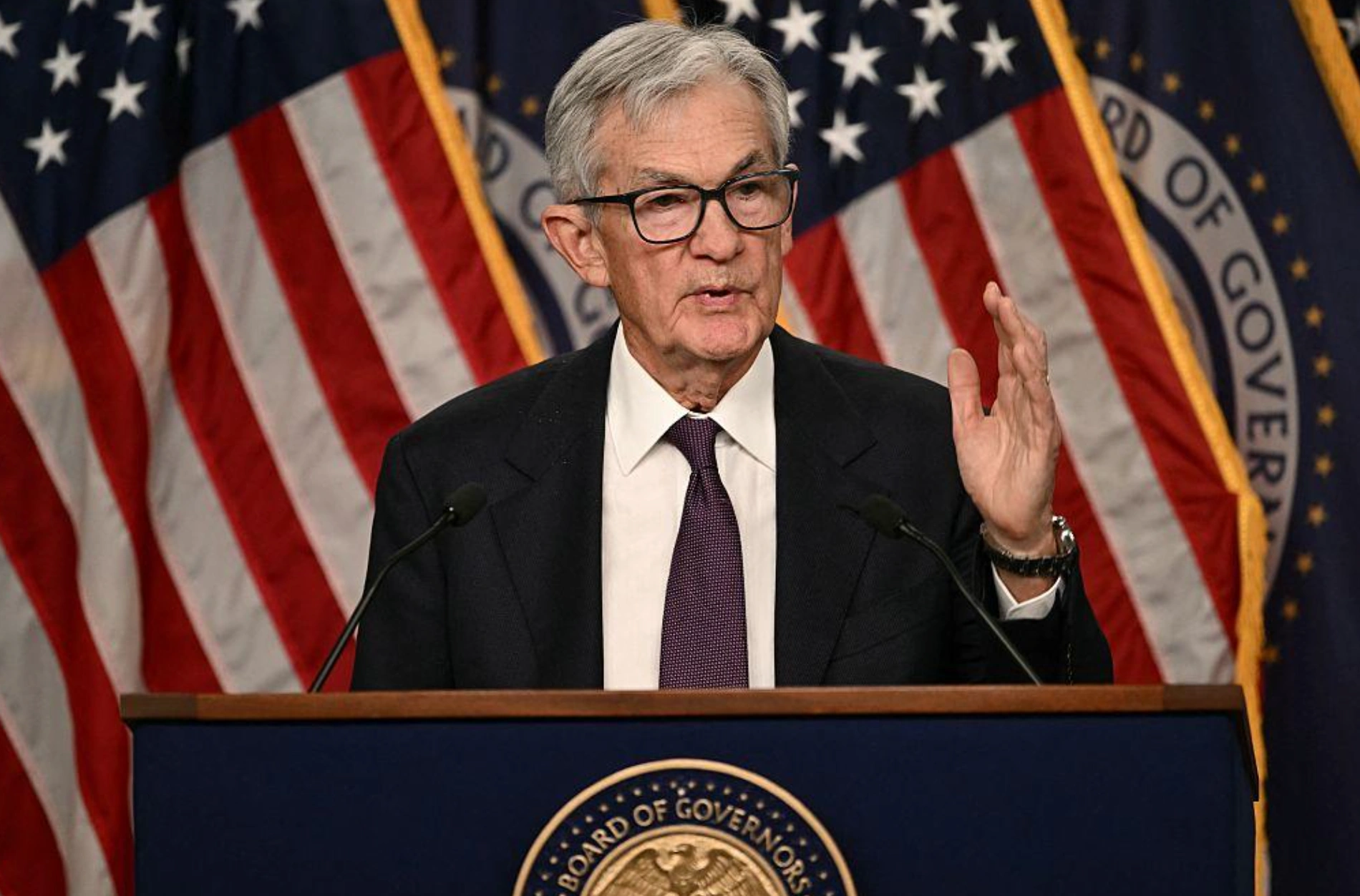
August's core PCE came in at 3.3% year-over-year with a monthly print of +0.3% — a re-acceleration from July's +0.2% that lands exactly two weeks after the Fed's first rate hike since 2023. That combination puts Chair Kevin Warsh in the worst possible position heading into Q4: growth slowing, inflation sticky, and 16 of 18 FOMC participants already signaling at least one more hike this year.
The Fed's Tightest Corner Yet
The monthly acceleration is the number that matters most this morning. A +0.3% monthly core PCE print, if it annualizes anywhere close to that pace, implies core inflation running above 3.5% on a forward basis — and the Fed just hiked into a quarter where final Q2 GDP is printing at 1.5% annualized, down sharply from 2.1% in the prior read. That is not a soft landing. That is the textbook setup for stagflation, the scenario the Fed spent most of 2024 and 2025 insisting it had avoided.
The September FOMC decision — detailed in the Fed's own release — was framed by Wells Fargo as "an inflation-risk-management increase, not necessarily the start of an automatic series of hikes." That framing is now being tested in real time. If today's PCE is the data point that tips the balance, "risk management" starts to look a lot like a tightening cycle. The dot plot from September showed 16 of 18 participants penciling in at least one additional hike; four saw room for two more. With today's print confirming inflation has not broken lower, the centrist case for holding in October just lost its strongest argument.
The broader inflation picture reinforces the problem. August CPI came in at 3.4% year-over-year — headline PCE and core PCE are running in close formation at 3.3%, all of them well above the 2% target. There is no single category driving this; it is a diffuse, persistent overshoot. The Fed does not have the luxury of pointing to energy or food volatility as a one-time distortion. Core is core. At 3.3%, it is simply too high, and the monthly re-acceleration signals the disinflation trend that characterized late 2024 and early 2025 may have run its course.
What the Data Actually Shows
Strip out the noise and today's data package tells a coherent, uncomfortable story. Core PCE at 3.3% YoY with acceleration on the monthly print. Final Q2 GDP revised to 1.5% annualized — 60 basis points below the prior estimate of 2.1%. ADP private payrolls for September coming in with a consensus target of 73,000, which would be nearly double August's 38,000 — itself the weakest print since January. The labor market is bifurcated: job-changers are seeing gross pay gains of 7.3% year-over-year, while job-stayers are getting 3.0% base pay growth. That wage divergence does not scream imminent wage-price spiral, but it does not scream disinflation either.
The sector-level detail from August's ADP report is worth holding in mind as September's number hits the tape. Education, health care, construction, and leisure drove all the job gains in August. Manufacturing shed 17,000 positions. Professional services lost 16,000. Information lost 4,000. The goods-producing, high-productivity sectors of the economy are contracting on a payroll basis while services and government-adjacent employment holds the headline number together. That is a structurally weak labor market dressed up in a 4.1% unemployment rate. The 7.0 million Americans counted as unemployed as of August tells a more complete story than the headline rate.
The full-year 2026 GDP forecast of +2.3% is beginning to look optimistic given the Q2 deceleration. More alarming is the 2027 forecast: -2.1%, a swing of more than 4 percentage points in 12 months. If that projection holds any predictive value, the Fed is hiking into the front end of a growth cliff. That is not a scenario where the central bank has the luxury of methodical, meeting-by-meeting incrementalism. Every decision between now and year-end carries asymmetric downside risk.
What Traders Watch Next
The immediate trade is in rates and the dollar. TLT was already under pressure after the September hike, and a 3.3% core PCE print with a hot monthly reading gives bond bears fresh ammunition. The 10-year yield trajectory heading into October 28 will be the market's running tally of how seriously traders are taking the next hike. If today's Fed speakers — Kashkari, Barkin, and Goolsbee — maintain or harden their tone in response to this morning's PCE, expect the short end to re-price meaningfully before Friday's official jobs report.
Kashkari is the one to watch most closely. He was among the three regional presidents who voted to hike in July when the majority held — a full two months before the committee moved. His read on today's PCE data is the clearest forward signal available given Warsh's deliberately minimal forward guidance posture at the September press conference. A hawkish Kashkari statement today, paired with a hot PCE print, effectively pre-commits the market to pricing October as a live meeting regardless of what Goolsbee or Williams say on the dovish flank.
Chicago PMI for September is also due this morning with a consensus of 51.2 — barely above the expansion threshold. Any miss below 50 would compound the growth concern embedded in the Q2 GDP revision and put the Fed in an even more uncomfortable position: hiking with manufacturing in contraction and services payrolls doing the heavy lifting. The October 28 FOMC meeting is six days after the next CPI release. That sequential data flow — CPI, then FOMC — means the committee will have one more inflation read before they vote. If September CPI follows August PCE's monthly re-acceleration pattern, a 25bp hike on October 28 moves from probable to near-certain. Traders should have their rate exposure positioned before that CPI print drops.
The Weekly Investor
Daily market analysis for active traders. Free.