Fed Minutes Wednesday: One Rate Hike Back on the Table
FOMC minutes drop July 8 at 2 p.m. With CPI at 4.2% and Warsh turning hawkish, a September hike is now a live risk traders can't ignore.
Key Points
- The Fed's June SEP revised 2026 PCE inflation expectations from 2.7% to 3.6% — the sharpest single-meeting upward revision in the current cycle — while the median rate forecast now implies one hike before year-end.
- Kevin Warsh opened his tenure as Fed chair with a hawkish pause, acknowledging inflation has run above the 2% target for more than five years and leaving a September move explicitly on the table.
- Wednesday's 2:00 p.m. minute release is the week's only tier-one macro catalyst; traders should watch whether the hike-before-year-end view is a fringe position or an emerging FOMC majority.
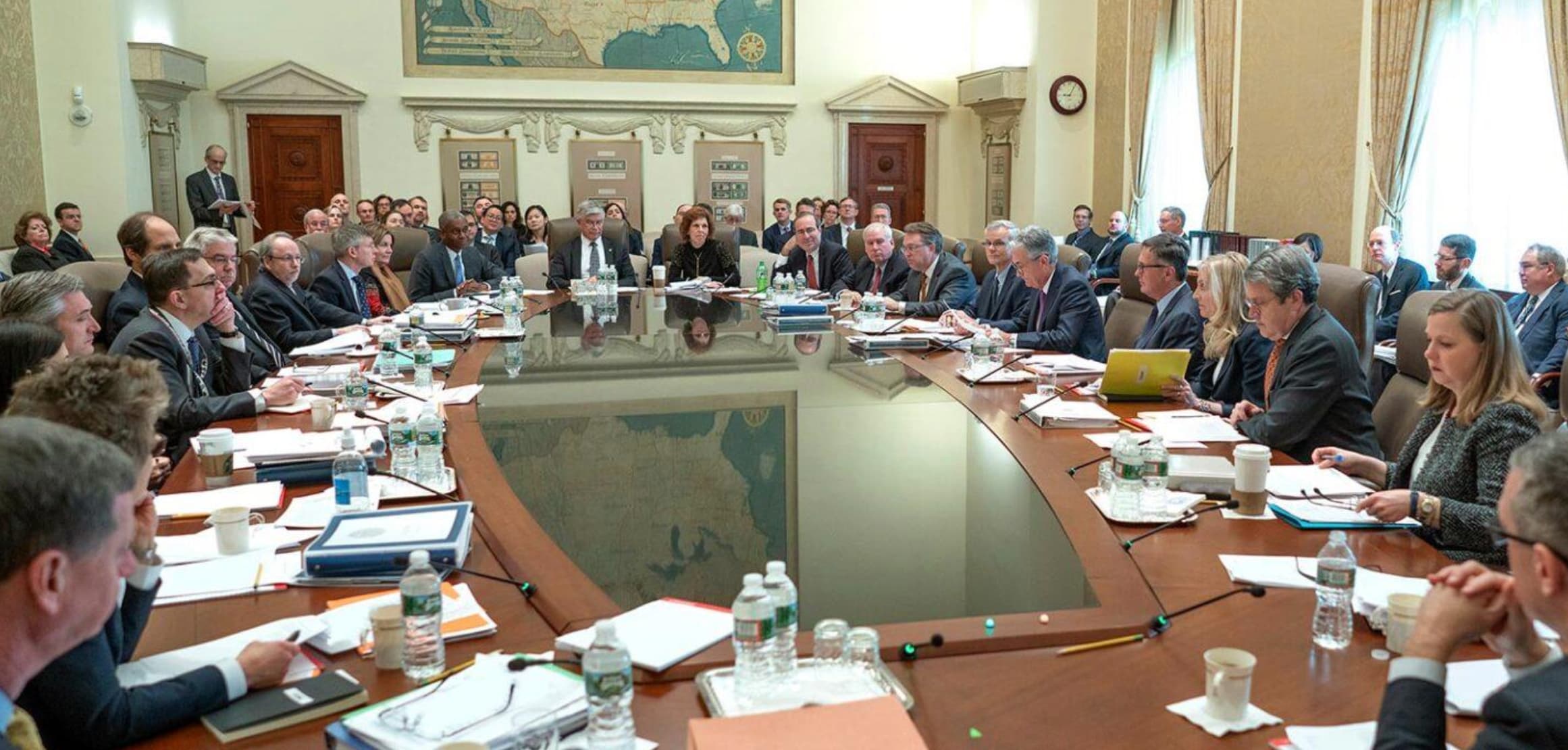
The Federal Reserve's June Summary of Economic Projections revised 2026 PCE inflation to 3.6% — up from 2.7% just three months ago — and the median dot now points to one rate hike before December 31. When the FOMC minutes from the June 16–17 meeting drop Wednesday at 2:00 p.m. ET, traders will get their first look at the internal debate that produced that shift, and whether new Chair Kevin Warsh has already assembled a coalition willing to pull the trigger as early as September 29.
The Inflation Problem Warsh Inherited
The numbers behind Wednesday's minutes are ugly in a specific way that makes a hike defensible. Headline CPI sits at 4.2% year-over-year as of the May print — more than double the Fed's stated 2% target — while core CPI, at 2.8%, is running well above where the Committee expected it to be at this stage of the cycle. The effective federal funds rate is 3.63%, SOFR is 3.64%, and the 10-year Treasury is yielding 4.49% against a 2-year at 4.14%. That 35-basis-point positive spread in the 10-year/2-year is a curve that has normalized after years of inversion, but it does not reflect a market pricing in serious additional tightening — yet.
What the June SEP revision tells you is that the Committee's own models are no longer able to explain away elevated inflation as transitory. PCE going from 2.7% to 3.6% in a single quarterly revision is not a rounding error — it is an acknowledgment that supply shocks, partly tied to ongoing conflict in the Middle East driving energy costs, have embedded themselves more persistently than the staff projected even in March. WTI crude is at $73.59 per barrel and Brent at $73.63, levels that are not catastrophic but are high enough to keep transportation and goods inflation from fully unwinding. Henry Hub natural gas at $3.20/MMBtu adds to the cost-of-living pressure on the household side. The Fed cannot cut through energy prices. What it can do is raise the cost of money to suppress demand enough to offset them — and Warsh appears willing to consider exactly that.
What Warsh Said — and What the Minutes Will Confirm or Contradict
At his post-meeting press conference, Warsh was direct in a way his predecessor rarely was: "We recognize that inflation has been running well ahead of the Fed's long-stated inflation goal of 2 percent — that's been going on for more than five years." That sentence is important not just as candor but as doctrine. It signals that the new chair will not tolerate the institutional habit of treating above-target inflation as acceptable so long as it is declining. The direction of travel matters less to Warsh than the distance from the destination.
At the ECB's Sintra forum on July 1, Warsh elaborated on a broader shift in the Fed's reaction function: he wants to replace lagging government survey data with real-time, technology-driven economic monitoring. "My hope, my aspiration, is that nine to twelve months from now we're going to be using new technologies to understand what's happening in the real economy in a contemporaneous, real-time way," he said. That statement matters for rate strategy because it implies Warsh will not wait for three consecutive monthly CPI prints to confirm a trend before acting. If his real-time data shows inflation reaccelerating or labor demand staying firm — unemployment is 4.2% against a revised forecast median of 4.3% for year-end, meaning the labor market is slightly tighter than the Committee projected — he has the philosophical framework to justify moving faster than the traditional cadence.
The minutes will show whether Warsh's hawkish framing was shared broadly or whether it was a chair-driven consensus papering over genuine dissent. A Fed where six or more members are explicitly open to hiking in September is a very different animal than one where Warsh is pulling a reluctant committee. Traders need to know which scenario they are in before positioning for the July 28–29 meeting and the September 29 decision.
What Traders Watch Next
The bond market has not fully priced a September hike. The 10-year at 4.49% and the 2-year at 4.14% reflect a market that believes the Fed will hold longer before moving — not one bracing for a 25-basis-point lift in eleven weeks. That gap between market pricing and the SEP median creates a specific trade: if Wednesday's minutes show broad committee support for a hike before year-end, the 2-year yield should reprice higher immediately, steepening the curve further and pressuring TLT. A 2-year move toward 4.35%–4.40% is plausible on a hawkish minutes read. Conversely, if the minutes reveal significant internal resistance — members pushing back on the revised inflation projections or flagging downside risks to GDP, which was cut from 2.4% to 2.2% — the front end rallies and the September hike probability fades back toward a coin flip.
The Treasury market's own inflation signals are sending a mixed message. The 5-year breakeven has fallen to 2.26% since May, suggesting bond investors believe the Fed's current stance will eventually succeed in suppressing inflation. The 1-year breakeven remains elevated near 3%, reflecting near-term energy and supply-shock risk. That divergence — short-term inflation fear, medium-term faith — is exactly the environment where a single policy signal can reprice an entire duration segment in an afternoon.
The Fed's July calendar runs through the July 28–29 FOMC meeting, with a press conference July 29 at 2:30 p.m. Between now and that decision, traders get Wednesday's minutes, any Fed speaker commentary in the intervening three weeks, and — critically — the June CPI print, which lands before the July meeting and will either validate or undercut the hawks' case. If June CPI prints above 4.0% again, a July hike discussion becomes live. If it breaks below 3.8%, the September timeline shifts toward November. Wednesday at 2:00 p.m. is where the week's real price discovery begins — watch the 2-year yield at that moment as the cleanest single-asset tell for how the market is reading the internal balance of power at the new-look Fed.
The Weekly Investor
Daily market analysis for active traders. Free.