Fed Holds, But Warsh's Dot Plot Just Repriced Everything
The Fed's June dot plot shifted PCE inflation forecasts to 3.6% and signaled a potential 2026 hike. Here's what that means for yields and rate bets.
Key Points
- The Fed's June SEP revised PCE inflation expectations sharply upward from 2.7% to 3.6% for 2026, with the median dot now implying one rate hike before year-end.
- New Chair Kevin Warsh's blunt opening message — "We've missed on inflation for five years and we're going to fix that" — signals a hawkish regime shift, not a temporary pause.
- Watch the 10-year Treasury yield at 4.38% and today's 10:00 a.m. ET ISM Manufacturing PMI print for the next catalyst to reprice hike odds.
The Federal Reserve's June dot plot quietly delivered one of the most significant policy signals of the year: the median PCE inflation forecast for 2026 jumped from 2.7% to 3.6%, and for the first time since the hiking cycle began winding down, the Committee's central tendency now points to a rate increase before December. The fed funds rate sits at 3.63% effective rate, the 10-year Treasury yield closed Friday at 4.38%, and with new Chair Kevin Warsh running his first press conference, the Fed just told markets it is not done.
Warsh Draws a Line
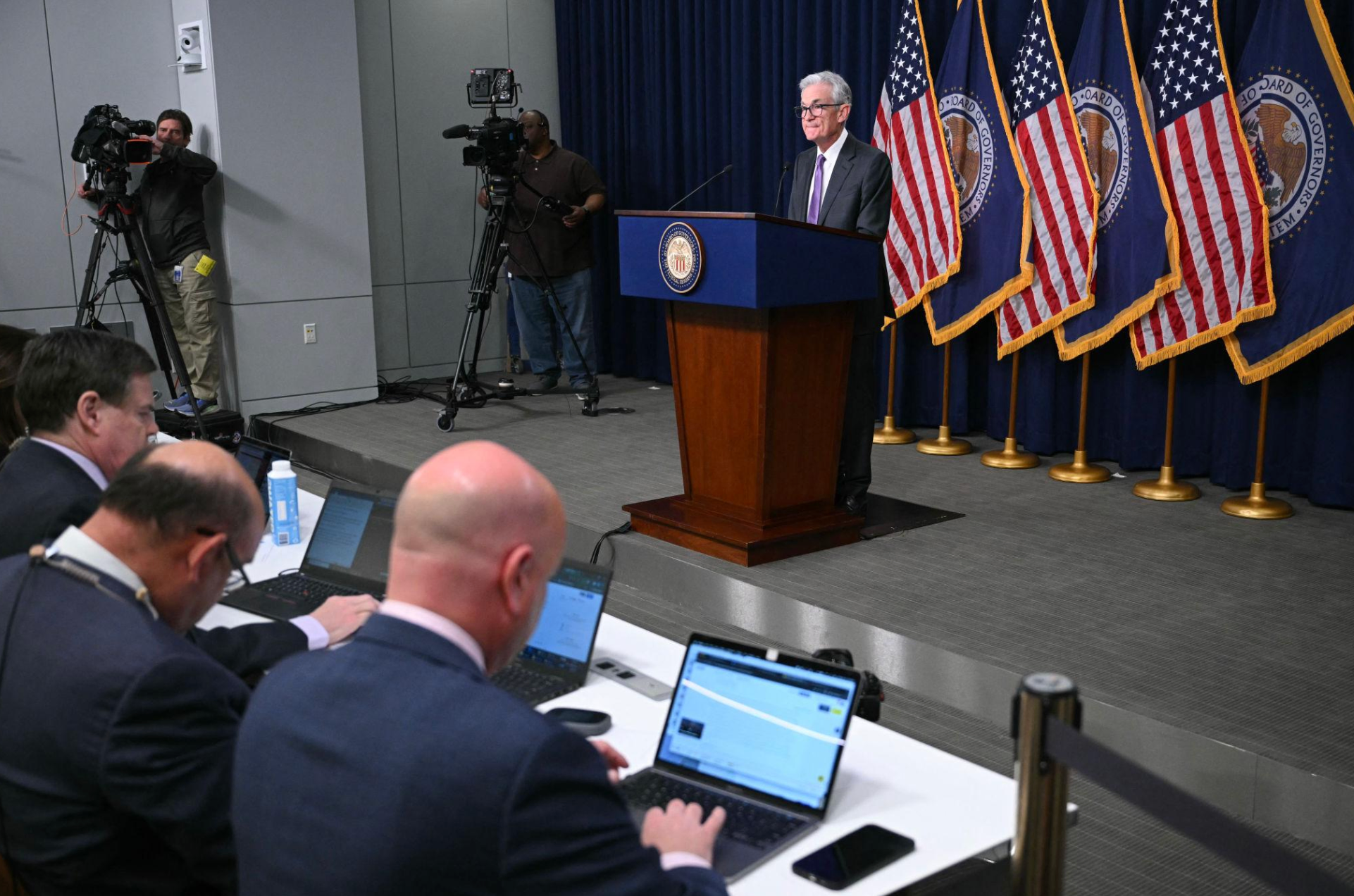
The symbolism of the June 16–17 FOMC meeting was impossible to miss. Kevin Warsh, taking the chair for the first time after Jerome Powell's departure, did not use the occasion to project continuity. He used it to establish a credibility mandate. His opening press conference statement carried a bluntness that the Fed under Powell rarely produced: "We've missed on inflation for five years and we're going to fix that." That is not boilerplate. That is a new chair drawing a line in public, on the record, at his first opportunity.
The policy rate itself did not move — the Committee held at 3.50%–3.75%, exactly where it has sat since the final cut of the prior cycle. But the rate decision was never the story at this meeting. The Summary of Economic Projections was. The PCE inflation revision from 2.7% to 3.6% is a 90-basis-point upward shift in the Fed's own central forecast, a move that would have dominated headlines in any prior year. The GDP revision ran the other direction — 2.4% trimmed to 2.2% — meaning the Fed is now officially penciling in slower growth alongside sharply higher inflation. That is a stagflationary configuration in the Fed's own numbers, even if the word "stagflation" never appeared in the statement.
The unemployment forecast ticked down fractionally, from 4.4% to 4.3%, which aligns almost exactly with the May actual print of 4.3%. That marginal labor market tightness, combined with the inflation revision, is precisely the combination that gives Warsh political and analytical cover to lean hawkish without triggering a recession alarm. The Fed is threading a needle: growth decelerating but not collapsing, inflation sticky but not spiraling, unemployment stable. That configuration historically allows a central bank to hike once more. That appears to be exactly what the median dot is now implying for the back half of 2026.
The Yield Curve Tells the Story
The Treasury market has already begun repricing. The 10-year yield at 4.38% and the 2-year at 4.10% produce a positive term spread of 28 basis points — a curve that has been normalizing after more than two years of inversion. The direction matters as much as the level. A steepening curve in the context of a hawkish Fed pivot typically reflects markets accepting that short rates will stay elevated longer, while long-end inflation expectations begin to drift higher. The SOFR rate at 3.62% confirms the market is pricing essentially full pass-through of the current fed funds corridor.
What makes this moment analytically interesting is the gap between the Fed's PCE forecast and the CPI data already in hand. May CPI came in at 4.2% year-over-year. Core CPI sits at 2.8%. The headline CPI number at 4.2% is running well above even the Fed's revised PCE forecast of 3.6%, which creates a credibility problem for the Committee if the summer data does not show visible deceleration. PCE and CPI measure different baskets — PCE has historically run 30–50 basis points below CPI — but even adjusting for that differential, the May read suggests inflation is not yet cooperating with the Fed's own projections.
The FOMC statement referenced elevated uncertainty tied to Middle East conflict and noted that energy price increases in certain sectors are contributing to above-target inflation. WTI crude at $81.36 per barrel and Brent at $81.00 are not yet at levels that historically break consumer budgets, but they are high enough to keep headline measures elevated through the summer driving season. Henry Hub natural gas at $3.12 per MMBtu adds a secondary energy pressure point heading into Q3 peak demand. The Fed cannot cut energy prices. What it can do is signal that it will not allow energy-driven inflation to become embedded in expectations — and Warsh's press conference was precisely that signal.
What Traders Watch Next
The most immediate catalyst is sitting in the 10:00 a.m. ET ISM Manufacturing PMI release today. The May print was 54.0% — a 19-month expansion streak, the highest reading since May 2022, with New Orders at 56.8%. If June holds above 50, it removes the last easy argument for rate-cut advocates: you cannot argue the economy needs policy relief when manufacturing is expanding at this pace. A print above May's 54.0% would almost certainly push the 10-year yield back toward the 4.50% area tested earlier in the year and materially increase the probability the September or November FOMC meeting delivers the hike the dot plot flagged.
A miss below 50 changes the calculus dramatically. The manufacturing sector has been the one clean data point supporting the "soft landing with no additional hikes" narrative. A contraction print would force a rapid reassessment of how much the Middle East shock and tariff uncertainty have actually damaged industrial demand. In that scenario, the front end of the curve would rally hard — 2-year yields could drop 15–20 basis points intraday — and hike odds for 2026 would collapse. The 2-year at 4.10% is the level to watch: a break below 4.00% on a weak ISM print would signal that markets are pricing the hike as dead. A hold above 4.10% through the ISM release, by contrast, confirms the hawkish repricing has staying power. The next FOMC meeting in late July is the event horizon. Between now and then, every data point is a vote on whether Warsh gets to pull the trigger.
The Weekly Investor
Daily market analysis for active traders. Free.