ETF Launches Hit 214 in June — and SpaceX Just Shook QQQ
June's record 214 ETF launches and SpaceX's Nasdaq-100 inclusion on July 7 are reshaping passive tech exposure. Here's what traders need to act on now.
Key Points
- SpaceX joined the Nasdaq-100 on July 7, triggering mandatory repositioning across every QQQ-linked product and passive vehicle benchmarked to the index.
- June produced a record 214 U.S. ETF launches — 95 of them from a single issuer, Corgi Funds — raising legitimate questions about product saturation and liquidity risk in niche strategies.
- Traders should monitor QQQ's reconstitution-driven flows through mid-July and assess whether the new Leverage Shares 2x single-stock products (GOOL, AMZG, METG) gain enough AUM to move their underlying names at the open.
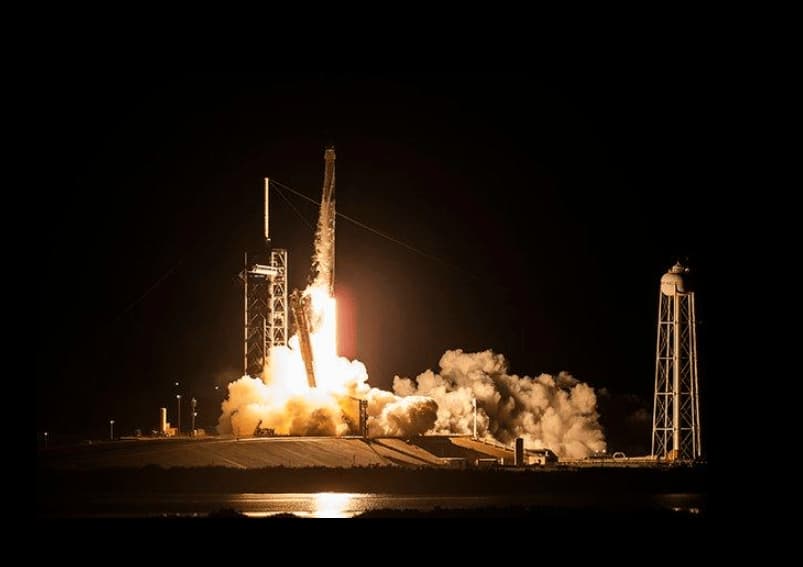
SpaceX joined the Nasdaq-100 on July 7, and every passive manager benchmarked to that index had no choice but to buy. The inclusion of one of the most closely watched private-turned-public names in technology into the QQQ-linked universe is the kind of index event that reshuffles billions in exposure quietly and quickly — while the rest of the market is watching semiconductor flows. Simultaneously, the U.S. ETF product machine printed 214 new funds in June alone, a pace that is straining even veteran observers' ability to track what is actually investable versus what is shelf-filler.
The SpaceX Reconstitution Trade
Index inclusion events generate predictable, mechanical buying — and that buying is front-runnable for traders who catch it early. SpaceX's addition to the Nasdaq-100 on July 7 means the approximately $322 billion in assets benchmarked to QQQ-linked products needed to establish or increase positions in SpaceX to maintain tracking accuracy. The exact weight assigned to SpaceX within the reconstituted index determines the dollar magnitude of required purchases, but even a sub-1% allocation across the QQQ AUM base translates to several billion dollars in forced buying concentrated over a narrow window.
The secondary effect is just as important: when a new name enters the Nasdaq-100, something else gets trimmed or removed entirely to make room. Traders who identified the likely losers in that rebalancing — names at the index margin with lower market caps or declining momentum scores — had a short-side opportunity in the days bracketing July 7. The reconstitution impact does not end at the close of inclusion day; passive rebalancing flows from institutions benchmarked to the index can trail for days as portfolio managers work their orders. QQQ itself merits close watching through the middle of July as the mechanics fully settle. The Information Technology sector already carries more than 70% concentration in just two names at the mega-cap level, and SpaceX's inclusion adds a new variable to an index that was already structurally top-heavy.
The Tema ETFs partnership with SemiAnalysis — announced this month — is a quieter but structurally interesting product development running alongside the index story. SemiAnalysis is one of the most technically rigorous independent research operations covering semiconductor and AI infrastructure, and packaging its analytical framework into an ETF product gives retail investors access to a differentiated stock-selection process in the same sector that is currently commanding the largest ETF flows on the tape. Whether the fund can build AUM fast enough to achieve meaningful liquidity remains the open question, but the partnership model itself represents a broader trend of ETF issuers seeking proprietary intellectual edges to differentiate in a crowded market.
214 Launches, One Dominant Issuer, and a Saturation Problem
June's 214 new U.S. ETF launches set a monthly record, but the composition of that number tells a more nuanced story than simple headline enthusiasm for the wrapper. Corgi Funds alone accounted for 95 of the 214 launches — a single issuer representing 44% of the month's new product count, rolling out an expansive lineup of AI-driven 2x leveraged and buffer ETFs targeted at short-term traders. When one issuer can move the monthly launch number by 44%, it signals that the record is being driven by product strategy rather than genuine investor demand discovery.
The global picture is equally striking. Through May 2026, the worldwide ETF industry had listed a record 1,397 new products, net of 208 closures for a net addition of 1,189 funds — surpassing the prior record of 1,063 set at the same point in 2025. Leverage Shares led all global issuers with 94 launches, nearly twice iShares' 48. The U.S. led in both new listings at 505 and closures at 110 — a churn dynamic that historically signals a maturing, competitive market where undercapitalized or redundant products get weeded out within 12 to 24 months of launch. For traders, the practical implication is straightforward: a new ETF with under $50 million in AUM that does not attract flows within its first six months faces meaningful closure risk, and trading a fund that subsequently liquidates forces an untimely taxable event.
Leverage Shares by Themes made the most actionable product move of the week, launching six new 2x single-stock leveraged ETFs on July 7 under tickers GOOL, AMZG, METG, AAPE, JBLG, and VIAG, listed on Cboe with a 1% management fee and targeting 200% daily exposure to Alphabet, Amazon, Meta, and Apple. These products are explicitly designed for traders who want amplified directional bets on mega-cap tech without the complexity of options. The risk embedded in any daily-reset leveraged product is well-documented — compounding drag erodes returns in sideways or volatile markets — but at a 1% fee against the backdrop of 113% year-to-date gains in semiconductor names, the appetite for leveraged tech exposure is clearly not exhausted.
What the Product Pipeline Tells Traders
The Defiance Autism Impact ETF (ASD) is a different kind of launch story — one that reflects the continued expansion of ESG and impact thematic investing into increasingly specific social categories. ASD invests in companies supporting the autism ecosystem while pledging charitable contributions for its first two years. Thematic impact funds of this structure have historically struggled to build scale beyond niche audiences, and with the broader ETF market now offering more than 3,500 products in the U.S. alone, the competition for investor attention at launch is intense. Unless ASD attracts institutional or advisory-channel support early, the closure statistics suggest it faces a challenging AUM-building window.
Dimensional Fund Advisors filing to list five ETF share classes of its systematic fixed income funds is the institutionally significant move that may get overlooked in the headline count. DFA's systematic approach to fixed income — factor-tilted, low-cost, and built on decades of academic research — commands genuine respect among fee-conscious advisors. Adding an ETF share class to existing mutual fund structures, rather than launching net-new products, is a capital-efficient way to expand distribution into the RIA and brokerage platform channels that have been migrating toward ETF wrappers for tax-efficiency reasons since 2023. This is not a product aimed at retail speculators; it is a structural move to capture advisor assets that are flowing out of mutual fund share classes and into the ETF ecosystem — and it reinforces why ETF inflows have crossed $1 trillion in just six months in 2026.
Active ETFs are quietly building critical mass in parallel. The T. Rowe Price Capital Appreciation Equity ETF (TCAF) crossed $7 billion in assets three years post-launch, and the VictoryShares Free Cash Flow ETF (VFLO) has climbed to approximately $8 billion over the same period. Both funds demonstrate that active strategies can scale inside the ETF wrapper if they offer genuine differentiation — TCAF on quality-growth stock selection, VFLO on free cash flow yield as a valuation discipline — rather than simply replicating an index with a higher fee. Against a 4.56% 10-year yield and a CPI print of 4.2% year-over-year, free cash flow discipline as a portfolio filter carries real analytical merit: companies generating durable cash returns are better positioned to service debt and fund buybacks in a higher-for-longer rate environment than growth names relying on multiple expansion.
The key date for the QQQ reconstitution trade is mid-July — specifically, the window before the next scheduled Nasdaq-100 quarterly review. Traders holding QQQ-adjacent positions should monitor whether SpaceX's implied weight drives measurable net creation activity in QQQ during the week of July 14. If QQQ AUM expands by more than $3 billion net of the semiconductor flow story, it would confirm that SpaceX inclusion is pulling fresh capital into the passive tech complex rather than just triggering internal rebalancing. That distinction matters for anyone sizing a position in QQQ derivatives or hedging tech concentration risk into the back half of 2026.
The Weekly Investor
Daily market analysis for active traders. Free.