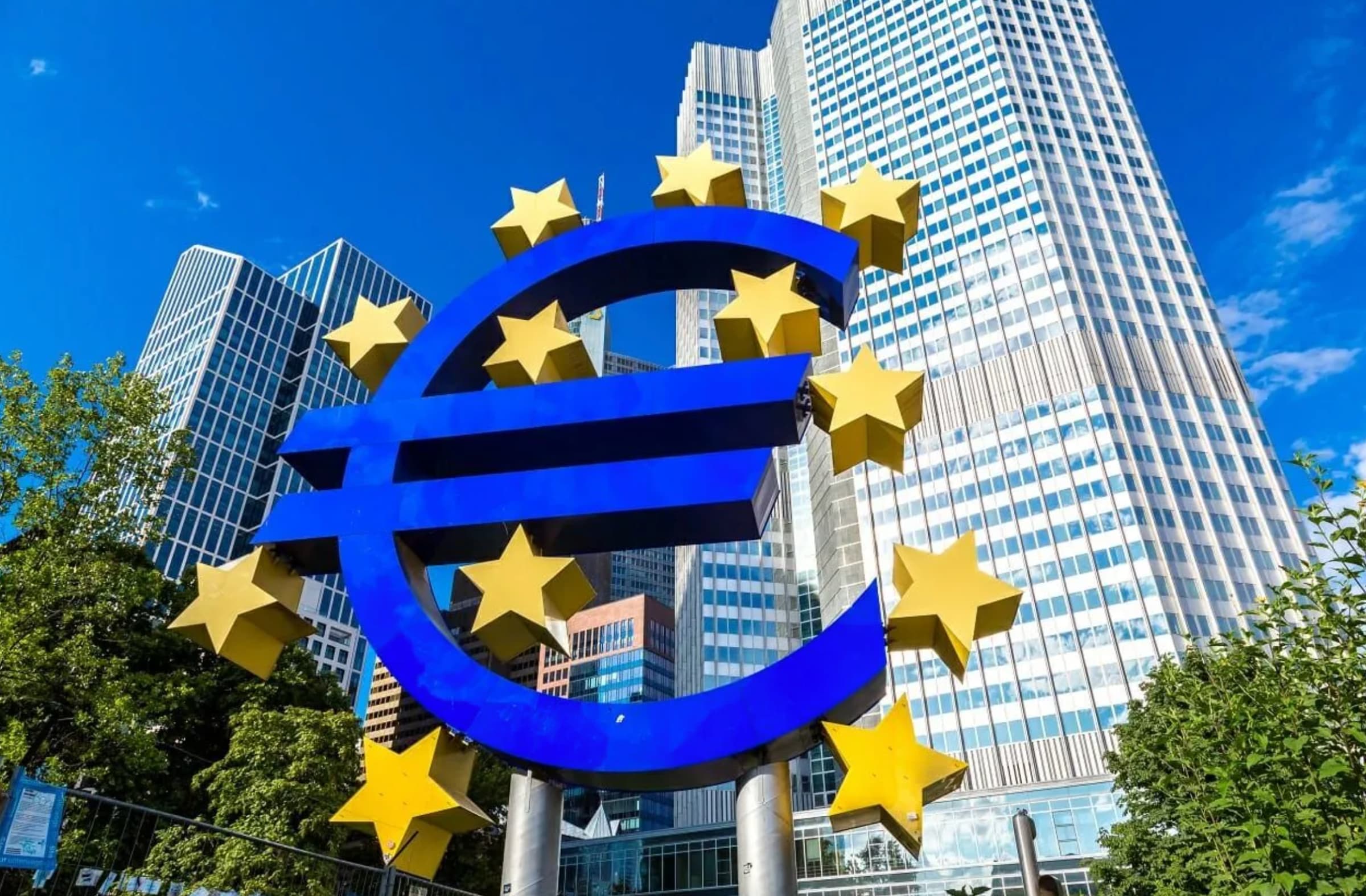

ECB Holds Thursday — Lagarde's Words Are the Trade
ECB rate decision hits Thursday at 8:45 AM ET. Hold is 90% priced in, but Lagarde's September forward guidance is where the real trade lives.
Key Points
- The ECB holds its deposit facility rate at 2.25% Thursday — a 90% probability on Polymarket — but market-implied pricing already assigns a 70% chance of a September hike.
- Middle East-driven inflation pressures are keeping the Governing Council's hawkish tilt intact, with ECB staff projecting eurozone headline CPI at 3.0% for full-year 2026.
- The September hike odds live or die on Lagarde's exact language Thursday — traders should watch for any softening of the "data-dependent" framing as the tell.
The ECB is almost certainly holding Thursday. The real money is on what Christine Lagarde says at 8:45 AM ET — specifically whether she leaves the door open wide enough for a September move that derivatives markets are already pricing at 70%.
The Hold Nobody Debates
The June 11 decision is the baseline here: the ECB raised all three key rates by 25 basis points, bringing the deposit facility to 2.25%, the main refinancing rate to 2.40%, and the marginal lending facility to 2.65%. That was the first ECB hike since 2023, a hawkish pivot driven explicitly by the Hormuz-related energy shock feeding back into eurozone consumer prices. Polymarket sits at 90% probability for a hold Thursday, and the swap market agrees — there is essentially no live debate about whether the Governing Council moves again this week.
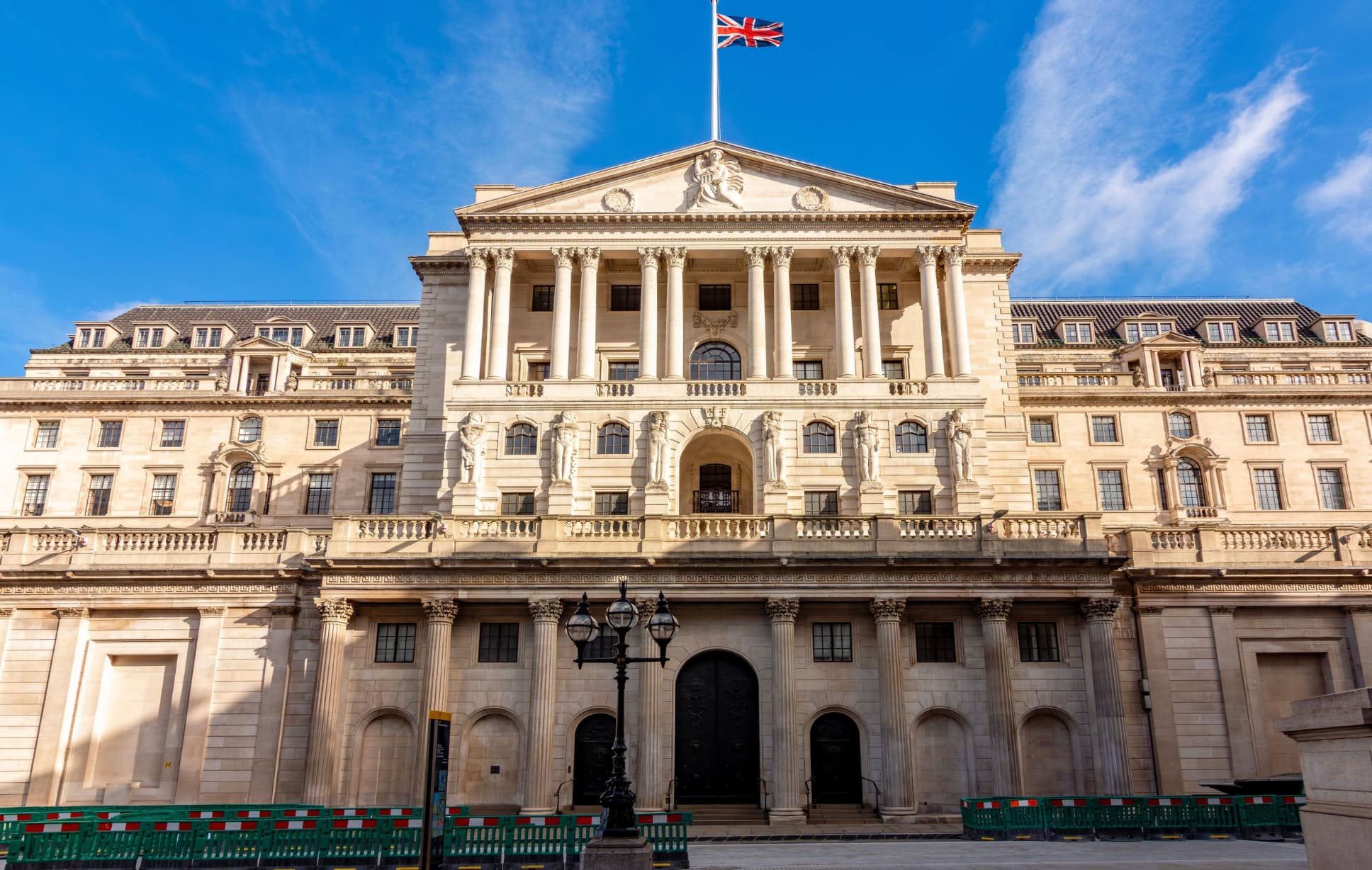
What makes the June hike unusual is that it came at a moment when most developed-market central banks were either on hold or cutting. The Fed is frozen at 3.50%–3.75%, paralyzed by a 4-to-8 internal dissent heading into its own July 28–29 meeting. The BoE is being carried toward an August 6 cut by softening UK inflation. The ECB is moving in the opposite direction, and the logic is straightforward: its own staff projections show headline eurozone CPI averaging 3.0% in 2026, core inflation stuck at 2.5% through 2027, and only a drift toward the 2.0% target by 2028. Those numbers do not describe a central bank that has finished its work.
The Hormuz dimension is not incidental — it is the story. Brent crude is sitting at $73.33 per barrel as of July 10, down from crisis peaks but still well above the $60–65 range that prevailed before the Middle East escalation. European energy import costs have a faster and more direct pass-through to CPI than the same oil price move does in the United States, which is now a net energy exporter. That asymmetry is precisely why the ECB can hike while the Fed is debating whether to cut. It also means that any further deterioration in Hormuz conditions between now and September would tighten the September hike case rather than loosen it.
What the Press Conference Actually Decides
Lagarde's press conferences have a structural feature that veteran ECB watchers have learned to exploit: she signals via adjectives. When the statement and press conference language shift from "determined" to "data-dependent" without qualification, that is typically a pause signal. When "vigilant" appears in proximity to inflation language, that is a hike signal. Thursday's written statement will be parsed to the word, but the real action comes in the Q&A, where Lagarde has historically been pressed into more concrete forward guidance than the statement itself delivers.
The 70% September hike probability embedded in euro short-rate futures is not arbitrary — it reflects the ECB's own projected inflation path and the pattern of Governing Council commentary since June. Bundesbank President Joachim Nagel has been the most consistent hawkish voice on the Governing Council, and his recent public remarks have not softened. Nagel's posture matters because the Bundesbank's institutional credibility on inflation gives his votes and public signals disproportionate weight in market interpretation. If Lagarde's Thursday framing is consistent with Nagel's recent tone, the 70% September probability holds or moves higher. If she introduces any language about "reassessing" or "monitoring conditions carefully" without a paired reference to upside inflation risks, expect that 70% to drop toward 50% within the hour and the euro to give back ground against the dollar.
EURUSD is the primary instrument for this trade. The pair's sensitivity to rate differential changes is well-established: a 25 bps ECB hike priced out of the September curve would compress the ECB-Fed differential and likely push EURUSD lower, while a Lagarde press conference that confirms September is live should hold or extend the euro's recent gains. Watch the two-year German Bund yield as the concurrent real-time signal — it is a cleaner read on front-end ECB expectations than the headline rate itself.
What Traders Watch Next
Friday's S&P Global Flash PMIs for the eurozone — consensus at Manufacturing 51.6, Services 49.8 — arrive less than 24 hours after Lagarde speaks, and they carry direct consequences for how Thursday's forward guidance ages. If eurozone services PMI comes in below 49.8, it introduces a growth-versus-inflation tension that makes the September hike harder to defend politically, even if CPI stays elevated. That is the scenario where Lagarde's careful Thursday language gets stress-tested almost immediately.
The broader context that traders should not lose sight of: the ECB is operating without a Fed safety net. When the Fed was hiking in 2022–2023, European rate markets could price ECB moves with some reference to the global tightening cycle. That synchronization is gone. The Fed's July 29 decision will almost certainly be another hold, and Chair Kevin Warsh made clear at the ECB Forum in Sintra on July 1 that the Fed views inflation as its primary problem — his words were "prices are too high" — but the Fed's internal dissent documented in the June minutes shows a deeply divided FOMC that is not ready to move. The ECB, by contrast, has institutional consensus behind its hawkish tilt and an inflation profile that justifies it.
The specific level to watch post-Thursday: the two-year German Bund yield near 2.35%. A Lagarde press conference that keeps September live should push that yield toward 2.45%–2.50%. A surprise dovish pivot brings it back toward 2.20%. Thursday's 8:45 AM ET decision is a hold. Everything that happens at 8:46 AM is the trade.
The Weekly Investor
Daily market analysis for active traders. Free.