ECB Holds at 2.25% — September Hike Now in Crosshairs
ECB holds rates at 2.25% July 23 as Lagarde signals inflation risks. September hike nearly fully priced. What her language means for EUR/USD and Bunds.
Key Points
- The ECB held its deposit rate at 2.25% today, as expected by 95%+ of market participants, but the real decision arrives September 10 with fresh projections in hand.
- Eurozone stagflation — 3.0% headline inflation against just 0.8% GDP growth and a Q1 contraction of 0.2% — has cornered the ECB between fighting price pressure and not crushing a barely-breathing economy.
- Traders must parse every word of Lagarde's press conference for "upside inflation risks" language that would confirm a September hike is live and send EUR/USD and Bund yields higher.
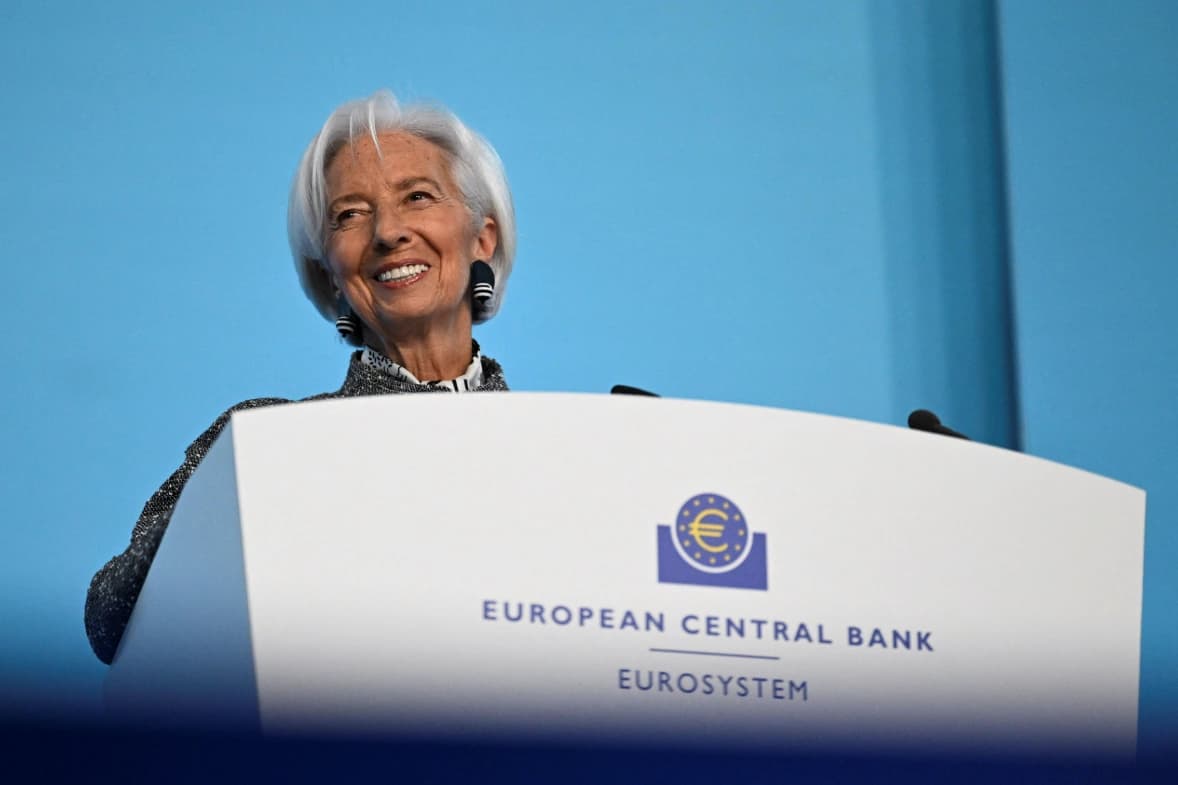
The ECB held its deposit rate at 2.25% this morning — no surprise there. The market priced that outcome at better than 95%. What matters now is the 45 minutes Christine Lagarde spent at the microphone afterward, because September 10 is where this fight actually gets decided, and today's language is the first draft of that decision.
Frankfurt's Stagflation Trap
The ECB did not arrive at this hold easily. Six weeks ago, on June 11, the bank reversed its entire 2026 easing narrative and raised all three of its policy rates by 25 basis points — the first hike since 2023 — after the US-Iran war that ignited in late February sent energy costs spiraling across the continent. The deposit facility landed at 2.25%, the main refinancing rate at 2.40%, and the marginal lending facility at 2.65%. That was a significant pivot, and it came with projections that made the bind explicit: headline eurozone inflation was revised up to 3.0% for 2026 from a March estimate of 2.6%, while full-year GDP growth was slashed to just 0.8%. The eurozone economy actually contracted 0.2% in Q1 2026 against an expected expansion of 0.1%.
That combination — accelerating inflation and a shrinking economy — is the textbook definition of stagflation, and it has put the ECB's Governing Council in precisely the position central bankers dread most. Raise rates to crush inflation and you risk tipping a fragile economy into a deeper contraction. Hold or cut and you allow inflation expectations to become unmoored in an environment where energy shocks are already doing structural damage to household purchasing power and business input costs. There is no clean exit from that corridor, only trade-offs with real political and economic consequences for 350 million people.
Why July Was Never Going to Move
The mechanics of ECB policy calendar make a July hike structurally difficult under any circumstances short of a genuine emergency. July is a non-projection meeting — the ECB only publishes updated macroeconomic forecasts four times per year, in March, June, September, and December. Those forecasts are the primary analytical scaffolding the Governing Council uses to justify rate changes to a diverse 26-member body with deeply divergent national economic conditions. Moving rates without fresh projections requires an extraordinary consensus that simply was not in place for this meeting, particularly with June's hike still being absorbed by credit markets and eurozone bank lending conditions.
The September 10 meeting, by contrast, arrives with a full new set of projections that will incorporate three additional months of energy price data, wage growth readings, and GDP revisions. It is the next genuine decision point. Markets have priced that hike at nearly full probability — meaning the question today was never whether Lagarde would move, but whether she would give traders cause to doubt September or reason to sharpen their conviction. The absence of hawkish language — any softening toward "data dependency" or acknowledgment that energy prices have eased from their February-March peak — would be the signal to fade the September hike trade. Confirmation of "upside inflation risks" or language noting that energy pressures are "broadening into core services" locks it in.
What Traders Watch Through September 10
The direct market expression of the September hike trade sits in front-end German Bunds and EUR/USD. A two-year Bund yield that prices in 25 more basis points by September is the clearest forward-looking instrument. If Lagarde's language today read as hawkish — and early EUR/USD price action will tell that story within minutes of her opening remarks — expect the two-year Bund yield to hold or nudge higher and EUR/USD to test resistance in the 1.09–1.10 handle depending on where dollar positioning sits heading into next week's FOMC.
That FOMC meeting, July 28–29, is itself six days away and adds a second layer of complexity to positioning here. The Fed is holding its federal funds rate target range at 3.50%–3.75%, with the June 17 FOMC statement characterizing economic activity as "expanding at a solid pace despite elevated uncertainty" and inflation as "elevated relative to the Committee's 2 percent goal." The Fed's June SEP median implied the potential for one additional hike before year-end, with PCE inflation revised sharply higher to 3.6% for 2026. U.S. CPI for June came in at 3.5% year-over-year, down from 4.2% in May — a meaningful deceleration, but still 150 basis points above target. Core CPI of 2.6% is less alarming but hardly clean.
The EUR/USD cross is therefore caught between two central banks in hawkish holding patterns, with the ECB meeting first and the Fed meeting the following week. That sequencing matters. A hawkish Lagarde today that strengthens EUR/USD runs directly into the possibility of a hawkish Warsh press conference on July 29 that reasserts dollar strength. Cross-currency traders are not playing a single central bank — they are playing the spread between two institutions simultaneously navigating supply-shock inflation in economies with very different growth trajectories.
The data calendar between now and September 10 will include at least two eurozone flash CPI readings, a preliminary Q2 GDP estimate for the eurozone, and multiple Fed speakers responding to whatever Warsh signals on July 29. Fed Governor Cook's July 15 remarks suggested the Fed is in a careful monitoring posture rather than a pre-committed hiking posture — but that was before this week's earnings data and before Warsh faces the market directly on July 29.
For traders holding EUR/USD longs or short front-end Bunds as a September hike expression, the specific level to watch is whether two-year German yields can sustain above 2.50% through the close today. A Lagarde press conference that delivers explicit "upside risk" language on inflation and avoids any dovish caveats about growth fragility would be the trigger. The September 10 meeting date is now the central macro event on the European calendar — today's ECB hold just set the table for it.
The Weekly Investor
Daily market analysis for active traders. Free.