ECB Hiked, Fed Frozen: Central Bank Divergence Trades Now
The ECB raised rates to 2.25% while the Fed holds at 3.50–3.75%. The 2026 divergence trade is live — here's what it means for rates, FX, and risk assets.
Key Points
- The ECB raised its deposit facility rate to 2.25% on June 11 while the Fed held at 3.50%–3.75%, creating the sharpest policy divergence between the two institutions in the current cycle.
- ECB staff projections show eurozone headline inflation at 3.0% in 2026 with growth revised down to 0.8%, a stagflationary combination that makes the hiking decision politically costly but analytically defensible.
- The BOJ remains the systemic wildcard — any further hawkish shift in Tokyo would unwind carry trades and inject volatility into every major currency pair simultaneously.
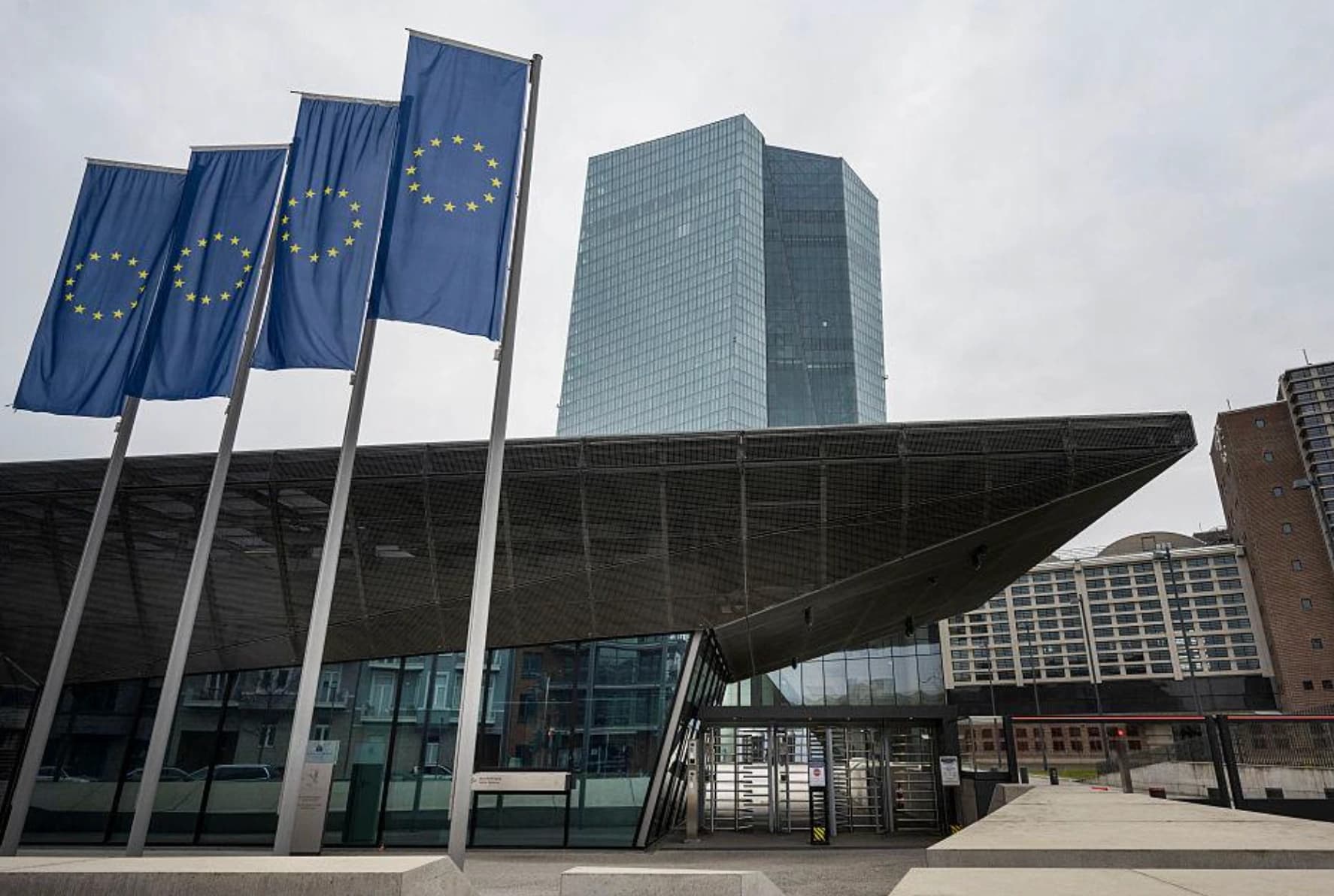
The European Central Bank hiked 25 basis points on June 11, moving its deposit facility rate to 2.25% — while the Fed sat on its hands at 3.50%–3.75% and the Bank of England froze at 3.75%. June 2026 broke the post-2008 synchronization pattern that has defined global monetary policy for nearly two decades, and the divergence trades are now live across FX, sovereign bonds, and rate-sensitive equities.
Five Central Banks, Five Different Answers
The ECB's June 11 decision was the headline, but the architecture of the divergence is what traders need to map. Five major central banks are currently operating with five distinct policy stances in response to what is essentially the same global shock — a Middle East conflict generating commodity-driven inflation on top of already-elevated post-pandemic price levels. The ECB is hiking. The Fed and Bank of England are frozen. The Bank of Canada wants to cut but cannot justify it with inflation still above target. The Bank of Japan is threading a nearly impossible needle between domestic reflation goals and the currency consequences of every decision it makes.
The ECB's rationale is laid out without ambiguity. The Governing Council said the decision to raise rates "is robust across a range of scenarios" — language that signals a deliberate rejection of the optionality-preserving, meeting-by-meeting framing that the Fed has favored. ECB staff projections put eurozone headline inflation at 3.0% in 2026, 2.3% in 2027, and 2.0% in 2028. Core inflation — excluding food and energy — is projected at 2.5% in both 2026 and 2027, only reaching 2.2% in 2028. Against a 2% target, that is a three-year timeline to get back to mandate, and the ECB judged that tolerating it without action would cost more in credibility than the growth sacrifice required by tightening. Growth was revised down to just 0.8% for 2026, making the hike a genuine stagflation bet — the ECB is explicitly accepting weaker near-term output to prevent inflation from becoming entrenched.
The contrast with the Fed's posture is structurally significant, not just directionally different. The Fed's June SEP revised PCE inflation up to 3.6% for 2026 and still — at least in the majority view — opted for a hold. The ECB saw 3.0% headline inflation and hiked. The Fed sees 3.6% PCE and holds. Whether that difference reflects a more sophisticated read on the nature of U.S. inflation, a higher political tolerance for above-target prices, or a genuine belief that the 4-dissenter minority is wrong about the demand-side dynamics, the market cannot fully price the dollar until it resolves that question.
The Bank of England, the BOJ, and the Carry Trade Risk
The Bank of England's MPC voted to hold Bank Rate at 3.75% at its June 2026 meeting, with the next decision scheduled for August 1. The BoE's position is the most defensible of the frozen-rate camp: UK growth is fragile, fiscal headroom is limited after several years of spending pressure, and the MPC has demonstrated a willingness to hold even when CPI is uncomfortable if the labor market shows signs of cooling. The August 1 decision will be the first post-summer read on whether the BoE is moving toward cuts — which markets would greet as a buying signal for gilts — or whether renewed services inflation forces another hold.
The Bank of Japan is the systemic risk that the ECB hike and Fed hold have underappreciated. The interest rate gap between Japan and other major economies has narrowed but has not closed, and carry trades funded in yen against higher-yielding dollar, euro, or sterling assets remain a significant structural position in global markets. Any further hawkish signal from the BOJ — or coordinated currency intervention by the Ministry of Finance to defend yen strength — could trigger a rapid unwind of those positions. The August 2024 carry trade unwind, which sent the Nikkei down 12% in a single session and rattled U.S. equity volatility, is the template. The conditions for a repeat are not identical, but they are closer than most risk managers are modeling. The interest rate differential has compressed, and the yen's recent strength relative to mid-2025 levels means the cushion available to carry traders has shrunk.
The Bank of Canada is the overlooked actor in this divergence story. Canadian inflation has been sticky enough to prevent cuts, but the domestic economy — heavily leveraged to the U.S. demand cycle and exposed to tariff-related trade disruptions — is deteriorating at a pace that makes the current rate level increasingly difficult to sustain. If the BoC cuts before the Fed moves in either direction, Canadian dollar weakness would add another FX leg to an already complex multi-currency divergence trade. Dollar-Canada at current levels is pricing in modest BoC-Fed divergence, but a surprise BoC cut — particularly if it comes before the July 14 U.S. CPI print clarifies the Fed's path — would move that pair sharply.
How to Position Across Asset Classes
The FX implications of the current divergence matrix run directly through the Dollar Index (DXY), which is simultaneously being pushed in opposite directions. The ECB hike is euro-supportive and thus DXY-negative. The Fed's internal hawkish shift — evidenced by four dissenters and an upward-revised dot plot — is dollar-supportive. The BOJ wildcard is the circuit breaker: a surprise hawkish signal from Tokyo would strengthen the yen, compress the yen-funded carry trade, and produce a multi-directional shock that disrupts the clean ECB-vs-Fed narrative. DXY needs a decisive resolution of today's FOMC minutes and the July 14 CPI before it can trend rather than oscillate.
In sovereign bond markets, the divergence creates a spread trade that is already partially in place but not fully exploited. German Bund yields have moved higher on the ECB hike, while U.S. Treasury yields — the 10-year at 4.55% and the 2-year at 4.19% — reflect a market that has priced some Fed hawkishness but not the full extent of what the dot plot implies. The spread between U.S. 10-year Treasuries and German 10-year Bunds has compressed from its 2024 peak. If the ECB hikes again — which its own projections and language suggest is possible — and the Fed holds, that spread compression accelerates, pressuring the dollar and supporting European risk assets on a currency-hedged basis even against weak growth.
For U.S. equity markets, the central bank divergence story matters most through the cost of capital channel. The 10-year Treasury at 4.55% is already putting pressure on longer-duration growth stocks. A move to 4.65%–4.75% — which a hawkish FOMC minutes read today could catalyze — would hit the Nasdaq-100's valuation multiples directly. Conversely, if the minutes read as a managed disagreement rather than a genuine policy fork, and if the market concludes that July 29 is still a hold, the relief rally in duration would lift the bond proxies — utilities, REITs, and high-dividend consumer staples — that have lagged in the first half of 2026. The August 1 BoE decision and the BOJ's next scheduled meeting are the next two international catalyst dates. Watch the 2.25% ECB deposit rate as the new floor for European policy — if June's hike is followed by another 25 basis points before year-end, the 2026 divergence trade becomes a structural theme, not a tactical positioning opportunity.
The Weekly Investor
Daily market analysis for active traders. Free.