ECB Hiked, Fed Froze: The Divergence Trade Reshaping Markets
The ECB raised rates June 11 while the Fed held at 3.75%. Five central banks, five responses to the same shock — here's how to trade the fracture.
Key Points
- The ECB raised all three key rates by 25 basis points on June 11 while the Federal Reserve held at 3.50%–3.75% on June 17 — the sharpest single-month policy divergence between the two institutions since 2011.
- Both central banks are responding to the same Middle East-driven energy shock, but reaching opposite conclusions about whether to prioritize the inflation consequence or the growth consequence.
- The next ECB meeting is July 30, one day after the Fed's July 29 meeting — back-to-back decisions that will either widen or compress the transatlantic rate gap and reset currency positioning across asset classes.
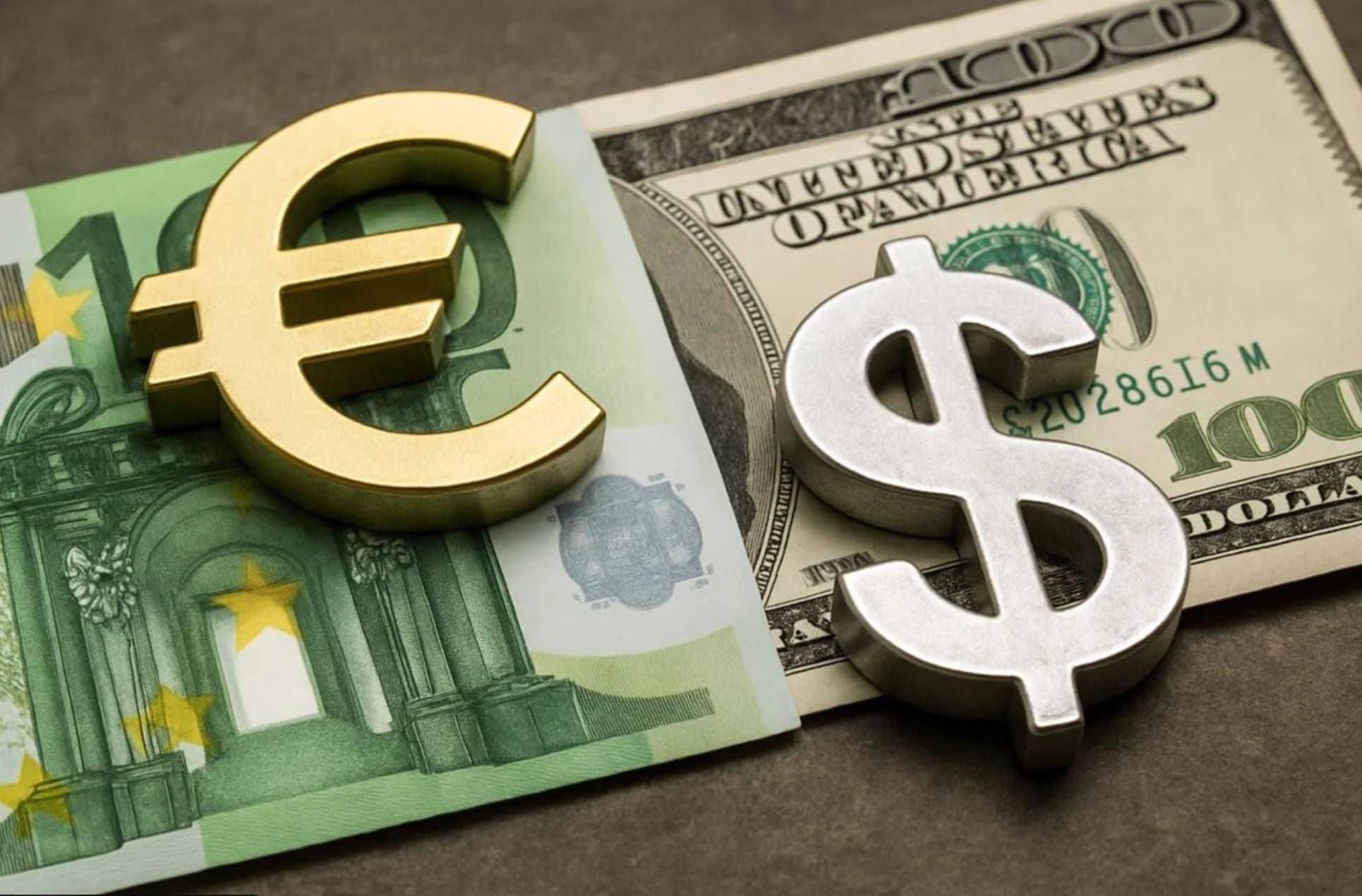
The ECB hiked on June 11. The Fed held on June 17. The Bank of England has been frozen since December 2025. June 2026 will be studied in monetary policy courses as the month five major central banks stopped responding to the same global shock in the same way — and the divergence trade it has opened is the most important macro positioning story of the second half of this year.
Five Banks, Five Different Answers
The ECB's Governing Council raised its deposit facility rate, main refinancing rate, and marginal lending facility rate by 25 basis points each on June 11, citing explicitly that "the war in the Middle East is generating inflation pressures" and describing the decision as "robust across a range of scenarios." The new Eurosystem projections pencil out eurozone headline inflation at 3.0% for 2026, with core inflation — ex-food and energy — running at 2.5% in both 2026 and 2027. GDP growth for the eurozone was slashed to just 0.8% in 2026, down from the prior projection, "reflecting a more pronounced impact of the war on commodity markets, real incomes and confidence." Frankfurt looked at those numbers and hiked anyway.
Six days later, Warsh's Fed looked at numbers that are structurally worse — U.S. CPI at 4.2% year-over-year, core CPI at 2.8%, the FOMC's own 2026 PCE forecast revised to 3.6% — and held. The statement did not ignore the inflation problem; it named supply shocks and energy prices explicitly. But the committee's GDP growth forecast for 2026 was revised down to 2.2% from 2.4%, and with a Middle East conflict embedded in every projection, the prevailing view was that acting on supply-shock inflation risked amplifying the growth damage. The ECB made the opposite call: that acting on inflation protects the institution's credibility more than it damages near-term output.
The Bank of England's position is arguably the most revealing data point in the divergence. Governor Andrew Bailey said on May 29 that the Bank is "in no rush to raise interest rates while the outcome of the Iran war remains uncertain and the UK's growth rate stays weak." The base rate has been at 3.75% since December 2025 — the same level as the Fed's upper bound — making the BoE and Fed effectively co-frozen while the ECB moves. That alignment between Washington and London is not coincidental: both the U.S. and U.K. economies are carrying more household debt at variable rates than the eurozone average, which raises the transmission risk of any hike and explains the political economy of patience even as inflation runs above target on both sides of the Atlantic.
The Dollar's Uncomfortable Position
The conventional playbook says Fed-holds-ECB-hikes equals weaker dollar, stronger euro. The DXY dollar index has not followed that script cleanly, and understanding why is the key to trading this theme correctly. The dollar's safe-haven premium — elevated by the Middle East conflict — is working against the simple rate-differential logic. With WTI crude at $81.36 and Brent at $81.00 as of June 19, the energy bid is keeping commodity flows dollar-denominated and the petrodollar recycling mechanism dollar-supportive even as the rate gap compresses.
The more nuanced read is that the divergence trade is expressed most cleanly in the front end of each country's yield curve rather than in the spot currency. The U.S. 2-year Treasury is yielding 4.09%, while equivalent German Schatz yields have moved higher post-hike but remain below U.S. levels in nominal terms. The spread compression — U.S. yields not falling, European yields rising — is the mechanism that would eventually pressure DXY lower, but it operates with a lag. For traders, the actionable window is in European bank equities, which historically benefit from rate hikes through net interest margin expansion, and in the euro-dollar cross, where the next ECB meeting on July 30 creates a defined catalyst.
The Bank of Canada's situation adds another layer of complexity. Ottawa has been openly telegraphing a desire to cut rates as the Canadian economy underperforms, but the combination of above-target inflation and the currency consequences of cutting while the ECB is hiking has left the Bank of Canada effectively paralyzed. The Bank of Japan, meanwhile, faces the opposite problem: inflation is running modestly above target, but the BoJ's primary motivation for any rate adjustment would be currency defense rather than price stability — a fundamentally different policy function that underscores how completely the post-pandemic central bank consensus has fractured.
What Traders Watch Next
The calendar alignment in late July is the sharpest near-term catalyst. The Fed meets July 29. The ECB meets July 30. If the Fed holds again — which remains the base case at Wells Fargo Investment Institute — and the ECB delivers a second consecutive hike or signals one is coming in September, the rate differential trade gets a clean reset. That sequence would also arrive with the full June U.S. jobs report in hand (due July 3), June CPI data, and a Q2 GDP advance estimate that will either confirm or refute the stagflation thesis that the Q1 2.0% print started building.
The specific numbers to mark: eurozone core inflation needs to show progress toward the ECB's 2.5% projection for 2026 to make a second hike defensible — any upside surprise in the July flash CPI for the eurozone re-opens the September hike question and keeps the divergence trade on. On the U.S. side, today's PCE release, combined with the third revision to Q1 GDP also due this morning, sets the baseline. A PCE reading above 3.6% — the Fed's own annual forecast — makes the July 29 meeting live rather than ceremonial and would be the event that collapses the divergence trade back toward symmetry. The ECB's June 11 rate decision and updated staff projections represent the clearest statement of where European monetary policy is heading; the Fed's response at the end of July is the variable that determines whether that heading creates a sustained trading opportunity or a one-quarter anomaly.
Traders long DXY as a conflict safe-haven should treat July 29–30 as a two-day event risk with binary outcomes, not a slow bleed. The divergence is real, the calendar is tight, and the spread between two institutions responding to the same shock with opposite tools cannot stay wide indefinitely.
The Weekly Investor
Daily market analysis for active traders. Free.