DRAM ETF Up 166% Since April: The AI Memory Trade
Roundhill's DRAM ETF has surged 166% since its April launch, topping $25B in assets. Here's why this HBM chip play is outrunning SOXX and SMH.
Key Points
- DRAM has gained 166% since its April launch and crossed $25 billion in assets, making it the most successful US ETF debut of H1 2026.
- The fund captures a structural gap in the semiconductor ETF universe — neither SMH nor SOXX hold SK Hynix or Samsung, which together with Micron control over 90% of global HBM market share.
- Watch whether SOXX's 113% YTD gain and DRAM's relentless weekly inflows accelerate further after yesterday's softer-than-expected June CPI print triggered a 2.5% bounce in SMH.
Roundhill's DRAM ETF has done something no US-listed fund has managed this decade: it crossed $25 billion in assets in roughly 11 weeks, gaining 166% since its April launch while pulling in positive net flows every single week of its existence. Yesterday's softer June inflation print sent semiconductor stocks sharply higher — SMH jumped 2.5%, the Nasdaq added 0.9% to 26,107 — and DRAM sits at the epicenter of that trade.
The Gap DRAM Fills
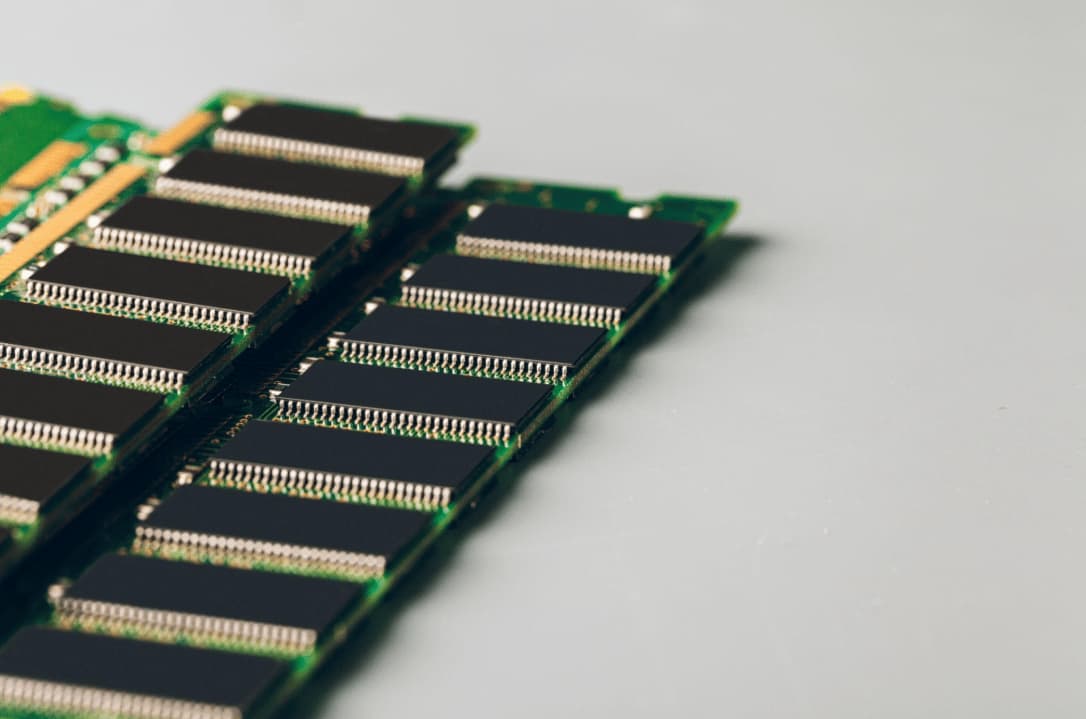
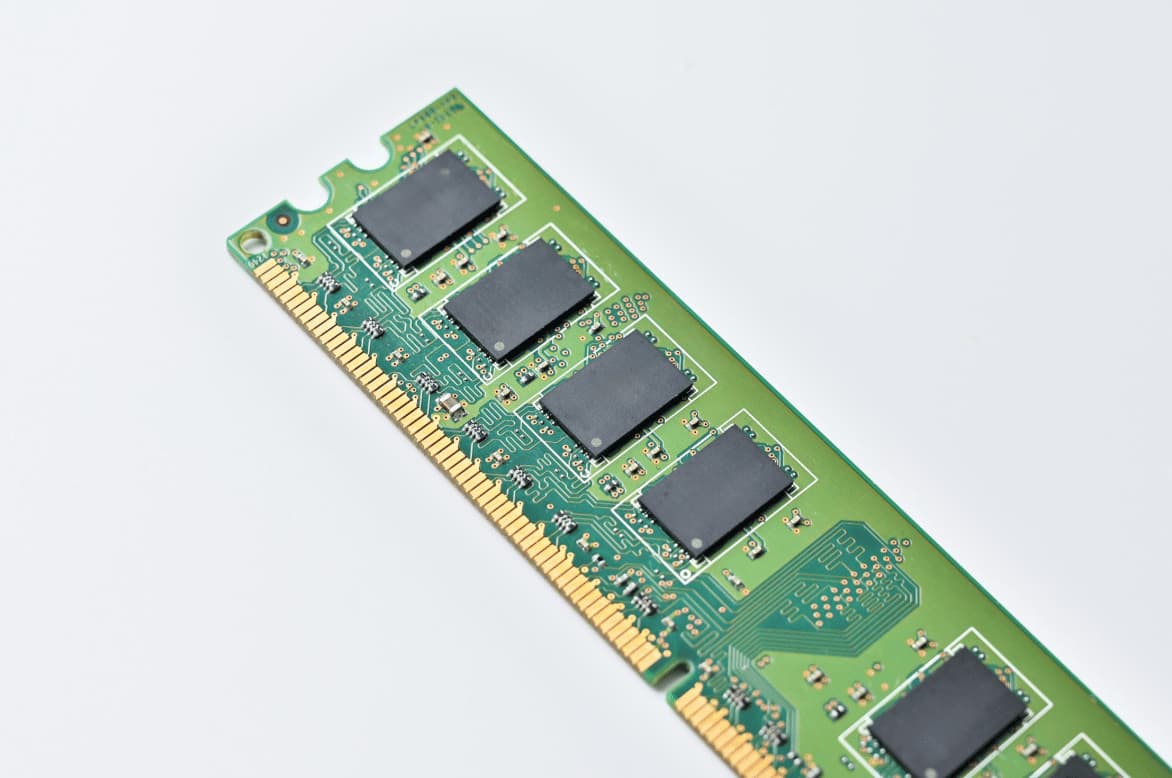
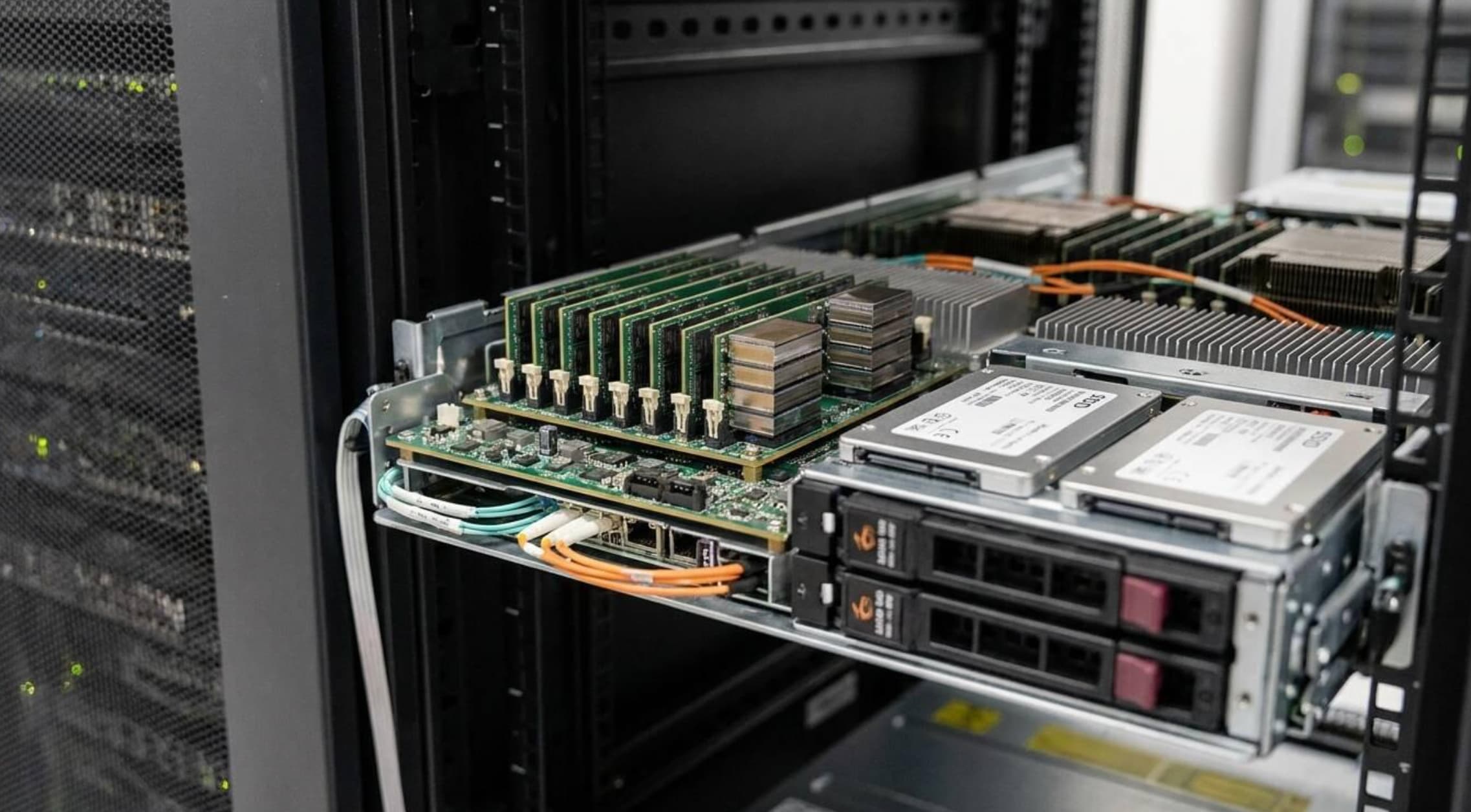
The pitch is deceptively simple, and it has worked with a violence that embarrasses most multi-year funds. High-bandwidth memory — HBM — is the physical bottleneck of AI inference and training at scale. Every Nvidia GPU that ships into a hyperscaler data center requires HBM stacked directly on the die, and three companies — SK Hynix, Samsung Electronics, and Micron Technology — control more than 90% of that market. DRAM holds all three as core positions. SOXX and SMH, the two dominant semiconductor ETFs with a combined tens of billions in assets and decades of track records, hold neither SK Hynix nor Samsung. They are US-listed securities funds by construction. DRAM is not constrained that way.
That structural gap matters enormously right now. SK Hynix is widely regarded by supply chain analysts as the leading supplier of HBM3E — the generation of memory currently shipping into Nvidia's Blackwell and successor architectures. Samsung is fighting to close the qualification gap. Micron, the lone American in the triad, is ramping HBM3E capacity aggressively after years of trailing its Korean rivals. The story is not a single earnings quarter; it is a multi-year capex and yield-ramp cycle, and DRAM is the only large, liquid US-listed vehicle that gives retail traders clean exposure to all three legs of that stool.
The $25 Billion Velocity Story
The asset accumulation pace is worth sitting with. DRAM launched in April 2026. By July 7 it had crossed $23 billion, and the latest data puts it above $25 billion. For context, ETF inflows topped $1 trillion year-to-date through June, with June alone contributing $191 billion — the second-best single month ever recorded. DRAM captured nearly $10 billion of that June haul alone, ranking it second for the month behind only IVV, the iShares Core S&P 500 ETF, which has been gathering assets for over two decades. SOXX, by comparison, collected $4.1 billion in June — a strong number for an established fund, but less than half of what DRAM pulled.
The buyer base appears to be a combination of retail momentum chasers and institutional allocators who needed a vehicle that didn't exist before April. The $4.3 billion that flowed into IALT — an active alternatives ETF — in June suggests model portfolio rebalancing is a meaningful force in current ETF markets. Something similar may be happening with DRAM: once a ticker clears a certain AUM threshold, it becomes eligible for inclusion in model portfolios run by RIAs and wirehouses, which creates a second, more durable inflow engine on top of the speculative retail bid. The fund's ranking as sixth among all US-listed ETFs by H1 inflows — competing against products that have existed for a decade or more — underscores how quickly that institutional flywheel can spin up.
The Risk Register Traders Can't Ignore
None of this means DRAM is a one-way trade from here. Three risk factors deserve explicit attention. First, the valuation question: a 166% gain in 11 weeks compresses future expected returns mathematically, and HBM pricing is subject to the same commodity-cycle dynamics that have destroyed memory chip investors repeatedly over the past 30 years. SK Hynix and Samsung trade in Seoul; any sharp won depreciation or Korean market dislocation hits DRAM's NAV directly in ways that SOXX and SMH holders never have to model.
Second, the concentration risk is real. When three companies control 90% of a market, a single negative development — a yield problem at SK Hynix's HBM3E line, a Micron earnings miss on margin guidance, a Samsung capacity dump — hits all three names simultaneously. There is no diversification buffer inside the fund's core thesis. SOXX's +113% YTD performance has been achieved with far broader sector exposure across chip designers, equipment makers, and foundries. DRAM is a pure-play bet, which cuts both ways.
Third, the rare week of net ETF outflows ending July 3 — roughly $3.7 billion in redemptions, partly driven by mechanical SpaceX-related rebalancing in Russell-tracking funds — is a reminder that technical flows can overwhelm fundamental narratives in the short run. Any quarter-end or index-rebalancing event that forces large funds to liquidate risk assets will hit DRAM harder than a diversified semiconductor ETF, simply because of its concentration and the still-shallow secondary liquidity in its underlying Korean-listed names relative to its AUM.
The forward-looking trade setup: yesterday's CPI print showed core inflation at 2.6% year-over-year, with the headline at 3.5%. That is not a number that forces the Fed's hand — SOFR sits at 3.6% and the Fed Funds effective rate is 3.62% — but it is soft enough to keep rate-cut optionality alive, which is precisely the macro backdrop that has powered growth and semiconductor stocks throughout Q2. CNBC's market coverage from yesterday's session noted the S&P closed at 7,543.59, up 0.38%, with semis doing the heavy lifting. If the 10-year yield — currently 4.62% — continues its gradual drift lower on softer inflation data, DRAM's multiple expansion trade has more runway. The specific level to watch: a 10-year yield break below 4.50% would likely trigger the next leg of momentum buying in high-growth tech and memory names. Conversely, any upside inflation surprise in the July CPI release — due in mid-August — that pushes the 10-year back toward 4.80% would be the clearest near-term risk-off signal for DRAM holders.
The Weekly Investor
Daily market analysis for active traders. Free.