Dow Hits Record 52,900 as Semis Bleed Into Holiday
The Dow closed at a record 52,900 Thursday while the Nasdaq dropped 0.8% on chip carnage. Here's the full setup heading into Monday's open.
Key Points
- The Dow closed at a record 52,900.07 Thursday while the Nasdaq lost 0.80% as the PHLX Semiconductor Index extended a two-day rout that has shaved roughly 6.7% from chip stocks.
- A badly missed June jobs report — just 57,000 payrolls added versus roughly 115,000 expected — shifted Fed calculus toward dovish, lifting blue chips while punishing growth names reliant on sustained earnings momentum.
- Traders should watch the SOX for a technical bounce attempt Monday and track SpaceX's Nasdaq-100 inclusion, effective July 7, which triggers mandatory passive buying at Monday's close.
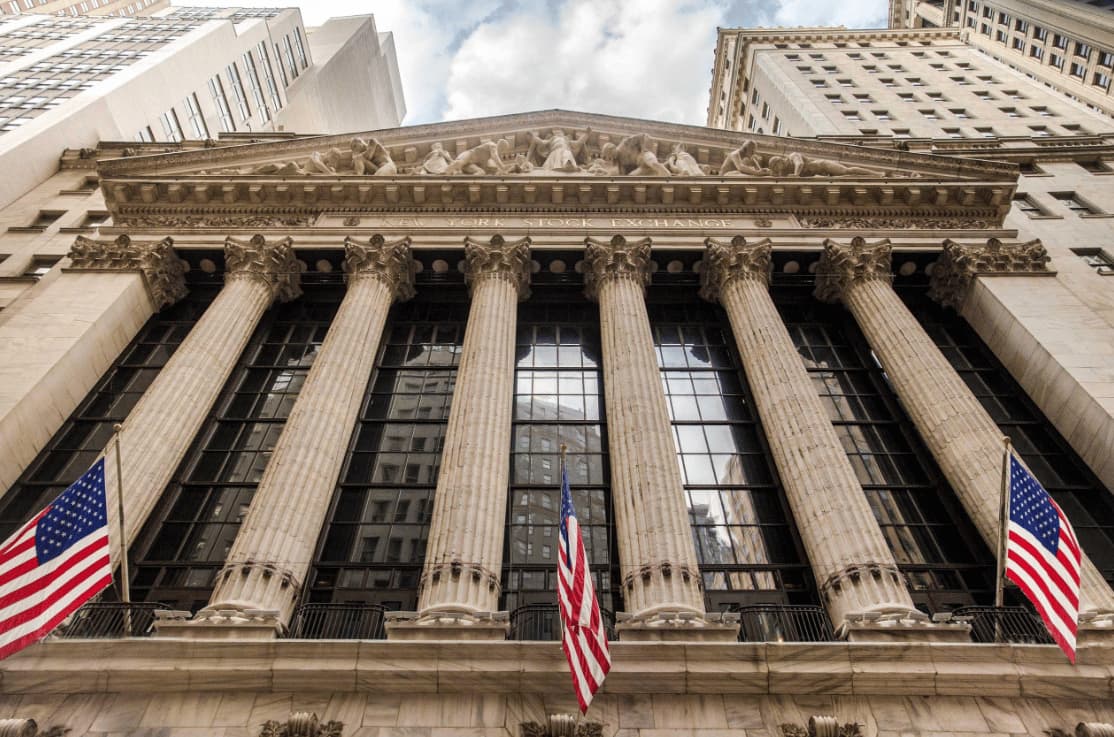
The number you need walking into Monday: 52,900.07. That is the Dow's record close from Thursday's abbreviated session, achieved the same day the Nasdaq dropped 0.80% and chip stocks continued a two-session collapse that has erased tens of billions in semiconductor market cap. The divergence is not noise — it is the defining rotation trade of summer 2026, and you have 64 hours to position before Monday's open.
The Jobs Miss That Moved Everything
June nonfarm payrolls landed at 57,000 — roughly half the consensus estimate and a sharp deceleration from prior months, which were themselves revised lower. The unemployment rate held at 4.2%, but the headline creation number was the shock. The Bureau of Labor Statistics dropped the data a day early due to the Independence Day holiday, which meant traders had to absorb it during Thursday's already-shortened session, with stocks closing at 1:00 PM ET and bonds at 2:00 PM ET. That compressed timeline amplified every move.
The market's read was straightforwardly dovish. Weaker payrolls reduce the Fed's rationale for additional tightening, and with the fed funds effective rate already at 3.63% and SOFR at 3.66%, any pivot narrative gets oxygen from a number like 57,000. Chris Zaccarelli, CIO at Northlight Asset Management, framed it directly: prior months' numbers were revised lower too, compounding the miss. More importantly for rate-sensitive positioning, Fed Chair Kevin Warsh went on record this week saying inflation risks have eased substantially — a notable softening from a chair who took office with hawkish credibility. Core CPI sits at 2.8% year-over-year as of May, still above the 2% target, but the trajectory matters as much as the level.
The bond market's reaction was telling. The 10-year Treasury yield stood at 4.48% as of Wednesday's close, and the 2-year at 4.17% — a positive 31-basis-point spread that marks a curve no longer inverted. A jobs miss of this magnitude typically compresses the front end faster than the long end, which steepens the curve further and is a direct tailwind for financials, regionals, and yield-sensitive industrials. That is exactly what the Dow's record print is reflecting. The S&P 500 finished essentially flat at 7,483.24, splitting the difference between Dow strength and Nasdaq weakness.
The Semiconductor Wreckage
Wednesday's session was the real destruction. The PHLX Semiconductor Index dropped 6.7% in a single day after roughly doubling during Q2 — a staggering run that left valuations stretched and any negative catalyst with enormous downside leverage. Sandisk, Micron, Applied Materials, and Lam Research each fell approximately 10% on Wednesday alone. Intel and Marvell dropped close to 9% apiece. These are not rounding errors; this is institutional profit-taking at scale following a quarter where the SOX nearly doubled.
Thursday brought no relief for the sector. The Nasdaq Composite closed at 25,832.67, down 0.80%, dragged by continued chip weakness. The Russell 2000 slipped 0.55% to 2,996.11, just shy of the psychologically important 3,000 level. The specific catalyst behind the Wednesday collapse traced partly to Meta's moves: Bloomberg reported the social media giant plans to enter the cloud business and sell AI computing power directly, a direct threat to AI infrastructure plays. CoreWeave and Nebius Group plummeted on the news, and the contagion spread to the broader semiconductor complex as investors reassessed who captures AI infrastructure margins going forward.
The meta-story here matters for Monday positioning. The SOX fell from an index level that represented roughly a doubling in three months. Even after a 6.7% single-day haircut, mean-reversion math does not automatically make these names cheap. Applied Materials trades on a business cycle that is sensitive to capex decisions at memory fabs, and with WTI crude at $73.59 and global industrial demand signals mixed, the broader environment for cyclical tech spending is not unambiguously supportive. Nvidia filed an 8-K on July 2 — the filing is worth pulling directly from the SEC — and any guidance commentary embedded in that document will shape the opening trade on Monday morning more than most macro data points.
What Traders Watch Next
The single most important mechanical event of the coming week is SpaceX's inclusion in the Nasdaq-100, effective July 7. Inclusion goes effective after Monday's close, which means index-tracking ETFs — QQQ carries roughly $340 billion in assets — must purchase SpaceX shares before Tuesday's open. That is forced, price-insensitive buying. SpaceX shares dropped 7.9% Wednesday after reports the FAA added the company to an internal prohibited investment list, creating a potential discount entry window ahead of mandatory passive demand. Watch the stock Sunday night in pre-market if any venue offers it, and watch QQQ's opening print Tuesday against Monday's close.
Beyond SpaceX, the rotation framework is the week's dominant thesis. Financials benefit from a steeper yield curve and dovish Fed repricing. Small caps, with the Russell 2000 at 2,996.11, need to clear 3,000 to confirm breakout momentum — a level that becomes technically significant on any chart. Rivian's 13% surge Thursday to $19.38 on raised delivery guidance is a signal that consumer-facing growth names with specific catalysts can still attract capital even in a tech-heavy selloff environment. Rivian reports Q2 results July 30, which gives the trade a defined event horizon.
The VIX closed at 16.15 Thursday, down 2.65% on the session — firmly complacent. That reading is consistent with a market that believes the Fed is done tightening and that geopolitical risk, while real, is contained. U.S.-Iran talks are ongoing following last week's strikes, and WTI's 1-month implied volatility, which spiked to 68% last week, has since pulled back to 51%. The spread between implied and realized vol on crude has compressed from 30 points to 14. That compression is either a sign that geopolitical risk is being appropriately priced out, or it is complacency ahead of a weekend when anything can happen. For traders carrying energy positions over the holiday, that asymmetry deserves attention.
The level to watch on Monday: S&P 500 7,500. A clean break and close above that level would be the first since the index's run began, and it would likely require the Nasdaq to stabilize rather than extend its chip-driven losses. If semiconductors catch a bid — and a 6.7% single-session drop in a sector that had doubled does create technical bounce conditions — the S&P clearing 7,500 while the Dow holds its record becomes the bull case for the week. The bear case is a Nasdaq that keeps rolling, dragging the S&P below 7,400 and testing whether the jobs-miss dovish narrative can hold against deteriorating earnings visibility in the sector that drove Q2's entire 20% Nasdaq gain. Monday's open, not Tuesday's SpaceX forced buying, is the first tell.
The Weekly Investor
Daily market analysis for active traders. Free.