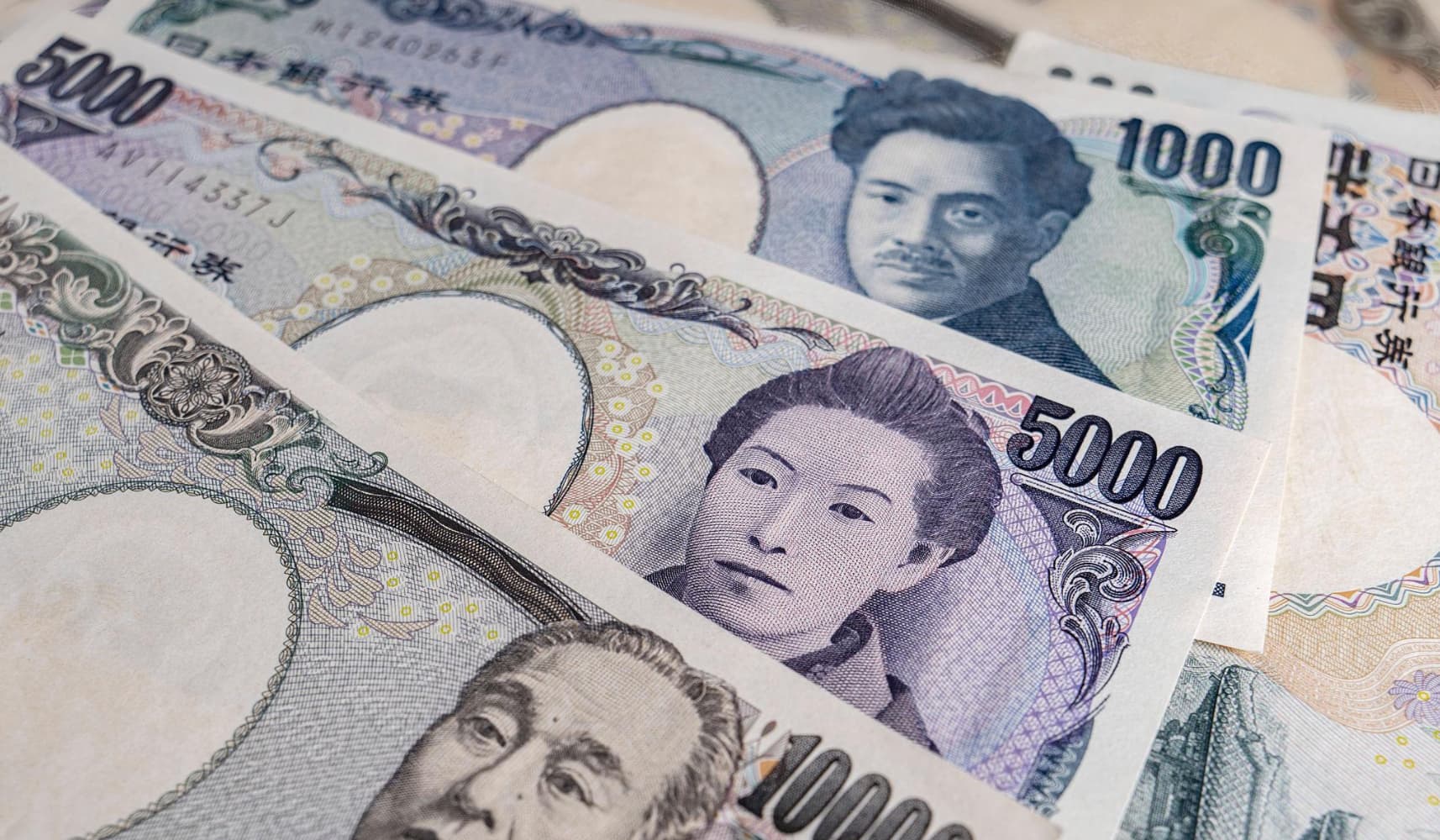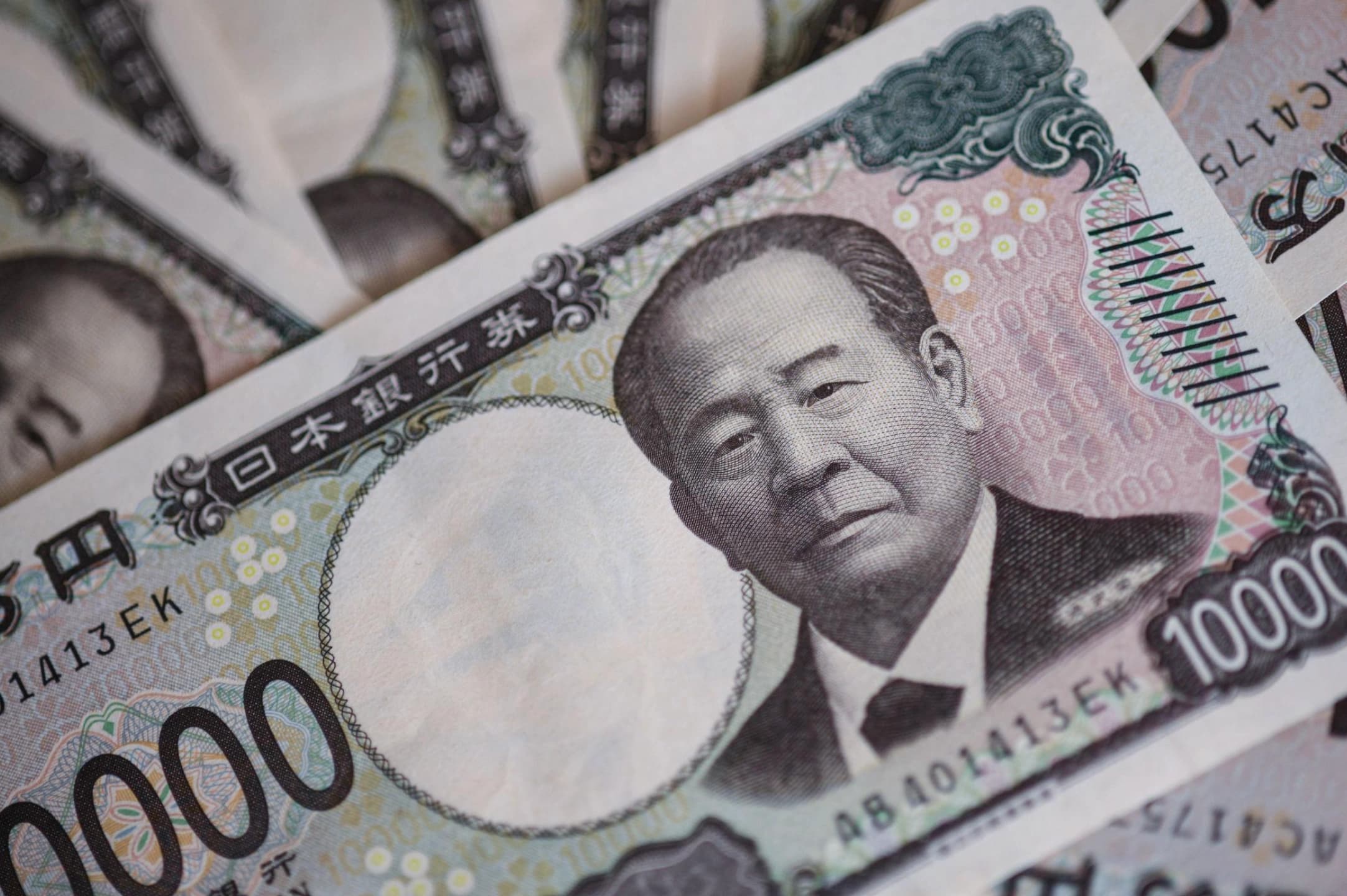

BOJ Hikes, Goldman Targets 165 USD/JPY — Carry Unwind Risk Grows
Bank of Japan raises rates 25bps as Goldman Sachs targets 165 USD/JPY. Here's what the global carry trade repricing means for cross-asset positioning.
Key Points
- The Bank of Japan raised rates by 25 basis points this week, yet Goldman Sachs simultaneously issued a 12-month USD/JPY target of 165 — implying the yen continues to weaken despite tightening, a direct contradiction of traditional monetary policy FX transmission.
- The ECB's June 25bps hike to a 2.25% deposit rate, BOJ tightening, and the Fed holding at 3½–3¾% create a three-way central bank divergence that is actively repricing global carry trade funding costs.
- Watch the USD/JPY spot rate and Japanese equity performance as the leading indicators — if the Nikkei continues hitting record highs post-hike while the yen weakens toward 160+, the carry trade is alive and the unwind risk is being deferred, not eliminated.
The Bank of Japan raised interest rates by 25 basis points this week, Japanese equities responded by hitting record highs, and Goldman Sachs simultaneously holds a 12-month USD/JPY target of 165 — revised up from 155 on July 6. That combination of a tightening central bank, a surging equity market, and a Street-consensus call for continued yen depreciation describes a global macro environment where the traditional rules of FX and rate transmission have been suspended, and where the accumulated stress in the carry trade is growing larger with each passing week rather than unwinding.
Three Central Banks, Three Different Problems
The synchronized-but-divergent global tightening cycle of 2026 has produced a rare three-way policy split with direct cross-asset consequences. The Federal Reserve held its funds rate at 3½–3¾% at the June 17 FOMC meeting, with the dot plot signaling one potential hike before year-end against a backdrop of PCE inflation revised to 3.6% and GDP cut to 2.2%. SOFR is currently printing at 3.63%, consistent with the EFFR target and reflecting a market that is not fully pricing the July 29 hike that Governor Waller threatened. The Fed's problem is stagflationary: too much inflation to cut, too little growth to hike without consequence.
The ECB's problem is structurally different. The June 11 decision to raise all three key rates by 25 basis points — bringing the deposit facility to 2.25%, main refinancing to 2.40%, and marginal lending to 2.65% — was explicitly driven by Middle East war-related commodity inflation. But ECB staff simultaneously cut 2026 GDP projections to just 0.8%, flagging the war's hit to real incomes and confidence. The ECB is tightening into a near-recessionary growth profile, with headline inflation projected at 3.0% for 2026 and core running at 2.5%. That is a central bank being dragged into rate hikes by supply shocks it cannot control, while the demand side of its economy is deteriorating. The Bank of England sits in a similar bind: UK Q2 GDP came in at a stronger-than-expected +0.7% QoQ, which gives the hawkish BOE wing ammunition heading into the August 1 decision — but the May monthly print was a pedestrian +0.1%, and the composite picture is one of an economy running hot in patches while the household sector absorbs 2026's energy price shock.
The BOJ's situation is the most paradoxical of all. The 25bps hike this week marks a continuation of the exit from ultra-loose policy that began in earnest in 2024. Yet the yen has not responded as textbook monetary economics would predict — it has continued weakening, Goldman's 165 target is the most visible expression of Street consensus that this dynamic persists, and Japanese equities hitting record highs post-hike signals that domestic investors are not rotating into yen-denominated assets at a rate sufficient to support the currency. The explanation is carry: the interest rate differential between the dollar and the yen remains enormous. With the Fed funds rate at 3.63% and the BOJ's new policy rate still a fraction of that level even after this week's hike, borrowing yen cheaply and investing in higher-yielding dollar assets remains the dominant trade. A 25bps BOJ hike does not close that gap — it barely narrows it.
The Carry Trade's Expanding Footprint
The global carry trade's exposure has grown substantially through 2025 and into 2026, as the rate differential between Japan and the United States remained near multi-decade extremes for an extended period. Institutional investors, hedge funds, and leveraged accounts have used cheap yen funding to finance positions across U.S. Treasuries, emerging market debt, U.S. equities, and commodity-linked assets. The 10-year Treasury at 4.58% and 2-year at 4.18% represent attractive carry destinations relative to Japanese government bonds that, even post-hike, offer a fraction of that yield. As long as USD/JPY is stable or drifting higher — Goldman's 165 target implies further dollar strength — those carry positions are profitable and self-reinforcing.
The risk is nonlinear. Carry trades do not unwind gradually — they unwind violently, in compressed timeframes, when the funding currency unexpectedly strengthens. The August 2024 carry unwind, triggered by a BOJ surprise hike, saw the Nikkei drop more than 12% in a single session and VIX spike above 65. At that point, USD/JPY had moved from approximately 161 to 142 in a matter of weeks — a 12% appreciation of the yen that decimated the economics of the carry position. Today's setup is arguably more stretched: Goldman is targeting 165, the BOJ has just hiked again, and ECB tightening has added euro-denominated carry competition for the same institutional capital base. The feedback loop that drives a carry unwind — yen appreciation forcing position liquidation which forces further yen buying — is more dangerous the larger the accumulated short-yen position.
The Bank of Korea's policy announcement today adds another layer to the regional central bank picture. South Korea's economy is tightly coupled to Japanese export competitiveness dynamics; a weakening yen is a direct headwind to Korean exporters competing in global markets for the same customers. BOK policy decisions are increasingly being shaped by this FX channel rather than purely domestic inflation considerations, and any surprise from Seoul today would ripple through Asian FX trading into the European and U.S. sessions. The Swiss National Bank's July meeting minutes, also released today, will reveal how SNB policymakers are thinking about the safe-haven franc in an environment where two major central banks — the Fed and the ECB — have both hiked in recent months while growth slows.
What Traders Watch Next
The specific trigger level for carry trade stress is USD/JPY, not the BOJ rate decision itself. Goldman Sachs revised its 12-month USD/JPY target to 165 on July 6 — but the path to 165 runs through several potential disruption points. If today's U.S. retail sales data prints materially weak and the growth scare narrative takes hold, dollar demand softens and USD/JPY could retrace sharply toward 150, the level that historically coincides with increased carry liquidation pressure. Conversely, if retail sales beat and Waller's July 29 hike threat stays live, the dollar-yen differential widens further and carry positions are extended, pushing spot closer to Goldman's target.
The cross-asset read that matters most is not the yen itself but the correlation between the Nikkei and USD/JPY. When Japanese equities rise alongside a weaker yen, foreign investors in the Nikkei are getting paid in a depreciating currency — which typically prompts FX hedging that mechanically supports yen demand. If that hedging demand disappears — as it does in a risk-off scenario — the yen can move 3-5 figures in hours. The setup for the next two weeks is binary: between now and the July 29 FOMC decision, U.S. data determines the dollar's direction, the dollar determines the yen's direction, and the yen determines the single largest latent risk in global markets. The DXY, currently reflecting a Fed-on-hold assumption, is the instrument to watch — a break above the 104 level on a strong retail sales print this morning reopens the conversation about whether Goldman's 165 USD/JPY call gets pulled forward from a 12-month horizon to a 6-month one.
The Weekly Investor
Daily market analysis for active traders. Free.