Boeing Craters 7% as FAA Blocks 737 Max 10 Certification
Boeing shares fell nearly 7% Monday after the FAA refused to certify the 737 Max 10 over a new software glitch — the Dow's worst single-stock drag.
Key Points
- Boeing shares fell 6.88% Monday — the steepest single-session decline in the Dow — after the FAA said it will not certify the 737 Max 10 until a newly identified software glitch is resolved.
- The software flaw can disable an automated navigation function during a landing following a missed approach, a scenario the FAA will not accept without full evaluation.
- Watch for Boeing's formal response to the FAA and any timeline on a software fix; without a certification path, the 737 Max 10 backlog remains commercially stranded.
Boeing dropped 6.88% Monday — shedding roughly $10 billion in market capitalization in a single session — after the Federal Aviation Administration announced it would halt certification of the 737 Max 10 until regulators finish assessing a newly discovered software defect. The stock had already flagged the damage in premarket, falling 1.9% after The Wall Street Journal first reported the glitch, but the FAA's midday statement turned a manageable dip into the worst day for Boeing shares in months and the single largest drag on the Dow Jones Industrial Average.
The Glitch That Grounded a Certification
The software defect in question is not a minor calibration issue. According to reporting first published by The Wall Street Journal — confirmed in premarket coverage tracked by Yahoo Finance — the flaw can disable an automated navigation function specifically during a landing sequence that follows a missed approach. That is one of the highest-workload, highest-risk moments in commercial aviation: a crew has already committed to a landing, aborted it, and is now executing a go-around under potential stress, reduced visibility, or both. An automated navigation failure in that window is exactly the category of scenario that regulators scrutinized with extreme intensity after the 737 Max 8 crashes in 2018 and 2019.
The FAA's decision to pause certification rather than work alongside Boeing to patch the issue simultaneously signals the agency's posture has not softened. Post-737 Max crisis, the FAA stripped Boeing of certain self-certification authority and has operated under congressional pressure to demonstrate independence. Monday's move is the regulator publicly demonstrating that independence at Boeing's expense — again. The certification freeze is not a rejection, but in commercial aviation terms, a pause without a defined timeline is functionally equivalent until Boeing produces a verified fix and the FAA schedules a new evaluation window.
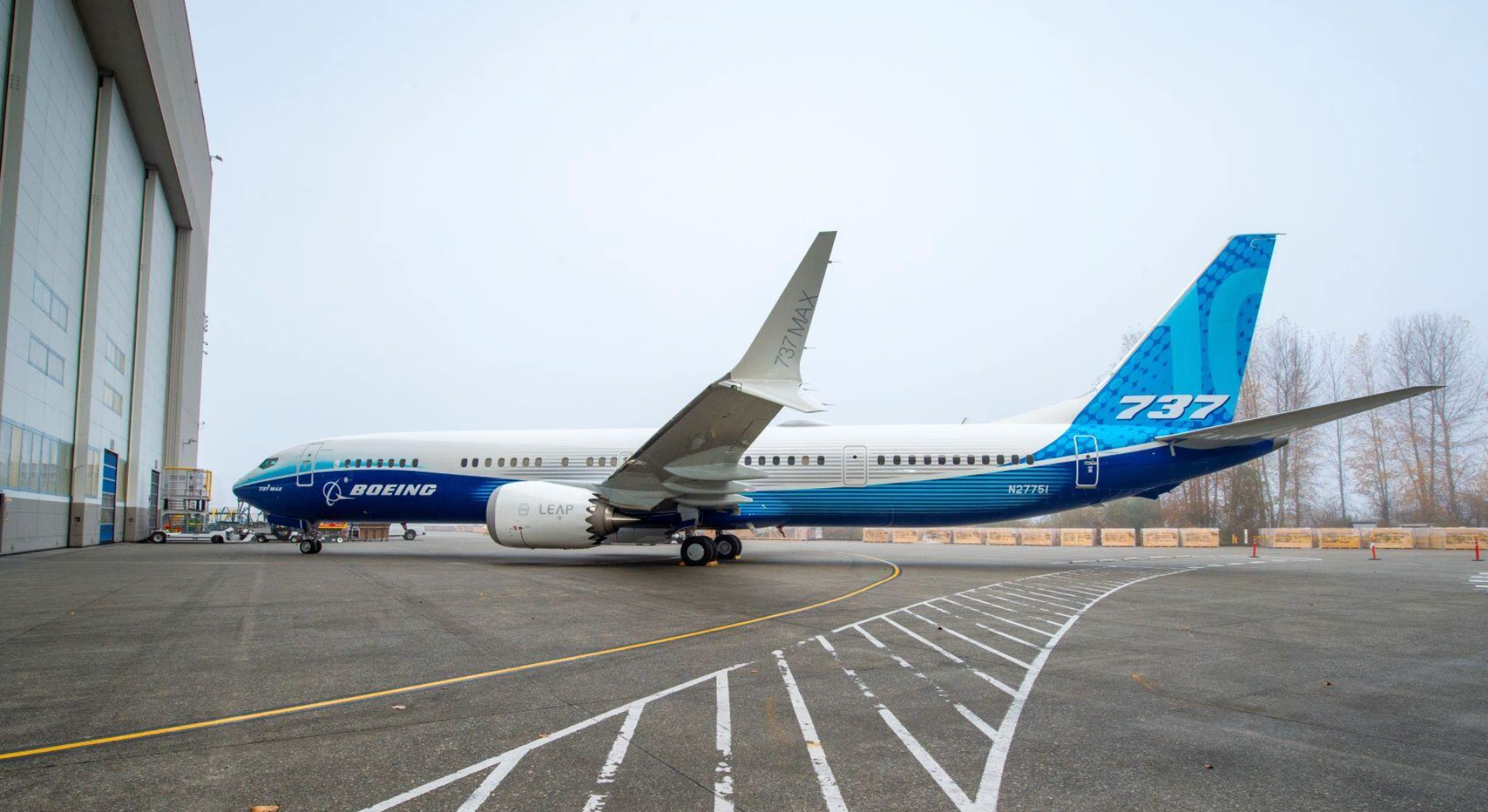
For investors, the critical issue is what this means for Boeing's delivery schedule and its relationship with airline customers who have the 737 Max 10 on order. The Max 10 is the largest variant in the 737 family and competes directly with the Airbus A321neo — itself one of the best-selling narrowbody aircraft in commercial history. Every month the Max 10 certification slips, airlines assess whether to hold their order positions or accelerate their pivot toward Airbus. Boeing cannot afford to lose that battle a second time.
What the Balance Sheet Cannot Absorb
Boeing entered 2026 in a financially fragile position. The company has burned through significant cash reserves managing production rate increases, labor negotiations, and the residual legal and regulatory costs from the Max crisis. Its debt load remains elevated, and its credit ratings have only partially recovered from the downgrades that followed the original grounding. A certification delay on the Max 10 does not immediately trigger a cash event — Boeing still collects progress payments on orders — but it delays the final delivery payments that represent the highest-margin portion of each aircraft sale.
The broader market context compounds the pressure. With the 10-year Treasury yield now above 5.2% — a level last seen in 2007 — Boeing's cost of capital has risen materially. The company issued long-duration debt during the low-rate era, but any new financing required to bridge production gaps or manage a prolonged certification timeline will be executed at rates that would have been unthinkable three years ago. Monday's close at a level reflecting a 6.88% loss also moves Boeing's stock further from levels where management would feel comfortable executing a secondary equity offering without severe dilution. The financial toolkit is narrowing precisely when operational problems are widening.
The Dow's Monday decline of 346.90 points to 51,481 was disproportionately Boeing's story. The next two largest drags — Salesforce at -2.88% and IBM at -2.09% — were meaningful, but neither represents a structural regulatory problem. Boeing's issue is categorically different: it is an open-ended government action with no announced resolution date, affecting a specific aircraft variant that the company's long-term revenue model depends upon.
What Traders Watch Next
Tuesday's premarket has Boeing stabilizing, but the stock's near-term path is almost entirely dependent on two datapoints that do not yet exist: Boeing's public response to the FAA detailing a software fix timeline, and the FAA's indication of how long its own evaluation will take once a fix is submitted. CNBC's live market coverage noted the FAA statement came without a remediation schedule, which means the market is pricing open-ended regulatory risk rather than a defined setback.
Options traders should note that Monday's move has likely repriced near-term implied volatility in BA significantly. Any trader considering a long position as a bounce play needs to identify whether they are buying a valuation argument or a catalyst argument — because without a specific FAA-Boeing timeline announced, there is no near-term catalyst to close the gap. The valuation argument requires a view that Monday's selloff overshot, which is possible but demands conviction that the software fix is straightforward and the FAA's posture will not harden further.
The technical level to watch is Boeing's 52-week trading range. A close below the lower bound of that range on elevated volume would signal institutional distribution rather than retail panic — a structurally different and more bearish signal. Conversely, a formal Boeing statement before Friday's close that includes a credible software patch submission date to the FAA could generate a sharp technical recovery given Monday's severity. The September 30 quarter-end is also a factor: portfolio managers with large BA positions face a mark-to-market decision before the books close Tuesday. Any forced repositioning around quarter-end — in either direction — could amplify moves that the underlying fundamental news alone would not justify. The first hard signal will be whether Boeing issues a press release before Tuesday's open or stays silent, which itself communicates something about how fast a fix is actually coming.
The Weekly Investor
Daily market analysis for active traders. Free.