AVAV Surges 20% After Hours on Q4 Beat: Fade Risk
AeroVironment jumped 20.6% after hours on a Q4 revenue beat, but FY2027 EPS guidance of $3.02–$3.34 vs. $3.98 estimated signals a fade setup.
Key Points
- AeroVironment's Q4 FY2026 revenue beat consensus, but FY2027 adjusted EPS guidance of $3.02–$3.34 came in 24% below the $3.98 Street estimate at the midpoint.
- The +20.6% after-hours surge to $167.59 reflects the revenue beat and defense sector momentum, but the embedded EPS guidance miss creates a classic setup for a Wednesday open fade.
- Traders should watch whether AVAV holds the $155 level at Wednesday's open — a failure there confirms the fade and opens a path back toward the $140–$145 consolidation zone.
AeroVironment posted a Q4 FY2026 revenue beat that sent shares rocketing +20.6% to $167.59 in after-hours trading Monday — but embedded inside that headline number is a FY2027 adjusted EPS guidance range of $3.02–$3.34 that sits 24% below the $3.98 Street consensus at the midpoint. That divergence between a strong backward-looking revenue print and a weaker-than-expected forward earnings guide is one of the most reliable setups for a morning fade in small-to-mid-cap defense names, and experienced traders are already mapping the levels.
The Beat That Built the Pop
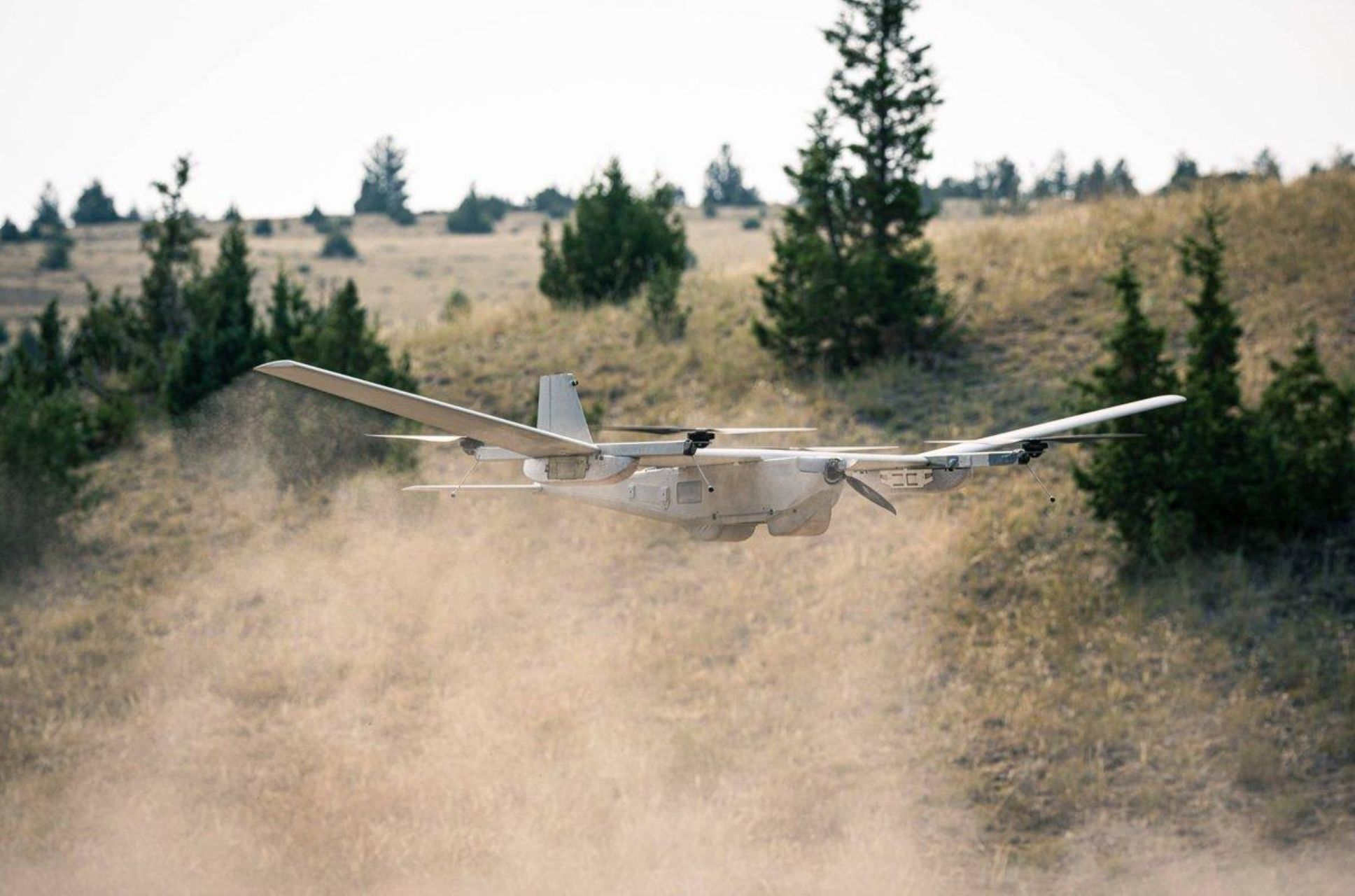
AeroVironment's Q4 revenue came in ahead of what analysts had modeled, capping a fiscal year defined by accelerating demand for unmanned aerial systems in both domestic defense procurement and international allied sales. The company's Switchblade loitering munitions program and the JUMP 20 medium-altitude long-endurance UAS have been among the most visible beneficiaries of post-Ukraine defense spending realignment across NATO and partner nations. Revenue growth in the quarter reflected contract deliveries that had been pushed from earlier quarters, a timing element that the sell-side had partially anticipated but apparently underweighted.
The defense sector broadly has been a consensus overweight trade through the first half of 2026, with the argument straightforward: elevated geopolitical risk, rising allied defense budgets under NATO's 2% GDP commitment pressure, and a domestic procurement cycle that accelerated meaningfully after FY2025 supplemental authorizations. AeroVironment has been one of the cleaner pure-play beneficiaries in that theme — the company sits in the tactical UAS segment where barrier to entry is high, program switching costs are significant, and the contract backlog provides multi-year revenue visibility that larger defense primes cannot always claim. That narrative fully explains why a revenue beat produced a 20.6% after-hours surge: traders who had been waiting for confirmation of the thesis bought the print aggressively.
The Guidance Miss That Changes Everything
The problem is the EPS. A FY2027 adjusted EPS guidance range of $3.02 to $3.34 against a Street consensus of $3.98 is not a rounding error — it is a 14% to 24% miss depending on where in the range the company ultimately lands. At the midpoint of $3.18, the miss is approximately 20%. For a stock trading at $167.59 in after-hours, that implies a forward P/E of roughly 52x on the company's own guided earnings — a multiple that is defensible in a high-growth software or AI infrastructure name, but that requires a significant narrative premium in a defense hardware manufacturer facing real cost pressures.
What drives the EPS guide below consensus? Management has not yet provided a full bridge on the call, but the likely culprits are identifiable. First, program mix shift: higher-revenue contracts in international markets frequently carry lower margins than domestic cost-plus programs, and an international sales acceleration that boosts top-line can compress adjusted earnings margins simultaneously. Second, R&D investment: AeroVironment has been accelerating investment in next-generation loitering munitions and autonomous swarm capabilities, expenditures that hit the income statement immediately but generate contract value over a 24-to-36-month horizon. Third, supply chain normalization costs: the tactical UAS supply chain, particularly for propulsion components and guidance electronics, remained elevated in cost through mid-2026 even as broader industrial supply chains normalized, a dynamic that the company had flagged on prior calls.
The critical point for traders is that none of these factors are business-threatening — they are timing and investment-cycle issues that compress near-term EPS without impugning the long-term thesis. But the stock market prices near-term EPS, and a 20% guidance miss against consensus is a concrete number that forces institutional holders to revise their models downward and, in many cases, to trim positions to manage tracking error against benchmarks. That selling pressure is what creates the fade opportunity.
Mapping the Wednesday Open
The after-hours pop to $167.59 represents a roughly 25% premium to where AVAV was trading in the regular session prior to the earnings release. After-hours moves of this magnitude in mid-cap names frequently compress at the open as institutional sellers who were locked out of the after-hours session hit the market on the first available print. The question is not whether there will be selling pressure at Wednesday's open — there will be — but where that selling exhausts itself and whether the underlying bull thesis provides a floor.
The technical structure matters here. AVAV had been consolidating in the $130–$145 range for much of May and early June before the earnings catalyst. A 20.6% after-hours gain puts the implied open in the $155–$165 range depending on overnight flow. The $155 level is the first meaningful test: if the stock opens above $155 and holds through the first 30 minutes of trading, the bull case is that institutional buyers stepped into the guidance miss and are defending the position. If it opens at $162 and immediately fades through $155 on volume, the classic fade pattern is confirming and the next support is back in the $140–$145 zone.
The sector context adds a layer of complexity. Defense names have been bid aggressively on geopolitical risk premiums that are themselves volatile — President Trump's announcement Monday that US-Iran peace talks will resume Tuesday took some of the acute geopolitical tension off the table, a marginal headwind for defense sector sentiment precisely at the moment AVAV is trying to hold its after-hours gains. The broader defense drone and UAS theme remains structurally intact, but sentiment-driven sector tailwinds are thinner Wednesday than they were Monday.
Position sizing is the practical takeaway. Traders who want exposure to the AeroVironment thesis have a binary at Wednesday's open: either the institutional sponsorship is strong enough to absorb the EPS guide revision and the stock establishes a new range above $155, or the fade plays out and offers a better entry point in the $140s with the same long-term thesis intact. Chasing the open above $160 on a print that contains a 20% EPS guidance miss versus consensus — in a stock that had already run 25% in after-hours — is a risk-reward profile that favors waiting. The specific trigger to watch: if AVAV closes Wednesday above $158, the fade thesis is invalidated and the new base is established. The FY2027 revenue guide and any contract backlog disclosures on the earnings call, expected to be available in transcript form by Wednesday morning, will set the tone for the next 30 trading days.
The Weekly Investor
Daily market analysis for active traders. Free.