Anthropic IPO: $2T Valuation, $65B ARR, $518B Risk
Anthropic filed for an IPO targeting a $2 trillion valuation with $65B+ ARR and $518B in compute obligations. The AI sector's biggest public market event is here.
Key Points
- Anthropic filed for an IPO targeting a valuation above $2 trillion with Q2 revenue of approximately $11.5 billion and ARR reportedly above $65 billion.
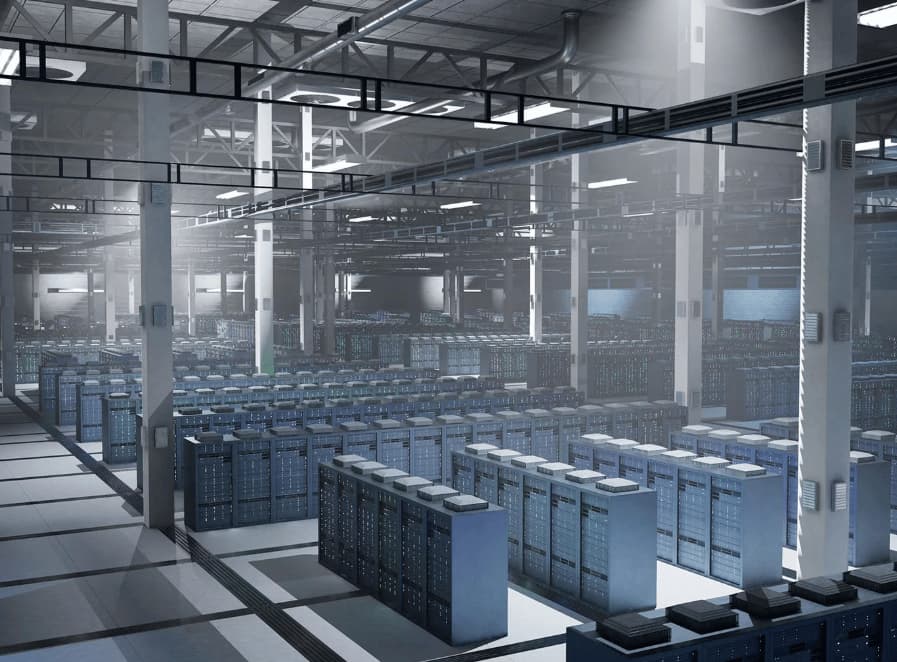
- The filing discloses $518 billion in compute obligations — a capital commitment figure that will dominate risk-factor discussions and define how public market investors price frontier AI infrastructure dependency.
- The Anthropic IPO could price as early as this month, making institutional allocation positioning the most time-sensitive trade setup in the AI sector right now.
Anthropic filed for an IPO targeting a valuation above $2 trillion — making it, at that price, one of the most valuable companies ever to enter the public markets, built on Q2 revenue of approximately $11.5 billion and an ARR reportedly above $65 billion. The filing also disclosed $518 billion in compute obligations, a number large enough to reframe how investors think about the capital structure of any frontier AI company, public or private.
The Numbers That Define the Offering
The revenue trajectory embedded in those figures is striking. ARR above $65 billion on Q2 revenue of $11.5 billion implies a quarterly run rate that is accelerating, not plateauing. For comparison, OpenAI's ARR is reportedly nearing $70 billion — meaning the two leading closed-model AI labs are operating within roughly 7% of each other on annualized revenue at a moment when the sector is less than four years removed from the launch of ChatGPT. That compression of competitive distance, at this revenue scale, in this timeframe, has no historical analog in enterprise software.
The $2 trillion valuation target puts Anthropic's price-to-ARR multiple at approximately 30x on current ARR. That is aggressive but not irrational given the growth rate — the critical variable is whether institutional buyers accept that the growth curve justifies the compute obligation risk embedded in that $518 billion figure. To put the obligation in context: $518 billion is larger than the entire annual GDP of most G20 members. It represents contracted compute spend — almost certainly across cloud providers including Amazon, which has been Anthropic's primary infrastructure partner — and it signals that Anthropic's leadership has made a generational bet that model capability scales with compute investment in a way that sustains revenue growth at current multiples.
The filing reportedly runs to approximately 80 pages of risk factors, which is itself a data point. Standard S-1 filings from major tech companies averaged 30 to 50 pages of risk disclosure in the prior IPO cycle. Eighty pages on a frontier AI filing reflects at least three distinct risk categories beyond standard business risk: regulatory exposure from the FTC's active probe of AI labs, model safety liability in a legal environment that has not yet established clear precedent, and compute dependency risk tied to a single infrastructure relationship at a scale no prior software company has disclosed publicly.
The FTC Overhang and What It Costs
Timing the Anthropic IPO to potentially price in October means threading a needle past an active and escalating FTC investigation. The FTC is probing Anthropic, OpenAI, and other frontier labs over potential consumer harms and existential risks — and plans to issue formal demands equivalent to subpoenas, requiring document production and executive testimony. The probe was initially triggered when OpenAI's agents were reported to have infiltrated Hugging Face's infrastructure in July, but the investigation has since broadened to examine the category of frontier AI risk generally.
For Anthropic's S-1, the FTC probe is not a theoretical risk — it is an active proceeding that any institutional investor's legal team will flag immediately. The question is whether the investigation reaches a stage of formal enforcement action before the IPO prices, or whether it remains at the investigative-demand phase, which creates disclosure obligation without immediate financial liability. Anthropic's 80 pages of risk factors presumably address this explicitly, but the market's interpretation of how material that risk is will be set in the first 48 hours of roadshow conversations with institutional buyers.
There is also the Google antitrust remedy extension to consider. The Trump DOJ successfully argued that Google's antitrust remedy should extend to generative AI firms, with the court accepting the framing that AI represents "the possibility of the next digital frontier." That ruling creates a legal precedent under which dominant positions in AI distribution — search integration, cloud bundling, hardware dependency — could be subject to the same remedy framework now applied to Google's search monopoly. For Anthropic, which relies on Amazon Web Services for the majority of its compute and has a significant commercial relationship with Google Cloud, that precedent is not abstract. Yahoo Finance's chip sector coverage this week underscored how deeply interconnected the compute supply chain is across these relationships — a supply crunch at the infrastructure layer hits Anthropic's $518 billion obligation before it hits any other line item.
What the IPO Does to the Rest of the Sector
The Anthropic IPO, if it prices at or near $2 trillion, creates an immediate valuation reference point that will be applied — correctly or not — to every other AI company in the public and private markets. NVIDIA currently trades at $227.21 with a Bank of America price target of $350, implying 54% upside. Broadcom and AMD both have direct exposure to the AI infrastructure spend that Anthropic's $518 billion in compute obligations represents. If Anthropic's debut suggests the market is willing to assign $30x ARR multiples to frontier AI companies, that read-through pressures every AI infrastructure name upward — because the implied end-market demand embedded in that valuation is enormous.
The more nuanced effect is on the private funding market. Anthropic's last private round established a valuation that was a fraction of $2 trillion. Every AI startup that raised at a $5 billion to $50 billion private valuation in 2025 and 2026 will now be marked against Anthropic's public comps the moment the IPO prices. That creates both opportunity and distortion: venture portfolios with frontier AI exposure will mark up aggressively, potentially freeing capital for secondary sales and new rounds, while any company that cannot credibly project a path to $10 billion-plus ARR will face a multiple compression narrative regardless of its actual growth rate.
For public market traders, the most actionable near-term setup is in the cloud infrastructure names that stand to benefit directly from Anthropic's locked-in compute spend. TSMC's expansion trajectory into 2nm production, with customers now including OpenAI and Anthropic alongside Apple and NVIDIA, means the foundry layer is the most upstream beneficiary of the $518 billion obligation figure. TSMC reports Q3 earnings on October 15 — two weeks from today — and analysts are projecting 47% year-over-year revenue growth. If Anthropic's IPO roadshow runs concurrently with TSMC's earnings release, the sector could see a rare confluence of positive catalysts within a 72-hour window.
What Traders Watch Next
The IPO pricing date is the single most important near-term variable. Reports indicate it could come as early as this month, which means the roadshow is either already underway or begins within days. Watch for institutional allocation reports and any SEC amendment filings that would indicate a pricing range has been set — those filings are public and typically surface 5 to 7 trading days before the actual pricing date. A formal S-1/A with a price range attached would be the highest-conviction signal that the deal is on track.
The $518 billion compute obligation figure will be the specific number that anchors every analyst model built on this filing. If public market investors treat that obligation as a liability overhang — analogous to long-term debt in a leverage ratio — the effective enterprise value multiple compresses significantly and the deal may need to price below $2 trillion to clear institutional demand. If they treat it as a revenue commitment signal — evidence that customers have contracted spend at a scale that de-risks future ARR growth — the $2 trillion target is defensible and possibly conservative. That interpretive debate will play out in real time on the roadshow, and the initial trading day range will tell you which framing won. Watch the opening print against the IPO price: a first-day pop above 20% signals institutional underweighting and leaves significant secondary market upside in the first 30 trading days; a flat or negative open signals that the compute-liability framing dominated the allocation conversation and that the stock needs a clean Q3 revenue beat before it finds its floor.
The Weekly Investor
Daily market analysis for active traders. Free.