AMD Surges 6.5%: What's Behind Friday's $31 Pop
AMD jumped 6.5% to $514.39 on Friday August 15. An 8-K filed Monday explains the catalyst — here's what traders need to know now.
Key Points
- AMD closed Friday at $514.39, a gain of exactly 6.50% from its prior close of $483.01, on volume that signals institutional participation.
- The company filed an 8-K with the SEC on August 17, the first business day after the move, pointing to a material corporate development as the likely catalyst.
- With AMD's next earnings report not expected until late October, Friday's move sets a new technical base — and whether it holds above $500 this week determines the trade.
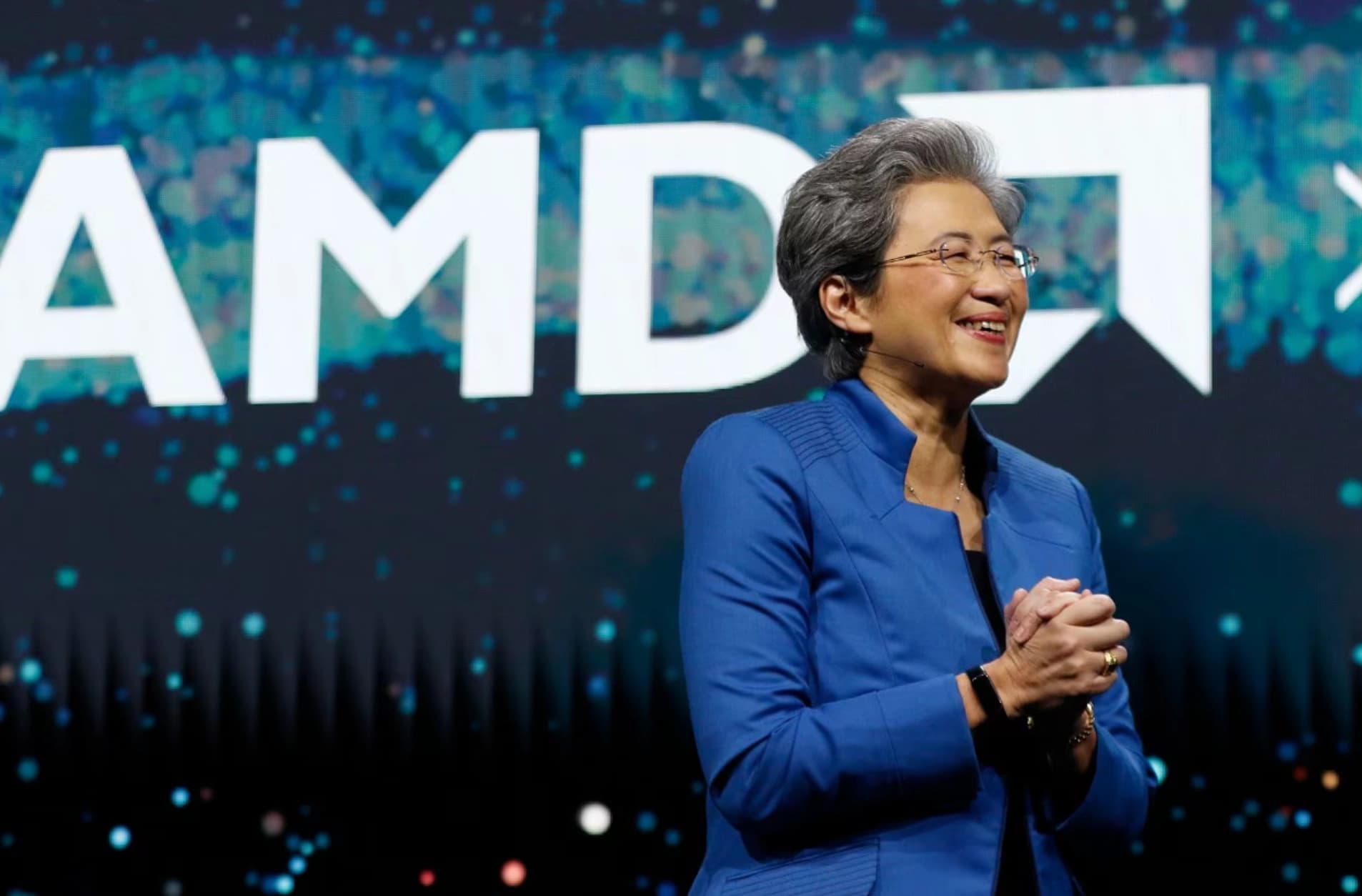
Advanced Micro Devices closed Friday at $514.39, up exactly 6.50% from its prior close of $483.01 — a $31.38 single-session gain that ranked among the largest dollar moves in the stock's recent history and arrived alongside an 8-K filing submitted to the SEC on Monday, August 17. In semiconductor stocks of AMD's scale, a move that size without an earnings release attached to it demands scrutiny. The filing, the macro backdrop, and the competitive dynamics around AI chip demand all converge on a single question for traders this Tuesday morning: is $500 a new floor, or a ceiling?
The 8-K and What It Signals
AMD filed an 8-K with the Securities and Exchange Commission on Monday, August 17 — the first trading day after Friday's surge — under SEC accession number visible at the agency's EDGAR database. An 8-K is a current report used to disclose material events that shareholders need to know about: executive changes, material agreements, asset acquisitions, or other developments that don't fit the regular quarterly cycle. The timing is critical. The 8-K was filed after the market close on Friday's session, meaning the disclosure either accompanied or closely followed whatever drove the intraday move.
AMD's previous quarterly earnings release showed the company delivering EPS of — based on available analyst tracking data — a result that kept the stock in its multi-month consolidation range below $490. The next formal earnings report isn't expected until approximately late October 2026, which means Friday's move was not a scheduled earnings catalyst. That narrows the candidates: a major partnership announcement, a licensing agreement, a product milestone, a contract win with a hyperscaler customer, or a strategic transaction. Given AMD's positioning in the AI accelerator market — where it has been competing directly with Nvidia's H100 and Blackwell architecture chips through its MI300X and successor products — any announcement touching data center GPU demand would be the highest-conviction explanation for a move of this magnitude.
The competitive context matters enormously here. Nvidia reported last-quarter EPS of $1.87 against a $1.75 estimate, a 6.52% positive surprise, and the stock has been the defining story in AI infrastructure for two years. AMD's path to sustained multiple expansion runs directly through its ability to take data center share from Nvidia, and any concrete evidence of that — a named hyperscaler contract, a capacity commitment from a major cloud provider, or a technology validation from a sovereign AI initiative — is the category of news that justifies a single-session move of 6.5% in a $500+ stock. Without confirmed details from the 8-K text, the nature of the filing remains the most important piece of unresolved information for anyone holding AMD into Tuesday's open.
The Macro Tape AMD Is Swimming In
Semiconductor stocks don't move in a vacuum, and the macro environment AMD is operating in as of August 18 is a mixed picture. The 10-year Treasury yield at 4.68% creates a persistent valuation headwind for high-multiple growth stocks — AMD trades at a significant premium to the broad market on a forward earnings basis — because higher discount rates compress the present value of future cash flows. That dynamic has weighed on the entire chip sector for much of 2026 alongside concerns about AI capital expenditure sustainability and whether hyperscaler spending on GPU infrastructure can maintain its current trajectory through 2027.
At the same time, WTI crude at $78.94 per barrel and a SOFR rate of 3.62% suggest the broader economy is not in distress — the 4.1% unemployment rate as of July 1 and core CPI running at 2.5% paint a picture of a soft-landing environment where corporate technology budgets remain intact. That's the demand-side foundation AMD needs. If enterprise and cloud customers are still spending on AI infrastructure — and Amazon's last-quarter EPS of $5.75 against a $1.82 estimate, a 215% positive surprise, suggests AWS revenue is not under pressure — then AMD's addressable market for its data center GPU and CPU products is still expanding. Friday's move, if driven by a specific contract or partnership announcement, would be AMD converting that macro tailwind into a named revenue commitment.
Palantir's +42.47% gain in August alone and SMCI's +7.56% single-session surge after a 74% EPS beat reflect a market that is actively rewarding AI infrastructure exposure when the numbers or the news flow supports it. AMD sitting at $514.39 heading into Tuesday fits that same thematic trade: investors rotating into names with credible AI chip revenue stories and genuine Nvidia competition capability. The VIX at 15.02, up 5.40% on the day, suggests some near-term hedging activity but not systemic fear — the environment is one where individual stock catalysts, not macro panic, are driving price action.
The Technical Trade and What Comes Next
From a pure price structure standpoint, AMD's close at $514.39 on Friday establishes a new reference point. The prior close of $483.01 was itself a level that had served as rough support through July and early August. A clean break above $500 — a psychologically significant round number that multiple sell-side desks have used as a price target anchor — on the back of what appears to be a material corporate development gives bulls a legitimate technical argument that the stock has shifted into a new range. The critical test is whether AMD can hold above $500 through the first two trading sessions of this week without the 8-K catalyst being walked back or clarified downward.
The near-term earnings calendar creates an interesting setup. With AMD's next quarterly report not expected until late October, there's no scheduled fundamental reset for approximately 10 weeks. That means Friday's move either becomes the foundation for a sustained advance — with traders extrapolating the 8-K catalyst into forward estimates — or it fades as the initial catalyst gets absorbed and the broader semiconductor sector deals with the ongoing rate and valuation headwinds. The options market, the VIX reading at 15.02, and the month-to-date performance of AI-adjacent names like Palantir all suggest the tape is willing to extend AI chip exposure when the story is specific and verifiable.
Watch the $500 level on Tuesday's open as the first confirmation test. If AMD opens above $505 and holds through the first hour of trading on volume that resembles Friday's session, the move has institutional validation and the risk/reward skews toward holding through the 8-K details becoming fully absorbed by the market. A fade below $498 — roughly 3% off Friday's close — signals that the catalyst was either less material than the initial reaction implied, or that sellers who were waiting for a technical exit are using the gap to distribute. The next formal fundamental catalyst after the 8-K is October earnings, where AMD will need to demonstrate that whatever drove Friday's announcement is translating into actual revenue and margin improvement — not just a signed agreement or a product milestone that remains in the pipeline.
The Weekly Investor
Daily market analysis for active traders. Free.