Alibaba Drops 8.6% as Burry Slams $10B Share Sale
Alibaba falls 8.57% premarket after a $10.2B Hong Kong share offering to fund AI. Michael Burry calls it dilution. Here's what the numbers actually show.
Key Points
- Alibaba dropped 8.57% in premarket Monday after raising $10.2 billion through a Hong Kong share offering, its largest equity capital markets transaction of 2026.
- Michael Burry publicly flagged the deal as shareholder dilution, adding high-profile bearish pressure to an already skeptical market reaction.
- With the stock absorbing its sharpest single-session premarket decline of the year, traders need to determine whether this is an overreaction to a credible growth investment or a justified reprice of a company spending aggressively into a crowded AI market.
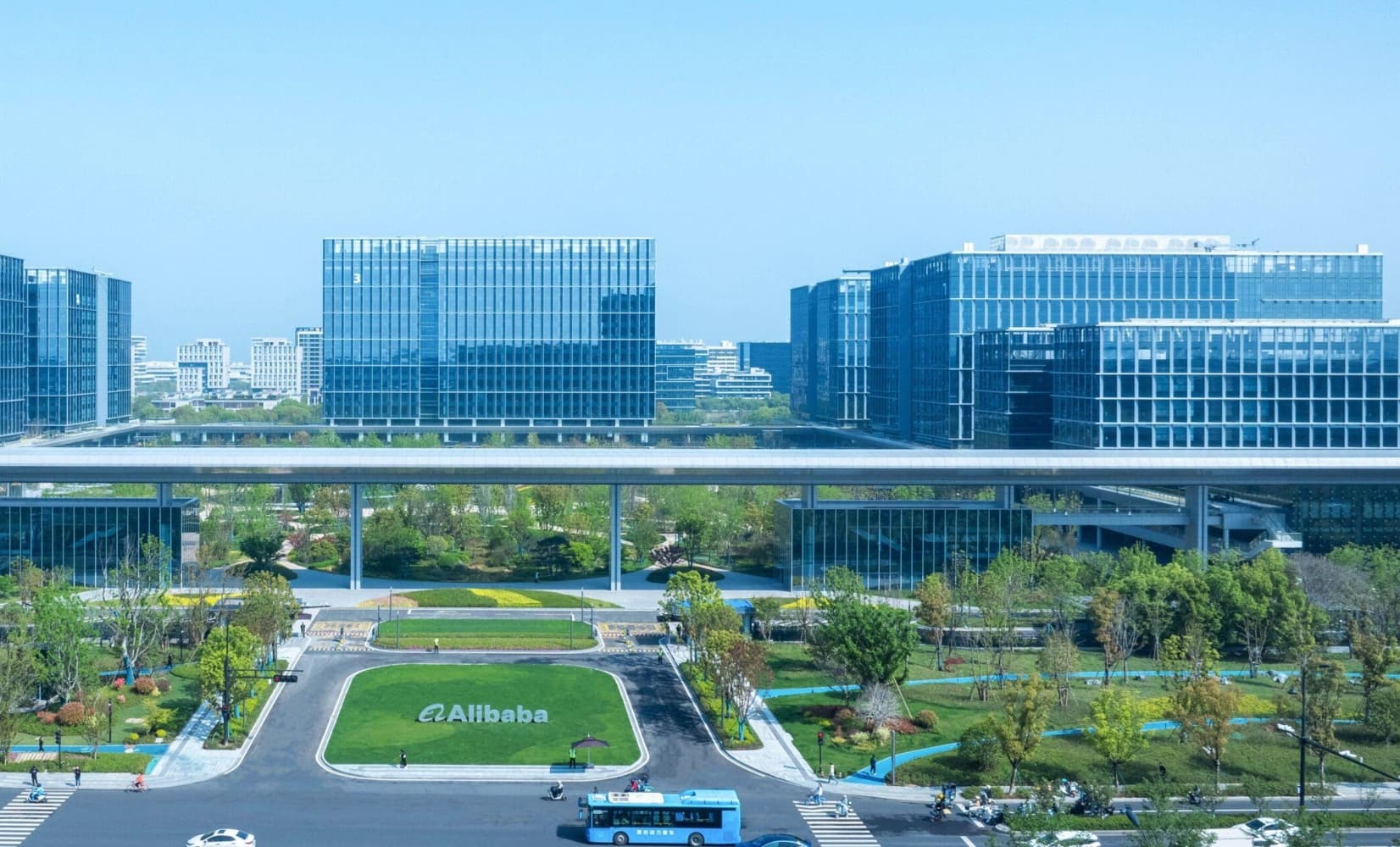
Alibaba just handed investors a $10.2 billion bill — and the market's first response Monday was to cut the stock by 8.57% in premarket trading. The Hong Kong share sale, the company's largest equity raise of 2026 and explicitly designated to fund its artificial intelligence expansion, immediately drew public criticism from Michael Burry, whose Scion Asset Management has been vocal on Chinese tech exposure. The combination of a massive dilutive offering and Burry's commentary is a credibility problem that Alibaba's management will need to address quickly.
The Mechanics of a $10.2 Billion Dilution Event
The structure of the deal matters. A $10.2 billion Hong Kong share offering — particularly one announced without extensive pre-marketing to soften the blow — is the kind of capital raise that signals urgency rather than opportunism. Companies that have pricing power in their equity and are confident in near-term cash generation don't typically hit the market with one of the largest secondary offerings in Asian equity markets in a single move. The question is whether Alibaba's leadership is raising capital because it sees a time-sensitive investment window in AI infrastructure that cannot be funded from operating cash flow alone, or because the balance sheet situation is more constrained than the last quarterly filings suggested.
Alibaba reported significant revenues in its most recent fiscal quarter, with its cloud segment — the division where AI investment is most concentrated — continuing to grow at a double-digit rate. However, the capital requirements for building out large-scale AI infrastructure, including GPU procurement at a time when Nvidia has reportedly raised AI server prices by more than 15%, are not modest. The company is competing directly against Tencent, ByteDance, Baidu, and a wave of well-capitalized Chinese AI startups for the same infrastructure and talent. If $10.2 billion is what Alibaba's management believes is required to remain competitive over the next 18 to 24 months, that figure alone speaks to how capital-intensive the AI arms race has become in China's technology sector.
The dilution math is real regardless of the strategic rationale. Existing shareholders — including substantial institutional holders across both the Hong Kong Stock Exchange listing and the New York ADR — have seen their ownership percentage decrease overnight. In a market where the 10-year Treasury yield is sitting near 4.74% and investors have a credible risk-free alternative returning close to 4.7%, the opportunity cost of holding a diluted equity position in a company executing an expensive strategic pivot is not trivial.
Burry's Play and Why It's Moving the Tape
Michael Burry's criticism carries market-moving weight disproportionate to the size of his fund, and Monday is no exception. Burry has built a reputation for identifying structural problems in assets before consensus catches up — the 2008 mortgage trade being the defining example — and his specific framing of the Alibaba offering as dilution rather than investment is a deliberate characterization. He is not arguing that AI is a bad market or that Alibaba lacks the technical capability to compete. He is arguing that the company is transferring value from current shareholders to future strategic positioning in a trade that existing holders did not choose and cannot opt out of.
That framing resonates in a market where investor patience with "invest now, profit later" narratives has been tested by two years of rising rates. The risk-free rate at 3.63% — the current Fed Funds Effective Rate — means that every dollar allocated to a long-duration growth story carries a higher hurdle rate than it did in 2022 or 2023. Burry's criticism lands harder in August 2026 than it would have in a zero-rate environment, and that is not coincidental. He understands the rate context as well as anyone.
There is also a geopolitical layer here that cannot be dismissed. The Trump administration's announced "economic war" with Iran and the broader posture of economic nationalism it represents creates ambient risk for Chinese technology companies listed in New York as ADRs. The regulatory relationship between U.S.-listed Chinese equities and their home-country operations has been a persistent source of discount in BABA's valuation for years. A large, Hong Kong-primary share offering that raises questions about the ADR's relative standing does not simplify that story.
What the Chart and the Level Tell Traders
The 8.57% premarket decline puts Alibaba's ADR in a zone that technical traders will recognize as significant. The stock had been consolidating after a strong first half of 2026 driven partly by China's domestic AI policy tailwinds and the broader emerging-market tech bid that accompanied a weaker dollar earlier in the year. An 8%-plus gap down on the open breaks any near-term technical structure that bulls had been building and immediately shifts the burden of proof back onto the long side.
For traders considering a position from either direction, the first data point to watch is where BABA finds its footing in the first 30 minutes of regular-session trading Monday. A gap-down that holds and consolidates — particularly if volume starts to dry up above the day's opening print — would suggest institutional buyers are stepping in to absorb the dilution shock. A gap-down that continues lower into the first hour, especially on sustained above-average volume, is a more bearish signal indicating that the smart money is using any opening liquidity to reduce exposure rather than accumulate.
The secondary catalyst to monitor is whether Alibaba's management schedules any investor communication in the next 48 to 72 hours to contextualize the capital raise. The absence of immediate clarifying communications would itself be a signal — one that Burry and other skeptics would likely amplify. The stock's next defined level of structural support sits roughly 12% to 15% below Friday's close. If the premarket decline holds through the open and Monday's session closes near its lows, that lower range comes into play by mid-week. Traders with existing long exposure need to decide before 9:30 AM Eastern whether this is a dilution event they can hold through, or whether the combination of Burry's public criticism, a $10.2 billion equity overhang, and a hostile rate environment makes a reduced position the more defensible posture entering the most event-dense week of August.
The Weekly Investor
Daily market analysis for active traders. Free.