
AI Model Price War: What $4 Tokens Mean for Margins
GPT-5.6, Grok 4.5, and Claude Sonnet 5 launched within 24 hours, crashing output token prices 80%. Here's who wins and who bleeds.
Key Points
- Output token costs across frontier AI models collapsed to the $4–$6 range in July 2026, down from $25–$50 for legacy flagships — an 80%-plus compression in a single month.
- Meta's launch of Muse Spark 1.1, its first paid closed model, signals the industry has pivoted from open-weight model proliferation to monetizing the agentic inference layer.
- Amazon's custom silicon business — Graviton, Trainium, and Nitro — has crossed a $20 billion annual run rate growing over 100% year-over-year, representing a direct and accelerating threat to NVIDIA's data center demand share.
Three frontier AI models launched within 24 hours last week, and when the dust settled, the price of output tokens across the industry had fallen 80% from where legacy flagships were trading six months ago. GPT-5.6 (Luna), Grok 4.5, and Muse Spark 1.1 are now competing for the same enterprise inference budget at $4–$6 per million output tokens — a level that would have been dismissed as economically impossible at the start of 2026. For traders holding AI infrastructure names, the question is no longer whether demand for compute exists. It's whether margin survives commoditization at this speed.
The Launches and What They Actually Signal
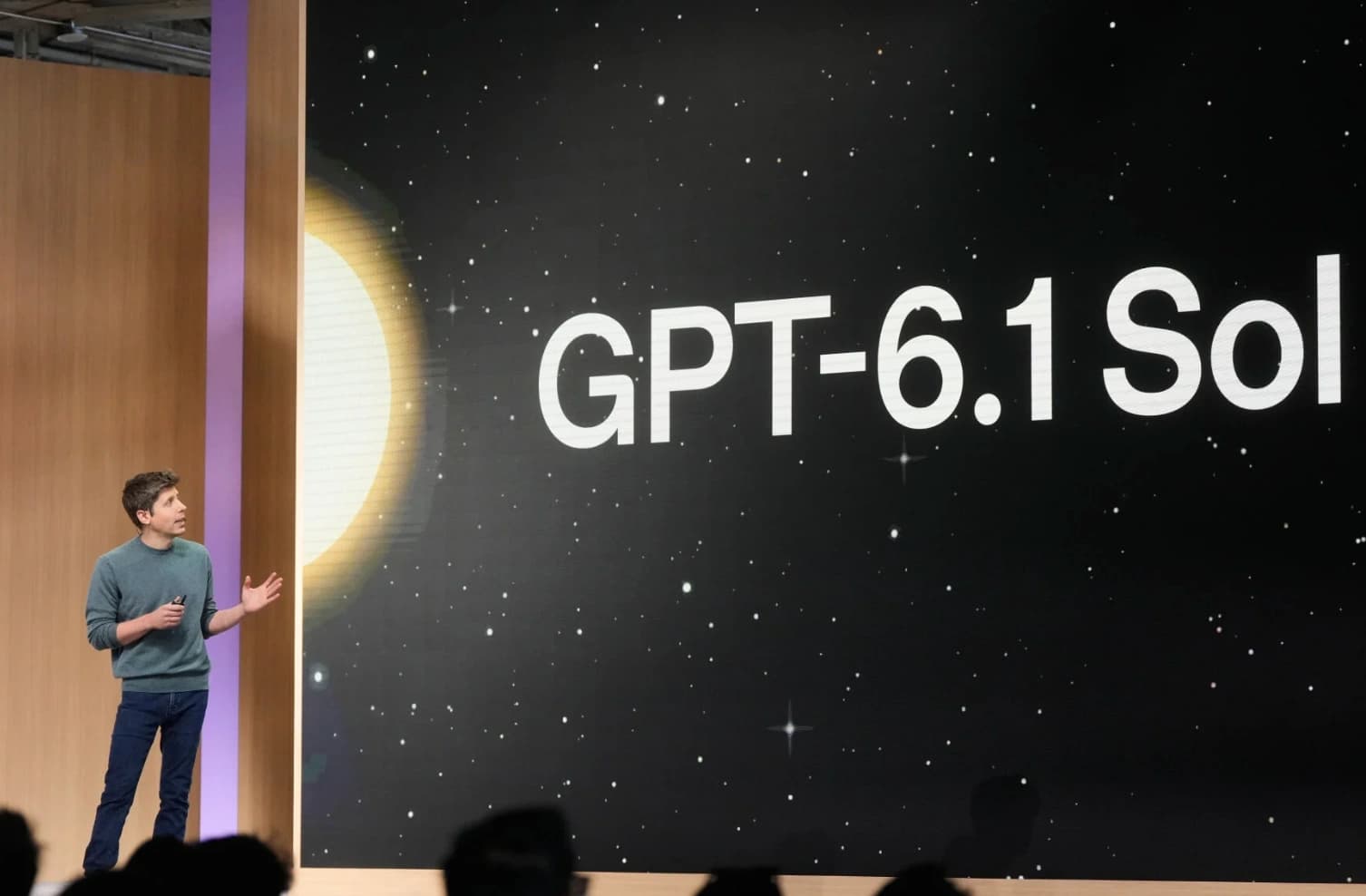
OpenAI's GPT-5.6 family — marketed as Luna, Terra, and Sol across three size tiers — is priced from $1 to $5 per million input tokens, with a 1 million token context window and full multi-agent orchestration built into the base offering. The models reportedly outperform Claude Fable 5 on long-running agentic benchmarks, which is the benchmark that enterprise software buyers actually care about right now. Programmatic tool calling and prompt cache breakpoints are included at launch — not roadmap items. OpenAI is shipping infrastructure-grade features at consumer-grade price points, and that compression is intentional. The strategy is volume at scale: capture the agentic middleware layer before any competitor can establish switching costs.
Anthropic's Claude Sonnet 5 is the most technically significant launch of the three for developer-facing workloads. Priced at $2 per million input tokens and $10 per million output tokens through August 31 — rising to $3/$15 thereafter — the model scores 80.4% on Terminal-Bench 2.1, the agentic command-line engineering benchmark. That is a 20.7-percentage-point improvement over Sonnet 4.6's 59.7% score, achieved in a single model generation. For software teams running autonomous coding and DevOps agents, that improvement is not incremental — it's the kind of capability jump that triggers budget reallocation. The August 31 price step-up is worth noting: Anthropic is capturing early enterprise adoption at a discount before normalizing to its target margin structure.
The most strategically important launch of the week is not the one with the best benchmark score. Meta's Muse Spark 1.1 is the company's first paid closed model — a direct reversal of the open-weight strategy that built the Llama ecosystem. Meta abandoning free model distribution in favor of a paid inference product means the company has concluded that the downstream monetization of open weights is not sufficient to justify the competitive subsidy. That's a significant signal. Every enterprise AI team currently building on Llama 4 or earlier open-weight Meta models should now be modeling a future where their zero-cost foundation layer has a price tag.
The Amazon Threat NVIDIA Investors Are Underweighting
Andy Jassy's disclosure last week that Amazon's custom silicon business has crossed a $20 billion annual run rate — growing over 100% year-over-year — with multi-year commitments from OpenAI, Anthropic, Meta, and Uber is the most underreported number in AI infrastructure this month. The Graviton, Trainium, and Nitro chip families are not science projects. They are production workloads at hyperscale, and four of the most compute-intensive AI companies on the planet have committed to them in writing.
This matters for NVIDIA because inference — not training — is now the dominant and growing share of AI compute spend. NVIDIA's H100 and B200 architectures are optimized for training throughput. Amazon's Trainium 2 is optimized for inference cost-per-token at AWS scale. As model prices collapse to the $4–$6 output token range, operators running inference workloads face intense pressure to reduce cost per inference call. Trainium runs those workloads at a structurally lower cost than rented H100 capacity — and Amazon controls the pricing on both sides of that equation. The 100%-plus growth rate in custom silicon, combined with OpenAI's multi-year commitment, suggests the demand-share shift is not hypothetical. It is already in the run rate.
NVIDIA's forward P/E of approximately 43x and EV/Sales of 21.5x price in continued dominance of both training and inference markets. Morgan Stanley's $288 price target and Overweight rating on NVIDIA cites four demand drivers — AI labs, hyperscalers, sovereign AI, and neocloud — none of which disappear in a price war. But if Amazon's custom silicon takes 15–20% of inference workloads from NVIDIA over the next 18 months, the EV/Sales multiple needs to compress. That's not a bear case; it's a math exercise.
What Traders Watch Next
The FTC's AI Accuracy Policy Statement comment deadline of July 31 is the nearest regulatory tripwire for consumer-facing AI products. Any company — OpenAI, Anthropic, Meta, Google — with a product that makes representations about AI capability or behavior faces direct exposure if the FTC finalizes a policy that treats capability claims as material consumer assertions. That's a compliance cost that will fall disproportionately on the companies currently racing to launch at the fastest possible cadence.
xAI's Voice Agent Builder, priced at $0.05 per minute of audio plus $0.01 per minute for telephony, illustrates where the price war is heading at the application layer. Voice agents at five cents a minute eliminate the economic case for legacy IVR infrastructure across every vertical from healthcare intake to financial services. NVIDIA's Nemotron 3 Nano Omni — a 30-billion-parameter open omni-modal model claiming 9x throughput improvement over comparable open multimodal architectures — simultaneously puts pressure on the closed-model pricing floor by making high-quality open alternatives viable for enterprise deployment. When open models perform at this level, the closed-model premium compresses further.
The specific event to watch: Amazon's Q2 2026 earnings call, expected in late July or early August, where AWS management will either quantify the Trainium demand ramp in a segment-level disclosure or decline to do so. If Amazon breaks out custom silicon as a discrete revenue line — even informally — it forces the market to reprice NVIDIA's inference market share in real time. The model price war is a revenue story for AI companies and a margin story for infrastructure providers. They are not the same trade, and conflating them is the fastest way to be wrong in both directions heading into Q3 earnings season.
The Weekly Investor
Daily market analysis for active traders. Free.