AbbVie's $10.9B Apogee Bet Targets Dupixent's Crown
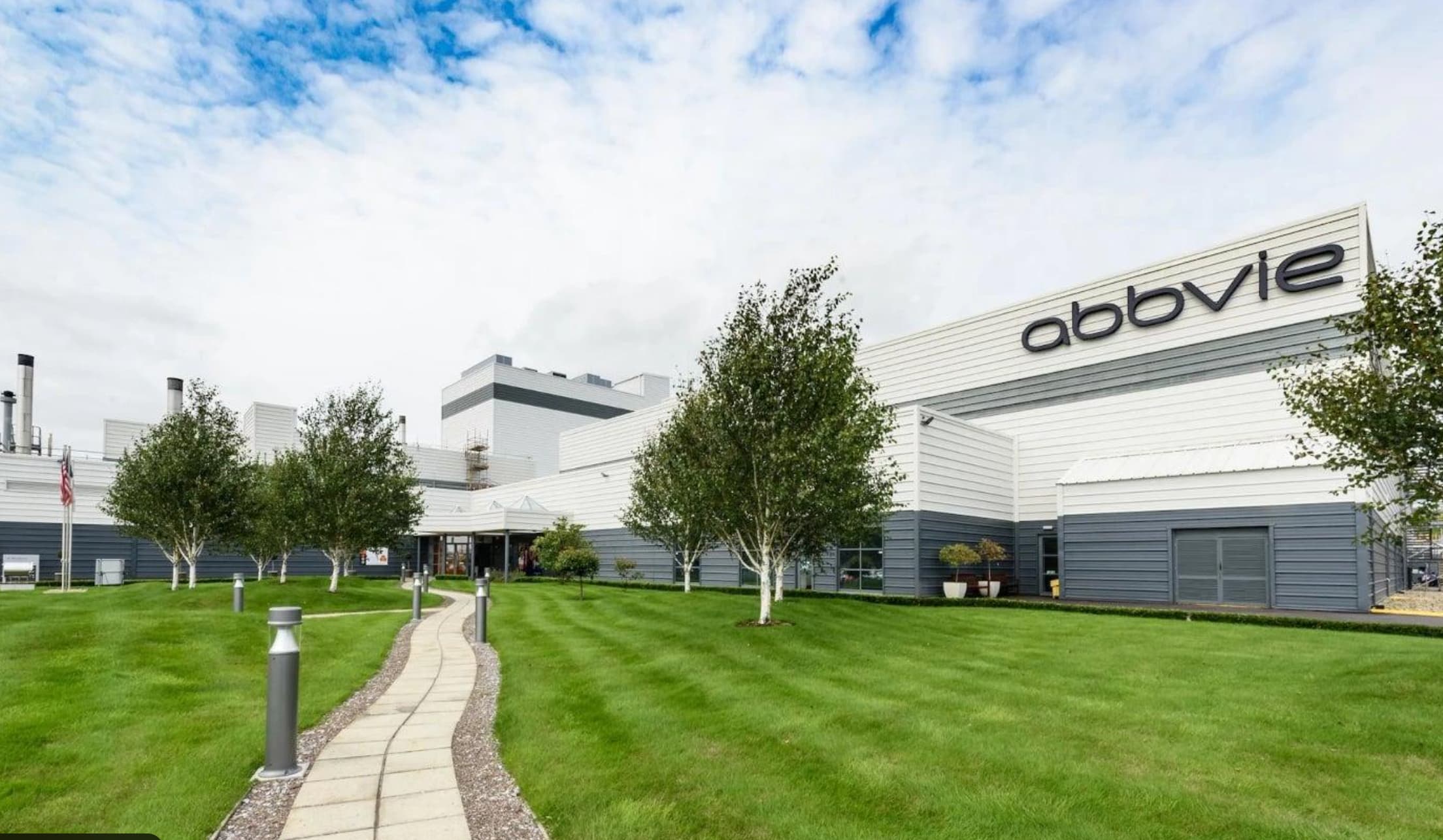
AbbVie acquires Apogee Therapeutics for $135.11/share in a $10.9B deal targeting Dupixent with twice-yearly dosing drug zumilokibart.
Key Points
- AbbVie is acquiring Apogee Therapeutics at $135.11 per share in cash, a 49.49% premium to Thursday's close, valuing the deal at $10.9 billion in total equity value.
- The strategic driver is zumilokibart, an IL-13 antibody that achieved significant skin clearance in roughly two-thirds of Phase 2 atopic dermatitis patients with dosing as infrequent as twice per year — versus Dupixent's every-two-week schedule.
- With deal close targeted for Q3 2026 and accretion pushed to 2032, traders should watch the Apogee shareholder vote timeline and any FTC signaling on large-cap pharma consolidation.
AbbVie is paying $135.11 per share in cash for Apogee Therapeutics, a 49.49% premium that sent APGE shares up roughly 48% in early trading on Tuesday. The $10.9 billion deal is the most consequential biotech acquisition of mid-2026, targeting the $15-billion-plus atopic dermatitis market that Sanofi and Regeneron's Dupixent currently dominates. The strategic logic is blunt: AbbVie wants Dupixent's lunch, and it's willing to pay a steep near-term EPS price to get it.
The Dupixent Problem AbbVie Is Solving
Dupixent posted roughly $14 billion in global sales in 2025 and is on a trajectory toward peak revenues north of $20 billion. AbbVie's own immunology portfolio — anchored by Skyrizi and Rinvoq — generated more than $30 billion in total revenue last year, up 14% year-over-year, even as Humira collapsed 49% following biosimilar entry. But Skyrizi and Rinvoq treat psoriasis and rheumatoid arthritis, not atopic dermatitis. Apogee fills the gap, and it does so with a dosing profile that could be a genuine commercial differentiator rather than a me-too entry.
Zumilokibart, Apogee's lead candidate, is an IL-13 antibody — the same cytokine pathway Dupixent partially targets. In Phase 2 data, approximately two-thirds of patients achieved significant skin clearance at 16 weeks. The critical commercial hook, however, is maintenance dosing: zumilokibart's trial design supports administration as infrequently as twice per year, compared to Dupixent's every-two-week self-injection requirement. In a disease where treatment adherence is a documented problem, a twice-yearly physician-administered option carries real market leverage — particularly with payers who have grown skeptical of Dupixent's cost-effectiveness at scale.
What AbbVie Is Absorbing — and What It Costs
The deal's financial mechanics are not painless. AbbVie's adjusted EPS absorbs approximately 14 cents of dilution this year and roughly 46 cents in 2027. Accretion is not expected until 2032 — a six-year payback horizon that reflects both the Phase 3 trial timeline zumilokibart still needs to complete and the commercial ramp required to build a meaningful share position against an entrenched Dupixent franchise. Morgan Stanley is advising AbbVie on the transaction; Jefferies and Goldman Sachs are advising Apogee. The deal requires Apogee shareholder approval and regulatory clearance, with closing targeted for Q3 2026.
Analyst reaction has split cleanly along valuation lines. Canaccord raised its AbbVie price target to $273 and called the Apogee acquisition "very good sense" for long-term immunology positioning. Piper Sandler went further, lifting its target to $298 and emphasizing AbbVie's accumulation of multiple pipeline "shots on goal" across dermatology and inflammation. On the other side, TD Cowen and several buyside desks are flagging the $10.9 billion price tag as "full," noting that Apogee had no approved products and only Phase 2 data at signing. The bear case is straightforward: if Phase 3 data disappoints, AbbVie will have paid roughly $10.9 billion for a clinical-stage asset with no near-term revenue offset.
What Traders Are Watching Through Q3 Close
AbbVie's immunology franchise is the company's existential engine. The 2023 Humira patent cliff was supposed to crater AbbVie's revenue base; instead, Skyrizi and Rinvoq absorbed the shock with double-digit growth, and management's credibility on pipeline execution is now unusually high relative to large-cap pharma peers. That credibility is part of why ABBV edged up approximately 1.5% on the deal announcement rather than selling off sharply — investors largely believe the commercial team can execute a launch in atopic dermatitis if the Phase 3 data holds.
The APGE arb spread is the more immediate trading signal. With the offer fixed at $135.11 in cash and shares trading around $134 as of Tuesday morning, the spread implies the market is pricing in a roughly 98% probability of deal completion — tight, but not risk-free given the current FTC posture on large-cap pharma consolidation. Any signal from Washington on merger review timelines for deals above $10 billion in the pharma sector could reprice that spread meaningfully. The Apogee shareholder vote has not been formally scheduled, but given the 49.49% premium, opposition from institutional holders looks unlikely; Apogee's top five shareholders collectively held more than 60% of shares outstanding prior to the announcement.
Broader context matters here too. With the 10-year Treasury yield sitting at 4.38% and core CPI still running at 2.8% year-over-year, the cost of capital for a six-year accretion timeline is non-trivial. AbbVie is effectively making a leveraged bet on a clinical outcome and a competitive moat that won't be testable for years. The stock movers to watch into Q3 include not just ABBV and APGE but also Sanofi, whose Dupixent royalty stream with Regeneron represents a direct competitive exposure if zumilokibart clears Phase 3 with a clean label. Regeneron's next earnings call — scheduled in late July — will be the first opportunity for management to address the competitive threat directly.
Traders holding APGE into the close should note that at a fixed cash offer of $135.11, there is no further upside from a higher bid — AbbVie has not disclosed any go-shop provision, and no competing bidder has emerged. The play at this price is pure deal-close arbitrage, with Q3 2026 as the target window. The specific date to mark is whenever the SEC clears Apogee's proxy filing, which will set the shareholder vote date and give the arb a hard deadline. Watch for that filing within the next 30 to 45 days.
The Weekly Investor
Daily market analysis for active traders. Free.